North Sea
North Sea at World Data Ocean is a file of 14 stories. The newest of them: “Belgium's First Artificial Energy Island Begins Calibrating Offshore Wind Integration”, “He Dreiht Wind Farm Powers German Grid, Boosting Renewable Capacity”, and “Copepod Life Cycles Shift with Marine Heatwaves: A New Ocean Indicator”. Belgium's first artificial energy island has begun calibrating its offshore wind integration, a measurable step toward meeting rising electricity demand with validated, real-time ocean intelligence. The first turbines at the 960-megawatt He Dreiht offshore wind farm are now delivering electricity to the German grid, marking a substantial step in the country's renewable transition. A Global Hub for Ocean Intelligence 4 World Data Ocean is a centralized digital platform where researchers, scientists, and ocean enthusiasts converge to… The list below is every North Sea story on World Data Ocean, newest first.
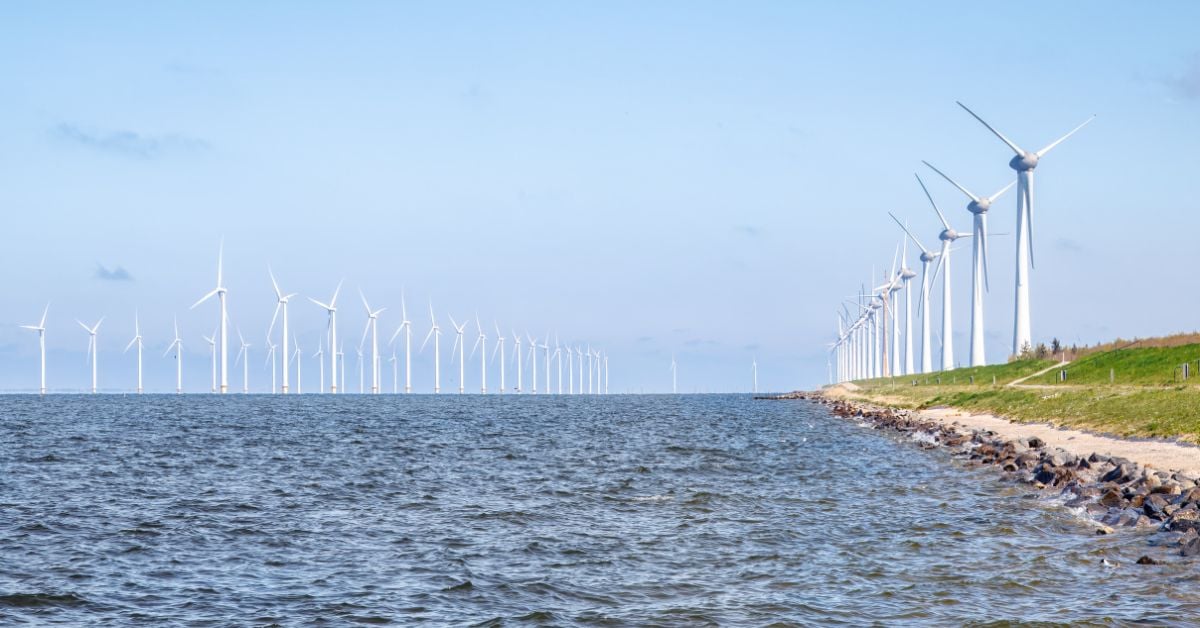
Belgium's First Artificial Energy Island Begins Calibrating Offshore Wind Integration
Belgium's first artificial energy island has begun calibrating its offshore wind integration, a measurable step toward meeting rising electricity demand with validated, real-time ocean intelligence. This integrated data ecosystem will turn climate indicators into actionable power. For deeper context on global offshore momentum, see our coverage of Ørsted consolidating ownership of the 172 MW Gunfleet Sands in UK waters. Understanding drives protection, and here, it also drives energy.
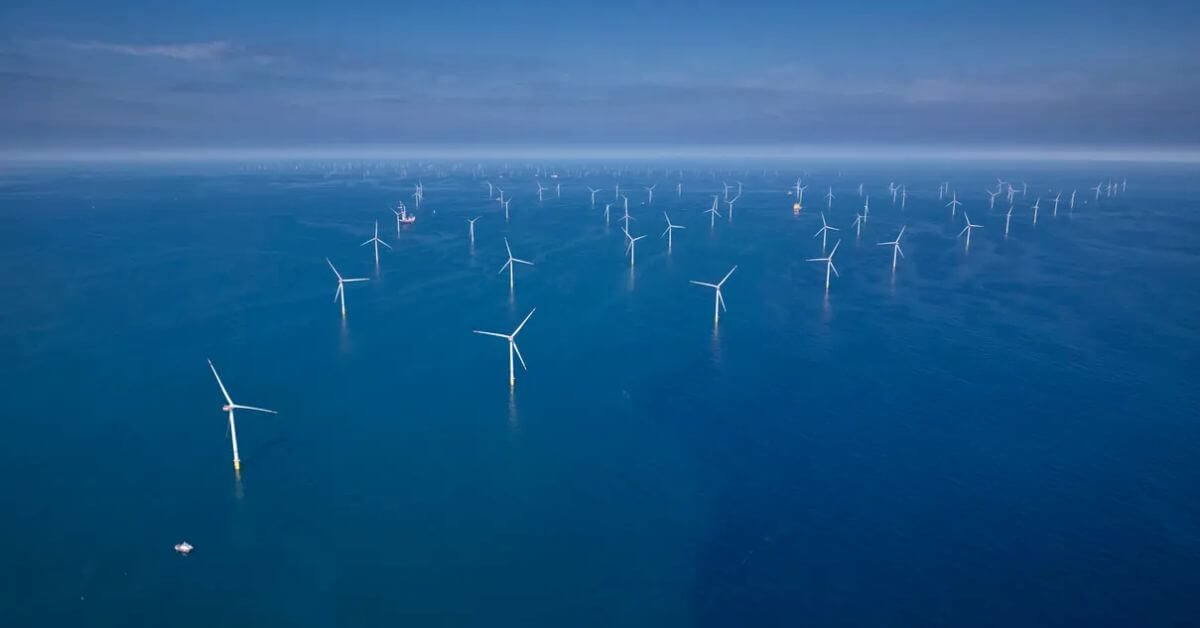
He Dreiht Wind Farm Powers German Grid, Boosting Renewable Capacity
The first turbines at the 960-megawatt He Dreiht offshore wind farm are now delivering electricity to the German grid, marking a substantial step in the country's renewable transition. This North Sea project demonstrates how measured, large-scale infrastructure can integrate clean power without theatrics. Germany's commitment to empirical progress is evident here. For broader context on how such energy shifts interact with marine policy, our related coverage, including the recent offshore lease reversal, offers a fuller picture. This is steady, data-driven advancement.

Copepod Life Cycles Shift with Marine Heatwaves: A New Ocean Indicator
Copepods are the ocean's canaries, and their response to marine heatwaves is proving more nuanced than expected. Using the Helgoland Roads time series, researchers found that blooms often contract when heatwaves strike during their peak, though most species show no consistent shift in timing beforehand. That distinction matters. It suggests selective pressure is intensifying within blooms themselves. As heatwaves grow stronger, these small disruptions could cascade through food webs, ultimately reshaping fish recruitment.
Dynamic Ocean Data Refines Extreme Sea Level Projections for Western Europe
Future changes in extreme still water levels cannot be understood through sea-level rise alone. Our dynamic modeling reveals that tides, storm surges, and seasonal cycles will reshape coastal flood risk across western Europe, with regional deviations reaching ±20 cm. Static approaches miss these complexities. In the southern North Sea, dynamic estimates amplify projections by 30-40%. For deeper context on maritime security, see our related coverage of Russian maritime activity in the Mediterranean.
Tracking Plankton Change: Open Data Workflow for Ocean Health Insights
Plankton imaging captures the ocean's smallest movers at scales that nets and bottles miss, yet the path from raw image to usable dataset has remained stubbornly manual. The Plankton Imager 10 aboard the R/V Simon Stevin changes that calculus in the southern North Sea. This open pipeline, built on deep learning classification and Darwin-Core Archives, turns high-frequency observations into validated, standards-based outputs. It is a practical step toward operational ocean intelligence, one we can adapt beyond the Belgian part of the North Sea.
Wadden Island Tides: Unraveling Complex Dynamics with Modern Tools
A neap tide on the open North Sea, yet a regular tide on the Wadden Sea side of the same island: that contrast is exactly the kind of puzzle that rewards patient observation. The app isn't necessarily wrong; it's revealing how shallow basins and narrow inlets dampen the lunar forcing that drives spring-neap cycles offshore. The mainland harbour data confirms it: this is real hydrodynamics, not a glitch. Understanding drives protection, and tools like this make that clearer.

Decommissioning Giant: Heavy-Lift Vessel Transfers Platform for North Sea Recycling
A heavy-lift vessel has transferred a North Sea platform for onshore recycling, a project expected to span roughly 18 months with 12 to 14 months dedicated to demolition. This is the kind of measured, industrial precision that defines responsible decommissioning. It is not flashy work, but it is necessary. The scale demands patience and calibration, and the timeline reflects that.

Norway Advances Maritime Innovation with Groundbreaking Ship Tunnel Project
Norway is carving a 1,700-meter passage through the Stadlandet peninsula, a 50-meter-high, 36-meter-wide tunnel designed to reroute ships from one of its most exposed seas. This is not a novelty; it is a calibrated response to a persistent maritime hazard. The project reflects a practical brand of ocean intelligence, where engineering meets geography. For readers tracking how nations mitigate risk at sea, this effort pairs well with our coverage of the bulk carrier freed near Gladstone, another reminder that safe passage is never guaranteed.
Coastal Food Webs: Balancing Top-Down and Bottom-Up Influences
Fifteen years of data from the Wadden Sea reveal that coastal food webs are not governed by a single dominant force. Our analysis of seven trophic groups shows that while nutrient-driven, bottom-up processes fuel spring phytoplankton blooms, predation, or top-down control, terminates them by summer. This suggests a dynamic balance, not a hierarchy. The findings point to a profound link between higher-level predators and the planktonic base, reminding us that ecosystem stability depends on the interplay of both pressures.

International Collaboration Intercepts Nearly Half a Tonne of Cocaine.
Operation White Sea VI, a collaboration of 14 nations, intercepted nearly half a tonne of cocaine before it reached European shores. The seizure is a measurable win for maritime security, but its real value lies in what it demonstrates: coordinated intelligence works. When nations share calibrated data across borders, criminal networks lose ground. This interdiction echoes the broader mission we track in our coverage, from ocean security to climate resilience.

Validated Maritime Transit: Russian Arms Delivery to Mali Observed.
A Russian Project 775 Ropucha-class landing ship was observed escorting a cargo vessel through the English Channel, a movement that confirms the ongoing maritime transit of military equipment to Mali. The operational details remain sparse, but the visual confirmation provides a measurable data point in the evolving logistics of state-sponsored security arrangements. This is not abstract geopolitics; it is a physical movement of assets.

Rotor Blade Recovery Highlights North Sea Monitoring Challenges
A drifting rotor blade in the North Sea is a blunt reminder that offshore infrastructure demands constant vigilance. The German Federal Police and Waterways and Shipping Administration moved swiftly to recover the broken component, yet the incident underscores how dynamic and unforgiving these waters remain. Recovery is one thing; prevention is another. For readers tracking maritime risks, our coverage of the *Strait of Hormuz Incidents* offers a parallel look at how quickly debris can threaten navigation.

Replica Ship Owners Feel Overlooked After ‘Odyssey’ Film Shoot
The Swedish owners of the Viking ship replica used in Hollywood's *The Odyssey* say they feel forgotten, a quiet coda to what should have been a triumph. Their vessel carried cinematic weight, yet the spotlight has moved on, leaving them in the shallows. It is a familiar ache in the world of ocean work, where the story's surface often outlasts its substance. For deeper context on how maritime narratives linger, our coverage of the He Dreiht wind farm offers a grounding counterpoint.

Integrated Data Fuels Global Wind Energy Advancement Through Collaborative Vessel Delivery
After two years in construction at the COSCO Shipping Offshore shipyard in Qidong, the Wind Ace is ready to move. Its delivery signals something practical: the global push for wind energy depends on vessels that can be built and deployed efficiently. The vessel's launch is a concrete step, not a spectacle. For context on how maritime infrastructure is shifting elsewhere, our coverage of the Gulf of Oman STS transfers shows similar pressure points. Integrated data, here, means the difference between a ship and a system.