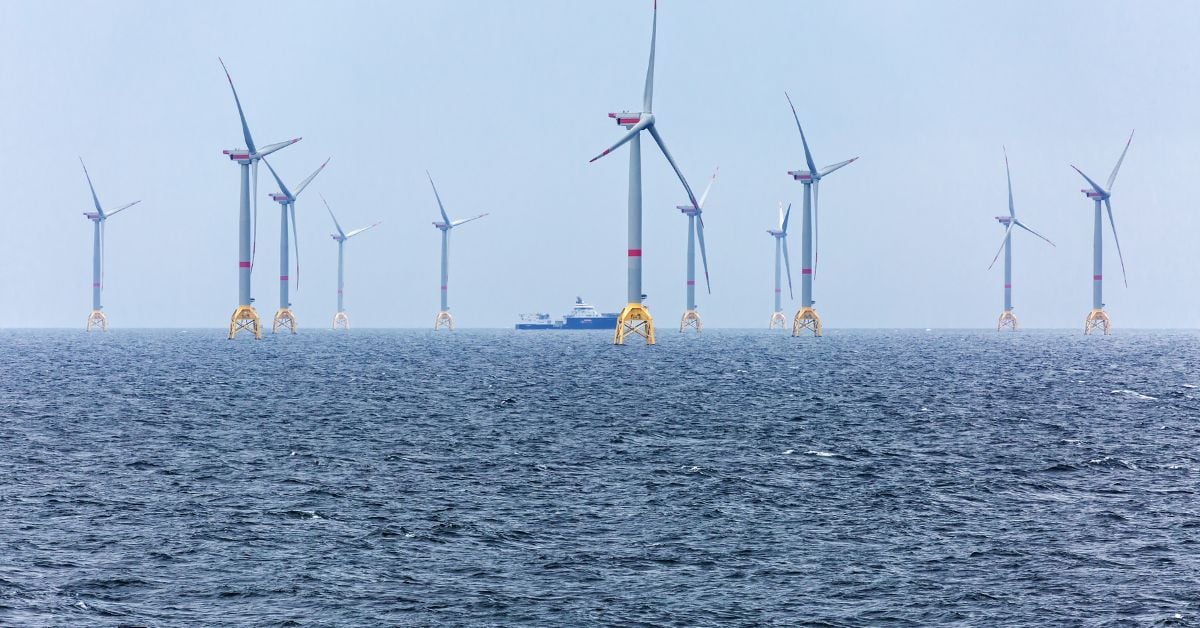
The cancellation of offshore wind lease agreements, paired with a proposed $4 billion reimbursement, is not a policy pivot; it is a signal. It tells coastal states, energy investors, and the scientific community that federal ocean policy now runs through a fossil-fuel lens, and that the legal and economic whiplash will be measured in years, not news cycles. California and New York are preparing for that fight, and they should. But this is not merely a political clash between state and federal powers. It is a stress test for the entire premise of ocean intelligence: that we can manage marine resources with calibrated, long-term foresight rather than abrupt reversals.
For readers who track maritime geopolitics, the pattern is familiar. The administration's move echoes the kind of leverage plays we see elsewhere, such as the phased negotiations over the Strait of Hormuz, where strategic chokepoints become bargaining chips. In both cases, the ocean is treated as a political chessboard rather than an integrated ecosystem. Meanwhile, the economic realities of coastal resilience remain stark. A related analysis of storm surge costs in coastal China demonstrates that climate-driven disruptions carry price tags that ignore political timelines. Wind energy was never just about clean power; it was a hedge against the rising costs of an unstable ocean. Cancelling those leases does not make the storms go away. It simply removes a tool for mitigating their financial and physical toll.
Our take is direct: this reversal is a miscalculation dressed as pragmatism. The $4 billion reimbursement is not a solution; it is a settlement with the future. It compensates for broken contracts but does nothing to address the underlying demand for reliable, distributed energy that offshore wind was poised to meet. For researchers and policymakers, the practical consequence is immediate: project pipelines stall, regulatory timelines blur, and the data streams that would have come from new turbines, oceanographic sensors, and grid integration, are postponed indefinitely. We lose more than megawatts; we lose longitudinal insights into marine environments that only operational offshore infrastructure can provide.
What would we tell a reader who asks whether this matters for them? It matters if you live near a coast, pay an energy bill, or care about the pace of climate adaptation. The legal battles ahead will determine whether the United States can hold a consistent course on ocean energy, or whether each administration can simply unwind the previous one's commitments. Watch the courts, but also watch the state-level responses. California and New York are not waiting for permission to build their own ocean economies. The open question is whether federal policy will obstruct them or eventually catch up to the reality that the ocean does not negotiate. The next lease sale, or the next reversal, will tell us which future we are actually building.