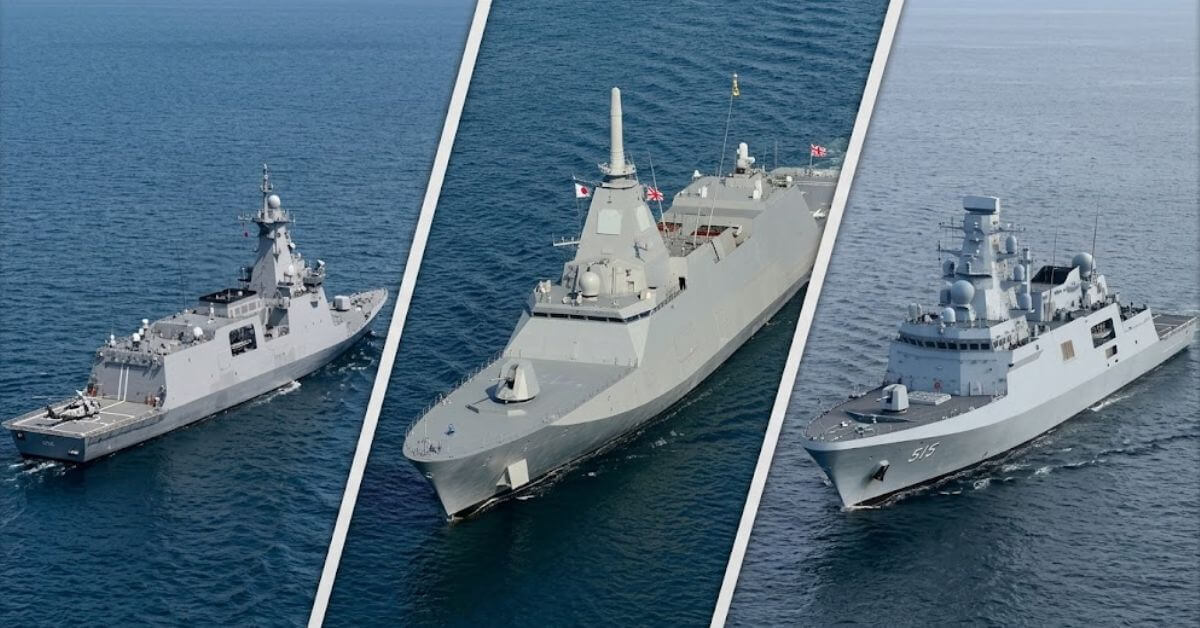
The U.S. Navy's exploration of international frigate options, including designs from South Korea, Japan, and Turkey, is a pragmatic response to a hard constraint: the need for speed in shipbuilding versus the slow, deliberate expansion of domestic yards. Rather than framing this as a retreat from American industrial capacity, the service appears to be pursuing a dual-track approach. It wants hulls in the water faster, while simultaneously investing in U.S. shipyards, transferring technology, and growing the workforce. That is not a contradiction; it is a calculated hedge. The strategic logic is sound, provided the technology transfer is genuinely bidirectional and the domestic investment is not merely symbolic.
This move should be read alongside parallel maritime developments. India's projection of a 230-ship fleet by the mid-2040s reflects a similar recognition that naval power is a long-lead-time investment, one that requires planning horizons measured in decades, not budget cycles. Meanwhile, China's new nuclear-powered carrier signals an intent to extend operational reach far beyond its regional waters. In that context, the Navy's interest in allied frigate designs is less about a single class of ship and more about accelerating the learning curve. The question is whether the United States can absorb foreign shipbuilding techniques without losing its own industrial base. The related coverage of India Projects Expanded Naval Fleet to Navigate Evolving Maritime Landscape and China’s New Nuclear Carrier Signals Extended Naval Operations Capability suggests that every major player is wrestling with the same problem: how to field credible maritime force quickly enough to matter.
For our readers, the practical takeaway is not about the specific frigate design that eventually wins the contract. It is about the underlying assumption that allied collaboration can substitute for domestic capacity in the near term without sacrificing it in the long term. That assumption deserves scrutiny. Technology transfer is not a one-way valve; it requires the recipient to have the engineering talent, the supply chain, and the maintenance infrastructure to actually use and improve the design. If the Navy's investment in U.S. shipyards is real, this could be a model for the future. If it is a headline, we will see the consequences in a decade, when the first of these ships approach mid-life refits and the workforce has not materialized. The other related piece, Collaborative Shipbuilding Initiative Advances Ocean Data Capabilities in India, shows that the private sector is already moving on this logic, pairing shipbuilders across borders to share risk and capability. The Navy is simply catching up to a pattern the commercial world has long understood.
Here is what we would tell a reader who asks whether this is a good idea: Shipbuilding is not a spot market. It is a long-cycle industry where the cost of getting the workforce wrong is paid years later. The Navy's willingness to look abroad is sensible, but the measure of success will be whether the technology transfer includes the *how* of building, not just the *what* of the design. Watch for the details of the industrial participation agreements. If they include concrete commitments to U.S. supplier development and apprentice programs, this collaboration could deliver the speed the service needs without sacrificing the sovereign capability it cannot afford to lose. If they do not, we will have traded a short-term schedule win for a long-term strategic vulnerability. The specific point to track is the percentage of each vessel's hull, mechanical, and electrical content that remains domestic. That number will tell us more than any press release.