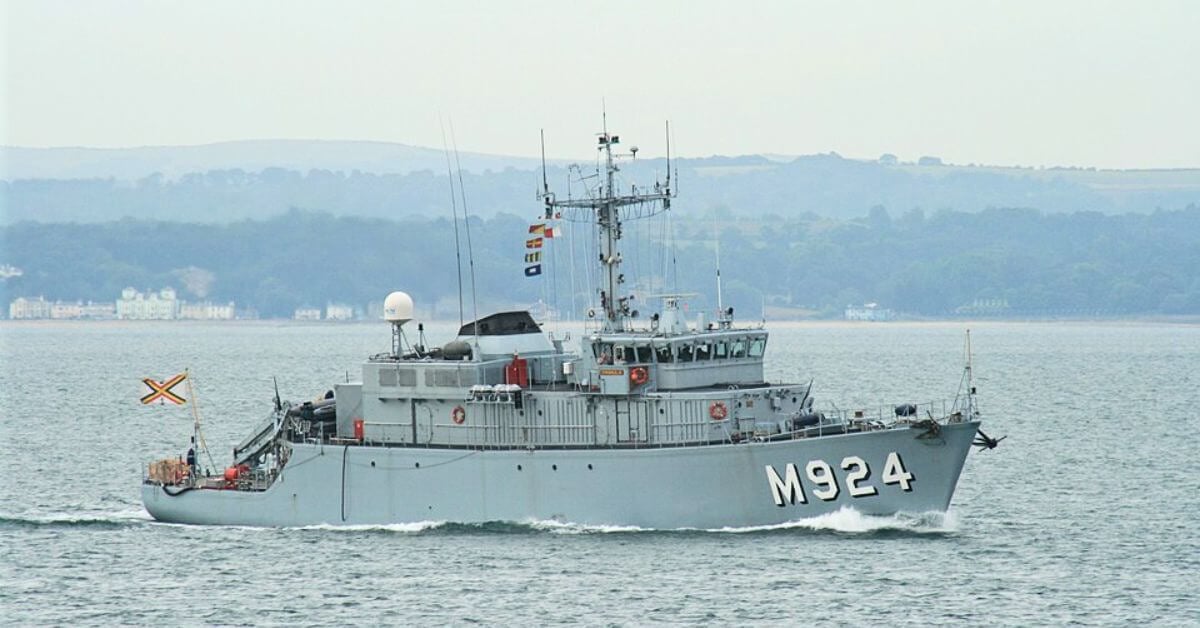
The interception of a ballistic missile by a French frigate near the Belgian minehunter BNS Primula in the Bab el-Mandeb Strait on October 13 is a stark reminder that the rules of engagement in maritime security have shifted. This is not an isolated defensive action; it is a calibrated response to a new operational reality where naval vessels must now contend with ballistic threats in addition to asymmetric attacks. For our readers tracking the Geopolitical Tensions in the Strait of Hormuz Draw Scrutiny on Maritime Sub-Chartering Networks, the convergence of mine countermeasure operations and ballistic missile defense in the same strategic waterway signals a dangerous escalation in the complexity of naval missions.
The French Armed Forces General Staff has confirmed that the frigate detected and intercepted the missile while escorting the Belgian minehunter, describing the action as defensive. No group has claimed responsibility, and neither France nor Belgium has publicly attributed the launch to Yemen's Houthi movement. Yet the pattern is empirically clear: this marks the second time in two weeks that a French warship has engaged a threat in the Bab el-Mandeb, following the October 1-2 incident where the frigate Languedoc used its main gun to shoot down a drone while escorting a container ship. The missile's target remains unknown, it could have been aimed at Primula, the frigate, or another vessel, but the operational necessity of escorting a minehunter through a strait where ballistic missiles are airborne is a measurable indicator of degraded maritime security. This is not alarmism; it is a validated observation of the threat environment.
What this means for our readers is that the integrated data ecosystem of naval operations is being stress-tested in real time. The French FREMM frigates, equipped with Aster surface-to-air missiles capable of intercepting ballistic threats, are demonstrating a capability that was previously demonstrated in March 2024 when the frigate Alsace shot down three Houthi-launched ballistic missiles. The October 13 incident suggests that this defensive architecture is now being applied routinely to protect allied vessels engaged in mine clearance preparation. As we noted in our analysis of Geopolitical Tensions Threaten Measured Flow of Saudi Crude Through Key Ports, the Bab el-Mandeb is a chokepoint for energy transit, and any degradation of its security has direct consequences for global supply chains. The presence of a Belgian minehunter in the region, awaiting political approval to clear mines in the Strait of Hormuz, underscores the dual pressure on NATO navies: they must defend against ballistic missiles while preparing to neutralize seabed threats.
The specific detail to watch is the investigation's conclusion on the missile's origin and intended target. The French military has not named the frigate or confirmed whether an Aster 30 was used, but the operational pattern is consistent with previous engagements. If the missile was launched from Houthi-controlled territory, it would confirm that anti-ship ballistic missile capability is now a permanent feature of the Red Sea and Gulf of Aden threat matrix. For navies operating in these waters, the practical takeaway is direct: minehunters, which cannot defend themselves against ballistic threats, will require continuous escort by air-defense frigates. The cost of maintaining freedom of navigation in these straits is no longer measured in fuel and crew hours alone, it is measured in the deployment of high-end defensive systems for every transit.