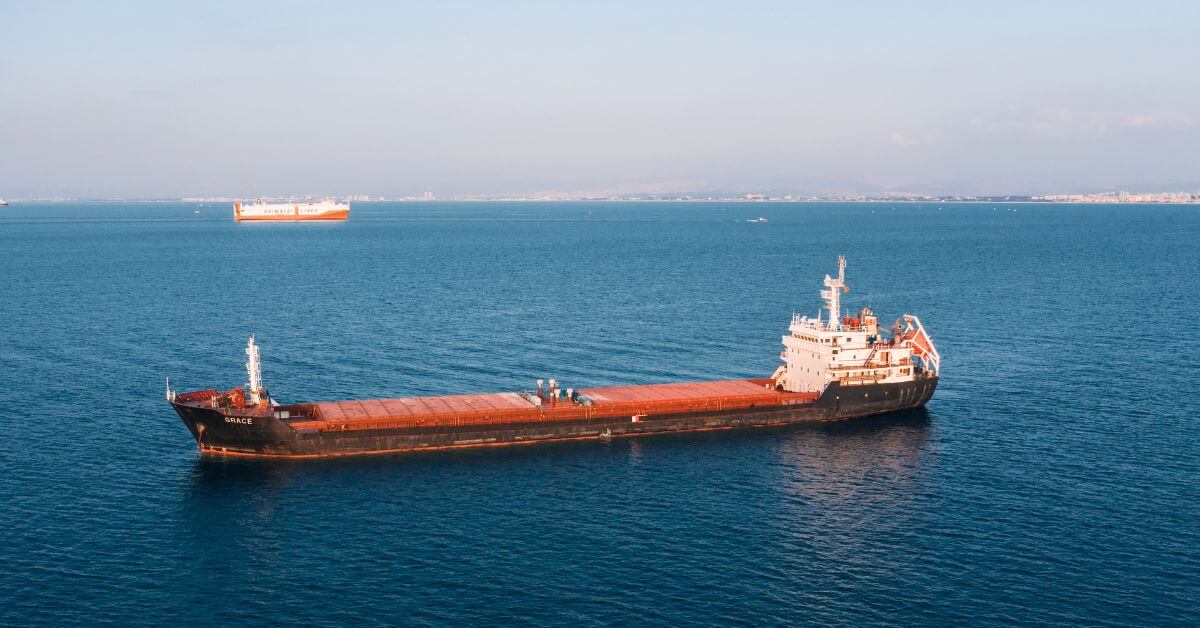
The Strait of Hormuz is not merely a geopolitical flashpoint; it is a calibrated node in the global ocean intelligence network, and the current dispute between Iran and a South Korean sub-chartered vessel reveals just how fragile that network has become. This is not a story about one shipping company, but about the cascading failure of transparency in a waterway that moves a significant fraction of the world's energy supply. The fact that Sinokor did not even own the vessels Iran has threatened, they were sub-chartered to an overseas oil company, according to the Korea Shipowners' Association, underscores a dangerous gap between political leverage and operational reality. As Tehran tightens restrictions following February's airstrikes, the practical consequence for our readers is clear: the integrated data ecosystem that tracks vessel identity, ownership, and compliance is being weaponized, and the weakest link is the sub-chartering layer. For researchers tracking CENTCOM Command Confirms 1.5 Billion Barrels Moved Through Hormuz, the volume of crude transiting the strait remains massive, yet the empirical evidence of rising dark transits, tankers switching off their tracking systems, suggests that measurable data is being deliberately obscured. This is where ocean intelligence meets national security, and where the absence of peer-reviewed, real-time monitoring becomes a liability for everyone from charterers to climate modelers.
The dispute is not happening in a vacuum. Iran's Persian Gulf Strait Authority published a list of 45 tankers in August, naming Sinokor vessels as repeat violators of crossing rules, yet the vessels in question had no South Korean crew and were manned entirely by foreign seafarers. This is a textbook case of the sub-chartering network's opacity: a South Korean company's name on a manifest, but no operational control or crew accountability. For policymakers and maritime analysts, the takeaway is that legal action against a vessel's listed owner may miss the actual operator entirely, creating a compliance gap that neither Iran's restrictions nor the U.S. naval blockade can effectively close. Meanwhile, the geological record offers a sobering context: the 100-million-year-old volcanic field rewrites Middle Eastern tectonic history, reminding us that the strait's physical geography is ancient and stable, yet the human systems governing its use are volatile and newly fractured. The contrast between deep-time stability and present-day disruption is a climate indicator in its own right, one that signals how geopolitical friction accelerates the degradation of shared maritime data standards.
What should readers watch for next? The Korea Shipowners' Association confirmed that Sinokor was checking the warning, but Iran has not specified what legal action it intends to take from November 1. This ambiguity is the concrete point: without a clear, peer-reviewed framework for crossing violations, every sub-chartered tanker entering the strait becomes a potential hostage to enforcement that may target the wrong entity. For the energy analysts, oceanographers, and policy advisors in our audience, the immediate consequence is that insurance premiums and charter rates for Gulf-to-Asia routes will recalibrate around uncertainty, not risk. The fire reported on an unidentified vessel near Al-Faw Port, where crew status remains unknown, is a grim parallel: when vessels go dark or when ownership chains become opaque, the first thing lost is the ability to respond. In the Strait of Hormuz, the question is no longer how much oil moves through, but who is accountable when the rules are enforced against a ghost.