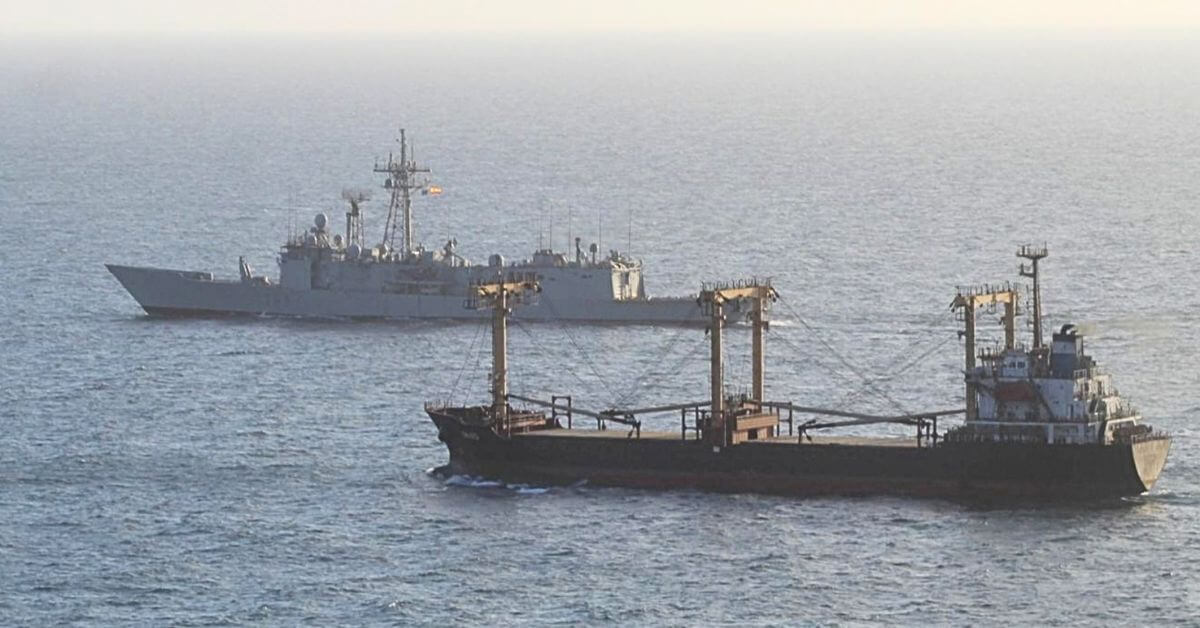
The European Union's request for more warships in the Red Sea is not a sign of escalation, it is an admission that naval resources are stretched to the breaking point. When merchant vessels must queue for escort through a vital chokepoint, the global logistics chain loses its calibrated rhythm, and the cost of delay propagates far beyond the waters. The practical consequence for our readers, whether researchers tracking climate indicators or policy advisors mapping supply-chain risk, is that maritime instability directly undercuts the real-time data collection and cross-border coordination on which ocean intelligence depends. Integrated data ecosystems require predictable shipping lanes; when those lanes become contested, the empirical foundation for everything from oceanographic sampling to trade modeling becomes harder to maintain.
This is not a problem confined to one sea. Recent cross-border simulation work, as reported in Cross-border simulation validates integrated SAR protocols in the Gulf of Trieste, demonstrates the value of validated, collaborative maritime response frameworks in a stable environment. That exercise, involving Italy, Croatia, and Slovenia, confirms that measurable improvements in search-and-rescue coordination are achievable when partners invest in joint protocols. The contrast with the Red Sea is stark: the EU is now seeking reinforcements not for a planned exercise but for a reactive escort mission, where the parameters of threat are dictated by non-state actors armed with precision-guided munitions. The strain is compounded by the fact that the Strait of Hormuz mission remains on hold, as detailed in Validated Data: Eight Marines Injured in Strait of Hormuz Missile Strike, where a validated report of eight U.S. Marines injured by an Iranian anti-ship cruise missile underscores how quickly operational demand can cascade across regions.
What does this mean for the ocean community in practical terms? First, the call for more warships signals that commercial shipping cannot count on consistent naval protection in the near term. That means longer dwell times, increased insurance premiums, and a recalibration of risk for vessels carrying sensitive research equipment or time-sensitive cargo. For those of us who rely on integrated, peer-reviewed data from the world's major shipping routes, the interruption threatens the longitudinal continuity of climate indicators that depend on regular passage through these corridors. Second, the EU's request reveals a gap between the aspiration for permanent maritime security and the reality of finite naval assets. This is not an abstract geopolitical point; it is a measurable constraint on the freedom of movement that enables global ocean observation.
The specific takeaway is direct: maritime security and ocean data collection are not separate domains. They are linked by the same vessels, the same chokepoints, and the same need for validated coordination. Until the EU secures the additional naval commitments it is asking for, the practical answer for researchers and logistics planners is to build redundancy into every routing plan and to assume that escort delays are the new baseline. The open question is whether the member states will respond with the same urgency that the Red Sea, and the ocean intelligence it supports, demands.