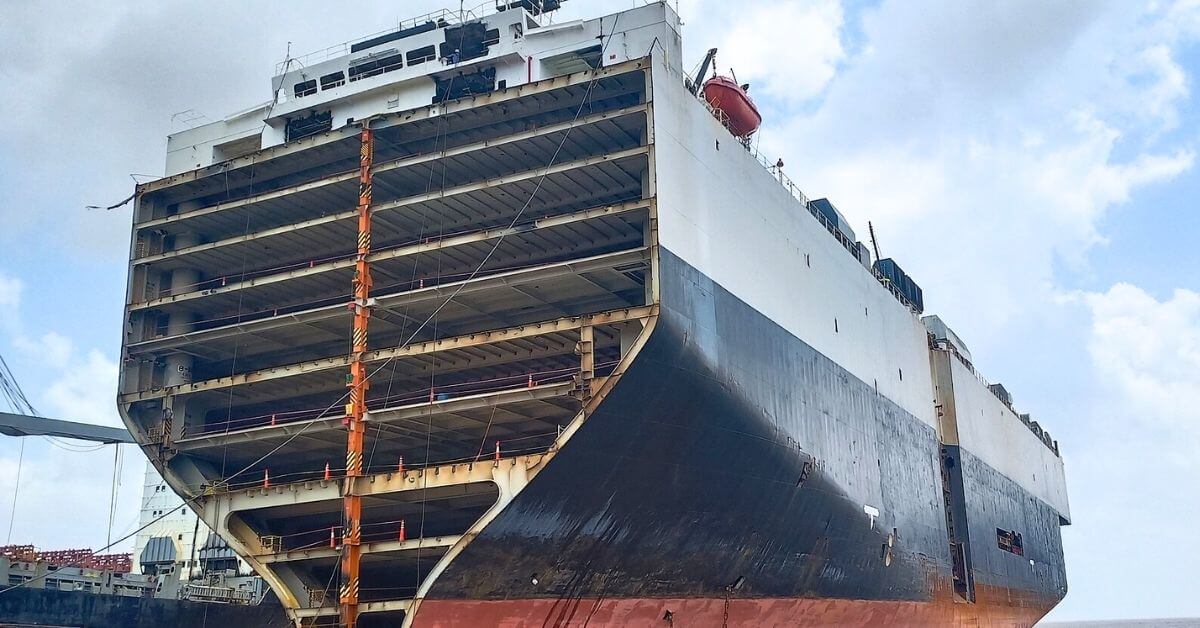
The European Union positions itself as a global leader on climate policy, with some of the most rigorous environmental standards on Earth. Yet a recent study reveals a glaring inconsistency: the vast majority of EU-owned or EU-flagged ships are being dismantled on the beaches of India, Pakistan, and Bangladesh, often under hazardous conditions. This is not a problem that has been outsourced; it is a responsibility that has been discarded. When we consider the data flowing through the new Integrated Subsea Infrastructure Shifts to Enhance Indian Ocean Connectivity and the broader Integrated Subsea Cables Enhance Data Transmission Across the Indian Ocean, we see a region capable of immense logistical sophistication. The irony is that the same ocean highways that connect our digital world are being used to hide the environmental cost of our physical one.
The study's finding that sufficient European recycling capacity exists makes the situation less about capability and more about choice. It is a choice driven by lower labour costs and less stringent oversight, but the bill for that decision is not paid in euros. It is paid in the currency of human health and environmental degradation on the other side of the globe. For our readers, many of whom work in maritime logistics or policy, this is a practical concern, not an abstract one. Every vessel you track, every cargo manifest you clear, has an end-of-life scenario. The current trend suggests that a ship's final voyage is too often a one-way trip to a place where the word "recycling" is a legal fiction. We would tell a reader who asks about this that their leverage is greater than they think. Charterers and owners respond to regulatory pressure and reputational risk. If the EU were to mandate that ships flying its flag be scrapped only in facilities that meet its own standards, the market would adapt within a single fleet renewal cycle. That is the kind of decisive, measurable action the moment demands.
This is not about moralising from a distance. It is about aligning the industry's physical infrastructure with its stated values. The same logic that drives the push for cleaner shipping fuels and efficient hull designs must apply to the shipyard. We are not arguing for the abolition of South Asian shipbreaking; we are arguing for its transformation. The Negotiations Clear Strait of Hormuz for LNG Delivery to Pakistan show that geopolitical and commercial realities in this region are already being managed with nuance and urgency. A similar level of diplomatic attention could be applied to the beaching yards. The technology and the expertise to perform safe, clean recycling exist. What is missing is the political will to enforce a standard that treats the life of a worker in Chittagong with the same value as the life of a worker in Gdansk. The specific detail to watch is whether Brussels will move from acknowledging this asymmetry to legislating against it. If they do, the tide will turn. If they do not, then our ocean intelligence is just another commodity, and our claims of stewardship are merely ballast.