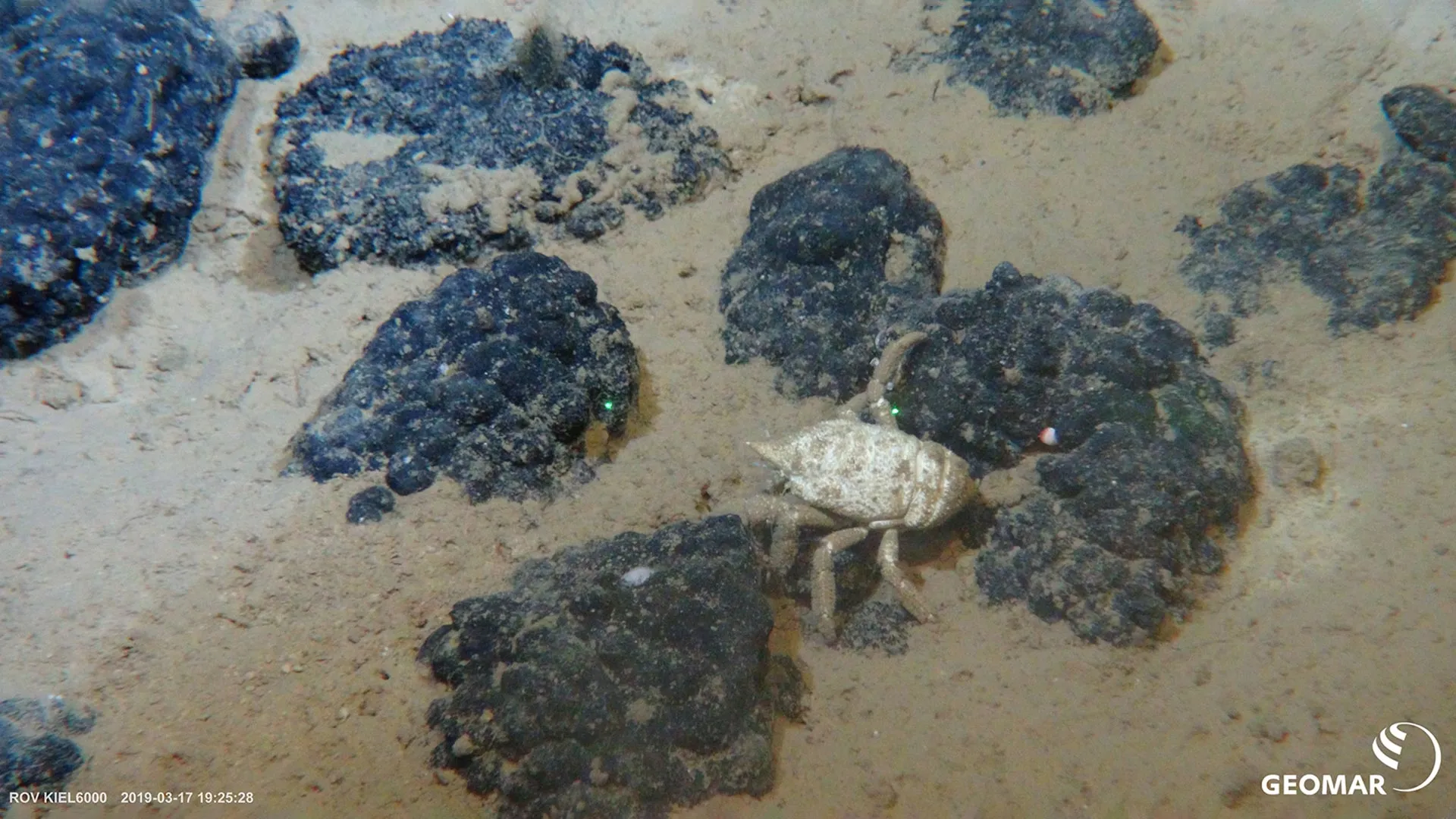
Understanding drives protection. The discovery of thousands of unique animals living inside deep-sea metal nodules is not just a biological marvel, it is a direct challenge to the assumptions underpinning the rush toward deep-sea mining. Researchers examined 244 of these polymetallic nodules, each taking millions of years to form, and found more than 4,100 animals inhabiting their cracks and cavities. These are not transient visitors; they are distinct communities, unlike anything in the surrounding seafloor mud. The finding forces a recalibration of what we consider a viable ecosystem. It also raises an immediate, practical question: can we responsibly extract the metals inside these nodules without destroying the habitats they house? This is not an abstract debate. The same sense of wonder that drives scientists to Discovering wonder in the Southern Ocean's hidden depths now demands that we weigh that discovery against the economic pressures that threaten it.
For our readers, researchers, policymakers, students, the implications are concrete. The nodules are not inert ore; they are three-dimensional habitats. The data show that each rock acts as a miniature reef, providing shelter, surface area, and structural complexity that the surrounding abyssal plain cannot. Removing those nodules would eliminate not just the metal but the entire micro-ecosystem that depends on them. This is a measurable, empirical finding, not a speculative concern. It mirrors the kind of integrated observation we value across ocean science: a single object, studied closely, reveals a network of life that was invisible at scale. The question now is whether our regulatory frameworks are calibrated to account for this kind of hidden biodiversity. As the Hera mission begins dual-front exploration of binary asteroid Didymos, we are reminded that our capacity to explore remote environments, whether in space or on the seafloor, continues to outpace our capacity to protect them.
We cannot claim to practice ocean stewardship while ignoring the biological complexity of the resources we seek to extract. The discovery that a single nodule can host dozens of animal species means that mining is not a surgical removal of metal; it is a systemic disruption of a living structure. This is not an argument to halt all exploration, but it is a demand for precaution. Before any extraction license is granted, we need a baseline survey, longitudinal, peer-reviewed, and publicly available, that accounts for these nodule-dwelling communities. The scientific community has done its part: it has looked closely and reported what it found. Now the burden shifts to regulators and industry to demonstrate that their plans are compatible with the preservation of these ecosystems. The alternative is to proceed blind, which is not innovation, it is negligence.
The specific detail to watch is how international seabed authorities respond to this data. Will they update environmental impact assessments to require nodule-by-nodule biodiversity surveys? Or will they treat these findings as interesting but insufficient to alter mining timelines? The answer will tell us whether our collective ocean intelligence is being used to guide decisions or merely to document losses. That is the open question, and it demands an answer before the first nodule is lifted.