deep sea
World Data Ocean keeps deep sea in one place: 22 stories so far. The section currently leads with “Deploying deep-sea cameras to capture bioluminescent signals in the abyss”, “A decade of empirical data illuminates the ocean's hidden reef ecosystems”, and “Deep-sea survey confirms 200,000 leaking barrels of Cold War radioactive waste”. Bioluminescent flashes in the abyss are among the ocean's most elusive signals, yet capturing them need not require a research vessel's full schedule. A decade of empirical data now reveals the hidden architecture of our ocean's reef ecosystems, measured, validated, and mapped in real-time. A Global Hub for Ocean Intelligence 4 World Data Ocean is a centralized digital platform where researchers, scientists, and ocean enthusiasts converge to… The list below is every deep sea story on World Data Ocean, newest first.
Deploying deep-sea cameras to capture bioluminescent signals in the abyss
Bioluminescent flashes in the abyss are among the ocean's most elusive signals, yet capturing them need not require a research vessel's full schedule. Deploying deep-sea cameras to record those sporadic glimmers, much like neutrino detectors resting in mine shafts, offers a low-cost, passive window into a world we rarely see. Leave the gear to brew while oceanographers tend to other duties; the resulting footage, though punctuated by darkness, promises genuine insight.
A decade of empirical data illuminates the ocean's hidden reef ecosystems
A decade of empirical data now reveals the hidden architecture of our ocean's reef ecosystems, measured, validated, and mapped in real-time. These are not speculative models; they are calibrated observations from orbit to ocean floor. Understanding drives protection. For deeper context on the systemic challenges facing marine environments, see our related coverage on validated data gaps in Europe's marine policy demanding integrated solutions. The science is clear; the call to act is measurable.
Deep-sea survey confirms 200,000 leaking barrels of Cold War radioactive waste
Two hundred thousand barrels of Cold War-era radioactive waste are now visibly leaking on the Atlantic seafloor. A new deep-sea survey confirms what many feared: this historical dumping was never truly contained. The measured data are sobering, but they also empower action. This is not an alarm, it is empirical evidence demanding a calibrated, global response. Understanding drives protection. For more on how we track ocean pollutants, see our coverage of "Seafloor sediment confirmed as a vast plastic pollution reservoir."
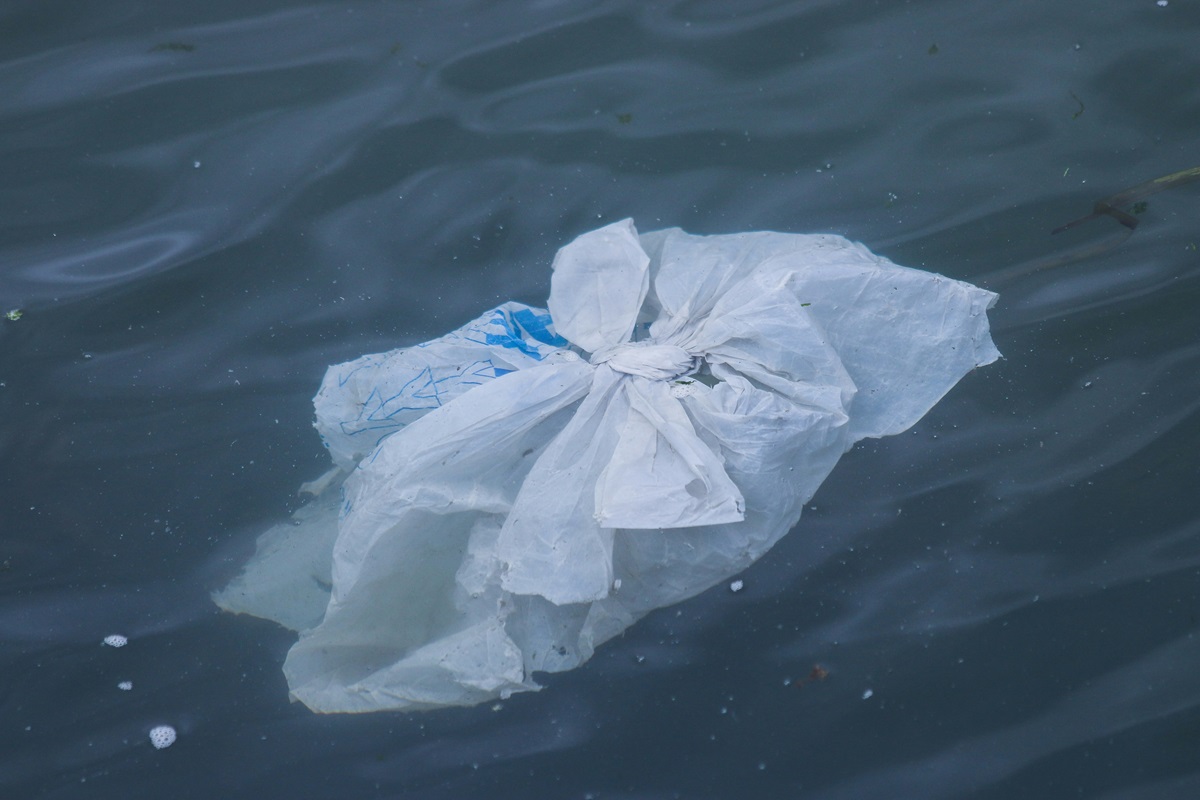
Seafloor sediment confirmed as a vast plastic pollution reservoir
Seafloor sediment has been confirmed as a vast plastic pollution reservoir, according to a world-first study by the Commonwealth Scientific and Industrial Research Organisation. This is not a surface problem, plastic is accumulating in the deep, where it becomes part of the geological record. The finding is a measurable, empirical signal of our impact. Understanding where plastic settles, from the seafloor to the Great Pacific Garbage Patch, is foundational to integrated ocean stewardship.
Life's mass across oceans, land, and deep subsurface mapped with empirical clarity
Life's mass is not evenly scattered across the planet, it is concentrated in distinct realms, from the sunlit ocean surface to the deep subsurface. Empirical mapping now offers a measurable, calibrated view of this distribution, revealing where biomass truly resides. Understanding drives protection. For deeper context on planetary-scale change, explore our related coverage on how seismic records measure a strengthening pulse beneath warming oceans.
Unveiling Ocean Insights: Five Unexpected Facts from World Data Ocean
Beneath the waves, discovery often rewrites what we thought we knew. World Data Ocean's latest findings challenge assumptions about marine life, and the implications are as practical as they are profound. This is the kind of data that sharpens our understanding of ocean intelligence, offering measurable insights for researchers and policymakers alike. It is a reminder that empirical observation still leads the charge in ocean stewardship.
Antarctic Krill Reproduction Linked to Deep-Sea Hydrothermal Vent Activity
New research links Antarctic krill reproduction to deep-sea hydrothermal vent activity, and it changes how we read the Southern Ocean. The study, published in *Communications Biology*, suggests that vent-driven nutrient cycles may influence krill spawning patterns in ways surface observations alone cannot capture. That is a meaningful step toward integrated ocean intelligence, where biological and geological data meet.
Ocean Oxygen Anomalies: Scientists Investigate Unexpected Deep-Sea Presence
Deep-sea oxygen anomalies are surfacing where none should exist, and the data demands attention. Scientists investigating this unexpected presence are recalibrating assumptions about how oxygen behaves below the mesopelagic zone. It is a reminder that our ocean intelligence remains incomplete, even as climate indicators sharpen. Findings like these reinforce why integrated data ecosystems matter; we cannot protect what we do not yet measure. Readers tracking related coastal mysteries may find our recent piece on the Oahu specimen a useful parallel.
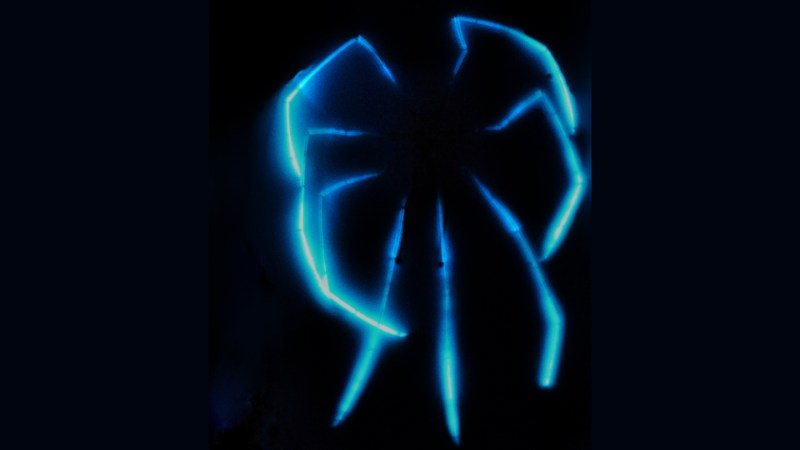
Deep-Sea Spiders Illuminate Trench, Echoing Historical Accounts
A recent expedition to a deep-sea trench near Australia has confirmed that certain sea spider specimens emit a bioluminescent glow, one that may have been documented by 19th-century naturalists. This is empirical evidence bridging historical accounts with modern ocean intelligence. Understanding drives protection. For more on maritime narratives, see our coverage of the bulk carrier grounding near Gladstone. These stories remind us that the ocean's stories, whether biological or industrial, demand our calibrated attention.

Ocean Ingestion: Could a Whale Swallow a Diver Whole?
A sperm whale's throat is large enough to swallow a human, but the mechanics of such an event are far from cinematic. The animal's esophagus is designed for squid, not scuba gear, and its instinct would be to reject anything unfamiliar. Understanding these biological limits sharpens our respect for ocean life. For more on how we track such creatures, explore "Integrated Subsea Cables Enhance Data Transmission Across the Indian Ocean." Curiosity and precision drive real ocean intelligence.
Oarfish Cuisine: Unraveling the Diet of a Deep-Sea Giant
A deep-sea giant with a diet that remains stubbornly out of focus, the oarfish presents a unique challenge for your ceramic work. While squid are indeed part of their menu, pinning down a single species is rare, as their feeding is opportunistic rather than specialized. You can confidently sculpt a squid without locking onto a precise genus.

Deep Ocean Warming: Longitudinal Data Reveals a Concerning Trend.
The ocean's abyss was long considered a stable, slow-motion frontier, but new longitudinal data now shows the deepest layers are warming. This is not a distant anomaly; it is a measurable shift in a system we rely on for climate stability. We find this trend deeply concerning, yet it reinforces why sustained observation matters. As we track these changes, we must connect them to broader disruptions, much like our recent analysis of Atlantic Circulation Weakens, to fully grasp the scale of what is unfolding.
Mapping American Samoa's Depths: An Exploration of Ocean Intelligence.
Beneath the waves of American Samoa lies a terrain as uncharted as it is vital, and this latest expedition turns raw data into actionable insight. We're encouraged by how this work transforms seabed mapping into a tool for stewardship, not just discovery. It's precise, purposeful, and exactly the kind of empirical effort our shared ocean future demands.
Exploring the Mariana Trench: A Hypothetical Descent and Timeline
The Mariana Trench descent is a study in patience as much as depth. A hypothetical plunge from the surface to the Challenger Deep would take roughly two and a half hours, assuming a steady drop. That timeline matters because it frames the real challenge: not just reaching the bottom, but doing so with instruments calibrated to survive the pressure. We find this a useful thought experiment for testing our integrated data ecosystems.

Rare Magnipinna Squid Sighting Highlights Thriving Deep-Sea Ecosystem
A rare Magnipinna squid sighting two days ago by the crew of Nautilus Live offers a compelling glimpse into a thriving deep-sea ecosystem. The dive revealed vibrant corals teeming with life, alongside a chimera and isopods, underscoring the value of sustained ocean observation. Such moments remind us why integrated data systems matter. For further context on how connectivity supports marine research, see our piece on integrated subsea cables enhancing data transmission across the Indian Ocean.
Illuminating the Deep: A Conversation with Ocean Pioneer Dr. Sylvia Earle
Dr. Sylvia Earle has spent a lifetime making the invisible visible, and her latest conversation cuts straight to the heart of why ocean intelligence matters. She speaks with the calm authority of someone who has seen the deep transform, yet her urgency is unmistakable. We admire how she translates complex marine systems into calls for action that feel both personal and collective. For those inspired to explore further, our piece on integrating citizen science for ocean intelligence complements her perspective beautifully.
Ocean Stewardship: A Foundation for Long-Term Human Survival
The deep ocean has already passed the multi-hundred-million-year test, and that is where our focus belongs. Land and space remain fragile, unproven options, while the ocean's stability has quietly outlasted every extinction event. The argument here is not about escape, but about learning to live within a system that has proven its resilience. We should treat the ocean as our primary environment, not a backup plan.

Mapping Deep-Sea Life: Environmental DNA Reveals Biodiversity Hotspots
The northern South China Sea's Qiongdongnan Basin hides a biodiversity puzzle beneath its hydrate-rich seabed, and this eDNA study brings it into focus. By sampling cold seeps, gas hydrate stable zones, and non-hydrate areas, the authors recovered 334 benthic species and found that deterministic processes, particularly variable selection, drive community assembly. That is a measurable step toward understanding these ecosystems. The work also complements our coverage of operational advances like the RAP-Based Mooring System, reinforcing how integrated data sharpens both science and stewardship.
Building a BRUV: Practical Advice for Underwater Video Deployments
Building a BRUV for Lake Erie means engineering for freshwater realities, not just deep-sea assumptions. The 210-foot depth requirement is a solid, measurable target, and the choice between PVC and metal extrusions will hinge on how you balance portability against current stability. Your instinct on diffuse green lighting shows practical thinking about fish behavior, though field testing will be the real validator.
Mapping the Deep: Cook Islands ROV Exploration Set for 2026
In 2026, the Cook Islands will bring its seabed into sharper focus through a dedicated ROV exploration campaign. This is the kind of methodical, on-the-ground ocean intelligence we need more of, moving from satellite-level observation to direct, calibrated observation of the deep. It is a precise step for mapping what remains unseen. For a broader look at how these efforts connect, our piece on mapping American Samoa's seabed offers a useful regional comparison. Understanding drives protection, and this work is a clear example.
Exploring the Cook Islands Depths: A 2026 ROV Mission.
In early 2026, an ROV mission will descend into the waters surrounding the Cook Islands, where the seafloor remains largely uncharted. This is the kind of methodical, empirical work that turns raw data into ocean intelligence. By capturing validated, real-time imagery from the depths, the mission strengthens the integrated data ecosystem that researchers and policymakers rely on. For those tracking how these efforts connect, our piece on NOAA's calibrated ocean intelligence offers useful context. Understanding drives protection, and this expedition brings us closer to both.
Tracking the Elusive Giant Squid: A North Atlantic Research Challenge
The giant squid remains one of the ocean's most persistent mysteries, and this North Atlantic research challenge underscores why. Tracking an animal that rarely surfaces demands more than patience; it requires calibrated, real-time observation across a vast, integrated data ecosystem. The work is difficult, but the potential to turn sparse sightings into empirical knowledge is worth the effort. For context on how such data networks function elsewhere, our related article, "Integrated Subsea Cables Enhance Data Transmission Across the Indian Ocean," offers a useful parallel.