animals
World Data Ocean keeps animals in one place: 5 stories so far. The section currently leads with “Exploring North Wind Group: A Look at Marine Mammal Care Opportunities”, “Incendiamoeba Sets New Limit for Eukaryotic Heat Tolerance”, and “Beyond Dolphins: The Realities of a Career in Marine Biology”. Applying for a marine mammal care role means knowing who holds the animals' welfare in their hands. A single-celled organism has just redrawn the upper limits of complex life. A Global Hub for Ocean Intelligence 4 World Data Ocean is a centralized digital platform where researchers, scientists, and ocean enthusiasts converge to… The list below is every animals story on World Data Ocean, newest first.
Exploring North Wind Group: A Look at Marine Mammal Care Opportunities
Applying for a marine mammal care role means knowing who holds the animals' welfare in their hands. North Wind Group presents an interesting case: the job description reads as standard husbandry, yet the employer's profile remains unclear to many applicants. That uncertainty is worth resolving before you commit. We appreciate the question, as it highlights a practical gap in ocean-career research.

Incendiamoeba Sets New Limit for Eukaryotic Heat Tolerance
A single-celled organism has just redrawn the upper limits of complex life. Incendiamoeba cascadensis can replicate at 145° F, a new record for eukaryotic heat tolerance that recalibrates what we thought possible for organisms with a nucleus. This isn't a marginal uptick; it's a genuine expansion of a biological boundary. The discovery invites us to rethink the resilience of life's building blocks. For deeper context on how survival traits manifest across species, our piece on fossilized dinosaur plumage offers a compelling parallel.
Beyond Dolphins: The Realities of a Career in Marine Biology
The public's image of marine biology often skips straight past the lab work, the data analysis, and the permit applications. It is a field defined by rigorous methodology, not casual swims. The misconception that professionals take time off to play with dolphins dismisses the scientific discipline at the core of this work. As this conversation notes, regional challenges, like those in Brazil, add further layers of complexity.
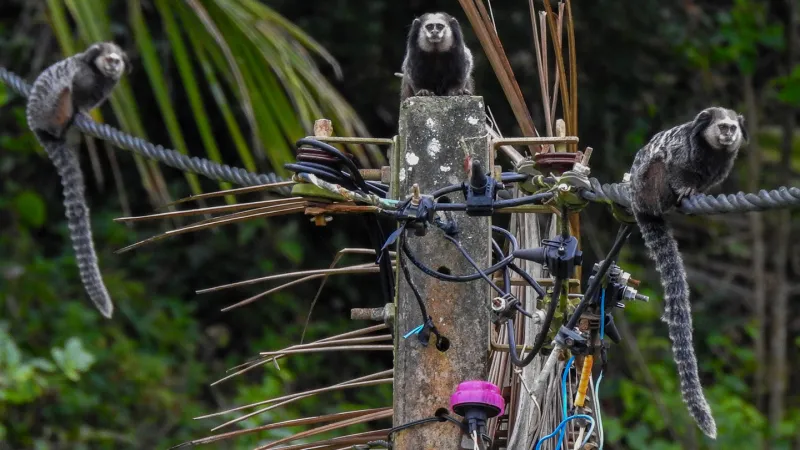
Drought's Reach: Wildlife Migration May Trigger Yellow Fever in Brazil
Drought can move more than dust. In Brazil, animals driven to find water carried the forest into the city, and may have triggered the country's first yellow fever outbreak in decades. That chain, from thirsty wildlife to urban transmission, is a stark measure of how climate stress reshapes disease risk. It is a reminder that ecological disruption rarely stays in the wild. For broader context on climate-driven change, see our piece on Atlantic Circulation Weakens: Global Climate Reshaping Predicted.

Rare Magnipinna Squid Sighting Highlights Thriving Deep-Sea Ecosystem
A rare Magnipinna squid sighting two days ago by the crew of Nautilus Live offers a compelling glimpse into a thriving deep-sea ecosystem. The dive revealed vibrant corals teeming with life, alongside a chimera and isopods, underscoring the value of sustained ocean observation. Such moments remind us why integrated data systems matter. For further context on how connectivity supports marine research, see our piece on integrated subsea cables enhancing data transmission across the Indian Ocean.