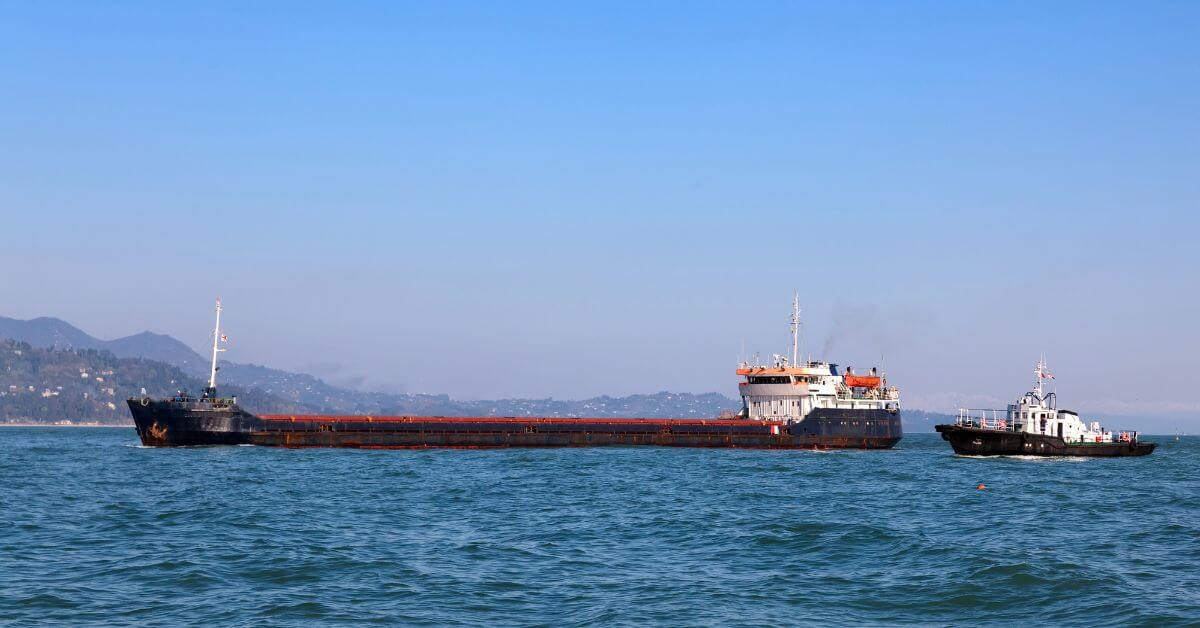
A collision in a narrow Norwegian fjord is rarely just a navigation error, it is a stress test of the systems we rely on to keep maritime trade moving safely. The incident in Valderhaugfjorden, where the tanker Xanthia struck the bulk carriers Bergfjord and Hav Frakt in darkness and poor visibility, has already triggered a formal detainment, a police investigation, and the identification of three suspects for reckless navigation. For an industry that operates globally but often learns locally, this event offers a calibrated, real-world measure of how quickly accountability and safety protocols can, and must, activate. It also stands in contrast to other recent maritime incidents where transparency has been far less assured, such as the Delayed reports confirm five IRGC vessel incidents in the Strait of Hormuz and the Baltic Cargo Route Disrupted as Gulf of Finland Vessel Detained, where geopolitical fog made cause and consequence harder to parse.
Our view is that the Norwegian response sets a benchmark for empirical, evidence-based maritime governance. No injuries, no spill, and a full chain of custody from Mayday call to medical testing to AIS data review. That is not luck, it is the result of integrated systems: coastal radio, the Joint Rescue Coordination Center, a frigate on standby, and inspectors from both the Norwegian Maritime Authority and DNV aboard the vessels within hours. The police have already ruled out alcohol and drugs among the crew, and the Norwegian Safety Investigation Authority is collecting electronic traces to reconstruct the sequence. This is ocean intelligence in action, not abstract data, but a measurable, validated process that determines whether a ship like the Xanthia is fit to sail to Finland for repairs or must remain detained until its hull meets approval.
The practical takeaway for our readers, whether you operate fleets, manage risk, or study maritime safety, is this: the difference between a minor collision and a systemic failure often comes down to the speed and rigor of the investigation that follows. In Valderhaugfjorden, the investigation began before the ships were even berthed. Three suspects were identified within 24 hours, but no formal charges have yet been filed, leaving open the question of whether the darkness and narrow geometry of the fjord will be treated as a contributing factor or a failure of watchkeeping. That distinction matters. It will shape how similar passages are navigated in the future, and it reinforces why peer-reviewed, longitudinal data on vessel movements and crew actions is essential to improving safety in confined waters. Meanwhile, the fact that the Xanthia was allowed to proceed under its own power while the Bergfjord and Hav Frakt remain detained shows that the Norwegian authority is calibrating its enforcement to the specific damage profile, not applying a blanket rule. That is the kind of precise, empirical judgment the maritime industry needs more of, and it is the detail to watch as the full investigation unfolds.