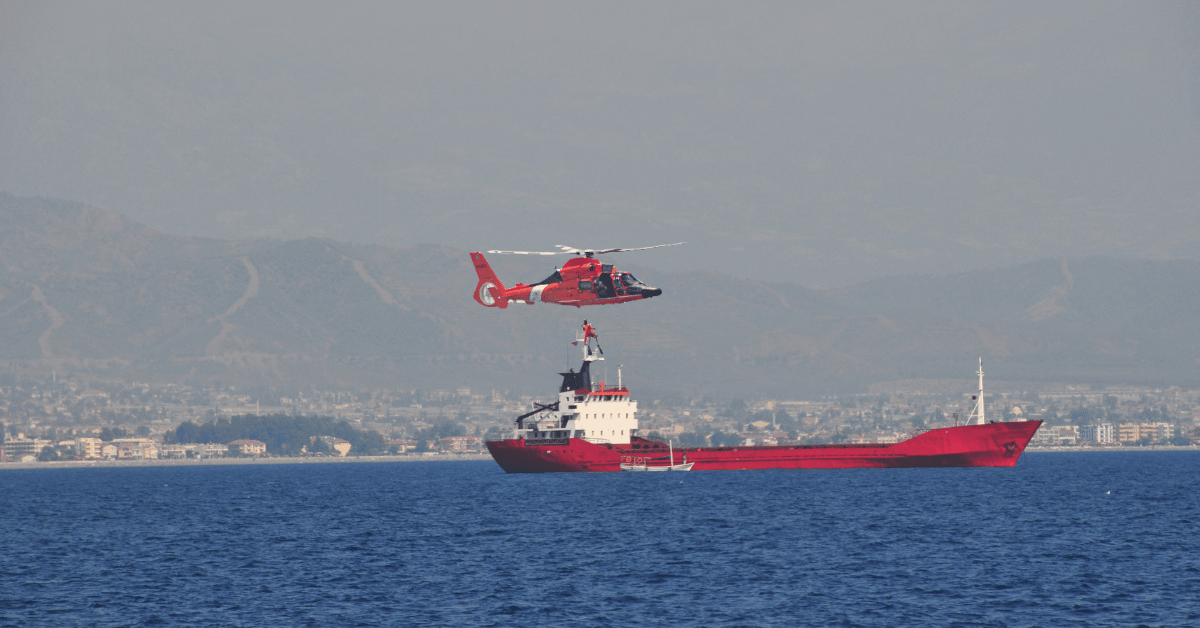
Four mariners were hoisted from an oil tanker near Vieques this week, and the operation itself was routine. The real story is what it reveals about the hidden vulnerabilities of the global shipping system and the quiet, coordinated response required to address them. This was not a headline-grabbing explosion or a catastrophic fire, but a suspected case of food poisoning aboard the Cyprus-flagged M/V Daibelli. Yet the response, a Coast Guard MH-60T Jayhawk crew, Customs and Border Protection, the Public Health Service, Puerto Rico's emergency medical services, and a regional hospital, shows that even a "minor" medical event at sea demands a calibrated, multi-agency infrastructure that most people never see.
Compare this to recent tragedies that have dominated maritime news. In the Persian Gulf, a Filipino seafarer was killed in an explosion aboard the oil tanker MT Velos Sapphire, a stark reminder of the physical dangers inherent in tanker operations. And in the Gulf of Oman, the UAE National Guard rescued all 22 crew from a burning cargo vessel, a successful evacuation, but one that underscores how quickly routine work can turn into a life-or-death scramble. The Daibelli case sits in a different category: it is a preventable, non-structural failure that nonetheless required the same level of coordinated emergency response as a fire or explosion. Tragedy in the Gulf: Filipino Seafarer Lost in Tanker Explosion and UAE National Guard confirms 22 crew rescued from burning cargo vessel both highlight acute crises; the Daibelli incident highlights a chronic vulnerability that rarely makes the news.
Our take is straightforward: the maritime industry needs to treat crew health with the same empirical rigor it applies to hull integrity and cargo management. Food poisoning aboard a vessel is not an anomaly, it is a predictable risk of extended voyages, closed environments, and supply chains that often operate with minimal oversight. The Coast Guard's ability to hoist four crew members from a tricky position off Vieques is a testament to training and readiness. But the fact that a tanker master had to call for a medical evacuation over what is, on land, a treatable condition points to a gap in onboard prevention and care. The crew of the M/V Daibelli were lucky that Rescue Sub-Center San Juan was listening and that an MH-60T was available. Not every vessel operates within a nautical mile of a U.S. territory with a helicopter and a hospital waiting.
This should push operators and regulators to ask harder questions about what happens below deck when no one is watching. An electrical fault in a laundry room can torch a chemical tanker, as we saw in a recent incident where crew evacuated before an explosion. Electrical fault at sea: chemical tanker lost after crew evacuates pre-explosion is a different failure mode, but the root cause is the same: systems that are not validated under real-world conditions. Food safety protocols, medical training, and onboard sanitation are part of that system. The specific detail to watch is whether the Daibelli's flag state or the vessel's manager conducts a follow-up investigation into how the food contamination occurred, and whether they share those findings publicly. That would turn a rescue story into a data point for prevention.