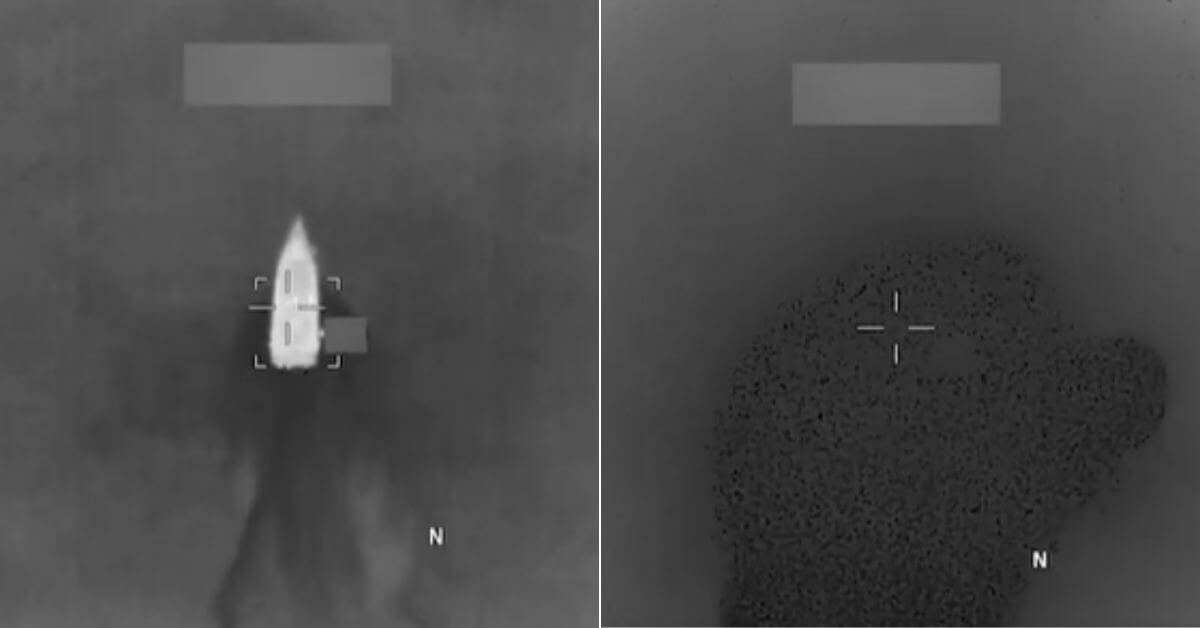
The U.S. military's strike on a suspected drug boat in the Caribbean, killing four people, raises a troubling question that demands an answer grounded in empirical evidence, not operational urgency: what validated intelligence is driving these lethal decisions? As part of a campaign that has now killed at least 235 people across 70 strikes since September, the October 4 attack typifies an approach where measurable outcomes in human lives are not matched by transparent, peer-reviewed evidence linking each vessel to criminal activity. For our readers, researchers, policymakers, and informed citizens, this is a moment to demand calibration between security objectives and the standards of accountability that underpin legitimate governance.
The rationale from U.S. Southern Command is clear: confirmed intelligence revealed "active involvement in narco-trafficking." Yet the military has provided no publicly available, real-time evidence that drugs were aboard the go-fast boat. This opacity contrasts sharply with the kind of integrated data ecosystems we advocate for ocean stewardship, where Enforcement action halts fuel shipment bound for Cuba in Gulf transit, a case where a vessel was boarded and actionable evidence led to a specific, non-lethal interdiction. The difference is not merely procedural; it is about whether force is being applied as a calibrated instrument or as a kinetic default. In the Manori incident, Tragic incident off Manori highlights risks of unregulated vessel access, unregulated vessel access led to deaths, but the response was a tragedy of circumstance, not a policy of pre-emptive strikes. Applying those same principles of verification and regulated access to maritime security operations is both prudent and achievable.
The administration frames these strikes as an armed conflict with cartels, and President Trump has linked them directly to fatal drug overdoses. That causal chain, however, lacks the longitudinal, climate-indicator-level rigor we expect from serious policy analysis. Drug trafficking is a measurable threat, but treating every go-fast boat as a validated target, without public evidence of contraband or chain-of-custody documentation, erodes the distinction between enforcement and extrajudicial action. When the U.S. seeks joint military operations on the territory of Colombia, Guatemala, and Honduras, as Defense Secretary Hegseth outlined in Panama, the credibility of those partnerships rests on shared standards of empirical proof. Guatemala's denial of any such agreement underscores the diplomatic cost of operating without clear, integrated protocols.
What remains to be watched is whether the administration will release the intelligence products that justified these 70 strikes. Until that data is made available for independent, peer-reviewed assessment, the campaign operates in a vacuum of accountability that undermines both its stated purpose and its long-term legitimacy.