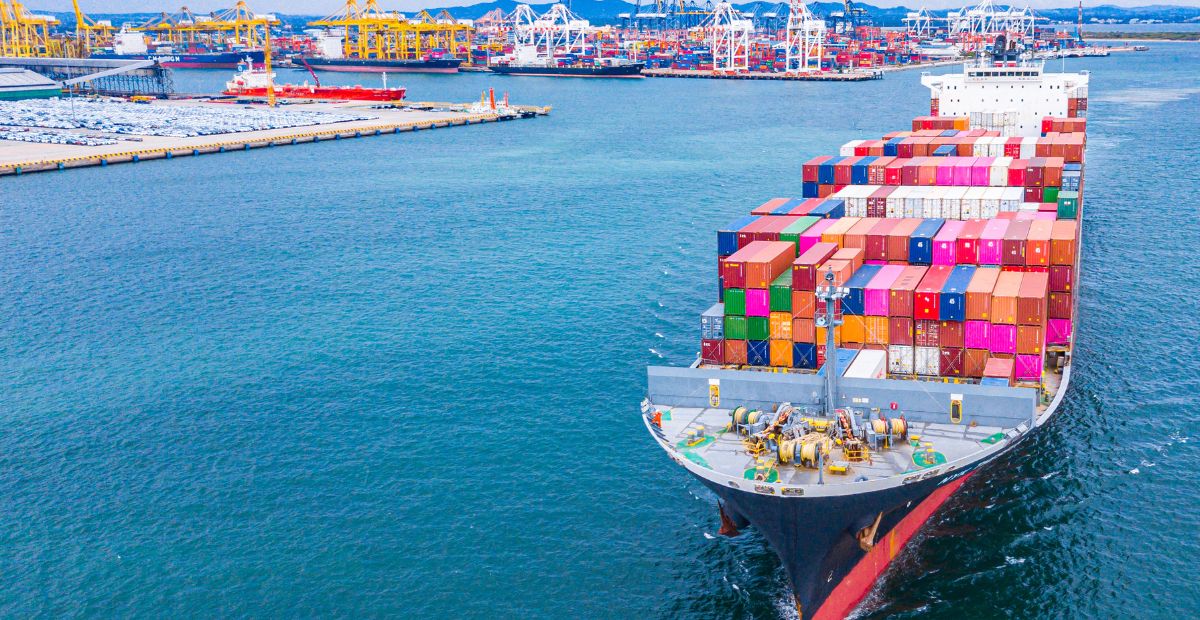
The PanStar Acro's round-trip through Arctic waters is a validated proof of concept, not a commercial breakthrough. South Korea's first commercial container vessel to transit the Northern Sea Route docked in Busan on October 11 after 50 days at sea, and while the voyage confirms the passage is physically viable, the cargo numbers tell a more measured story. The ship carried 737 TEU against a targeted 1,300 TEU, a utilization rate that underscores how far this route is from replacing established lanes like the Suez Canal.
The time savings are real and worth stating plainly: Busan to Rotterdam took roughly 22 days, compared to 30 to 40 days via Suez. That is an 8 to 12 day advantage, and for shippers moving time-sensitive goods, that margin matters. But the PanStar Acro's modest load factor suggests the route's economic case remains unproven. Arctic transit is not merely a faster path; it is a narrower one, subject to ice conditions, seasonal windows, and geopolitical friction along Russian waters. The vessel's six-day delay beyond its scheduled return is a reminder that Arctic schedules are provisional, not fixed.
President Lee Jae-myung's pledge to prepare for an "Arctic shipping era" and the government's goal of regular services by 2030 are ambitious, but ambition alone does not fill containers. The practical question is whether shippers will pay a premium for speed when capacity is constrained and routing is contingent. The trial also carries strategic weight beyond economics. As we noted with the Strait of Hormuz tanker strikes, commercial shipping is increasingly exposed to geopolitical chokepoints. Arctic routes offer an alternative corridor, but they run through Russian waters, introducing a different set of dependencies. The same logic applies to the forward-deployed destroyer’s maintenance in Spain: infrastructure readiness and route reliability are intertwined, and no single passage solves the broader fragility of global maritime logistics.
What matters now is not the successful trial itself but the data it produced. The PanStar Acro's voyage yields empirical measurements on ice navigation, fuel consumption, and port turnaround under Arctic conditions. Those metrics, peer-reviewed and integrated into operational models, will determine whether 2030 regular service is feasible or aspirational. The takeaway is specific: watch the utilization rate on the next scheduled attempt. If a second commercial crossing approaches full capacity, the route has momentum. If it repeats at 50 percent, the Arctic remains a strategic option, not a commercial one. Busan's ambition to become a global maritime hub depends less on celebrating this voyage and more on proving the route can carry the cargo that matters.