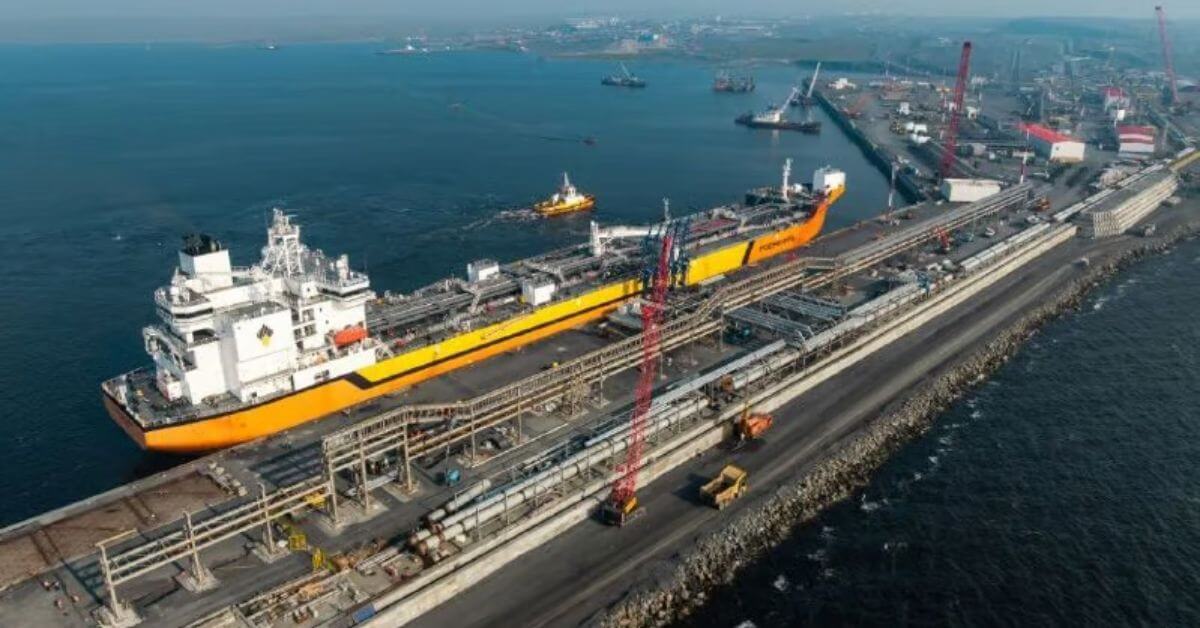
The first cargo of crude from the Vostok Oil project has moved through the Northern Sea Route, and that single fact carries more weight than the barrel count suggests. This is not a routine shipping update. It is a signal that Russia is converting its Arctic infrastructure into a working export corridor, and that the route's commercial viability now has a second, persistent anchor. The vessel's passage is the practical result of years of investment, sanctions pressure, and recalibrated logistics. For those of us tracking ocean intelligence, this is less about geopolitics in the abstract and more about how a new, long-term supply stream alters the rhythm of Arctic shipping.
The timing is deliberate. As Russia Calibrates Export Revenue for Northern Sea Route Icebreaker Fleet, the Vostok cargo provides a tangible revenue base to justify that spending. You do not build icebreakers on projected tonnage alone; you build them on committed cargo. This shipment is the first measurable proof that the route can generate the kind of consistent, high-volume traffic needed to amortize a state-backed fleet. Meanwhile, the Vostok Project Launches Arctic Oil Exports Amid Geopolitical Shifts makes clear that Western sanctions did not stop the project; they reshaped its timeline and its buyers. The question now is not whether the route will be used, but how often, and at what cost to the marine environment.
Our read is straightforward: this is a measurable shift in Arctic logistics, not a headline. The practical consequence for shipping operators and policymakers is that the Northern Sea Route now has a second major commodity stream, and that changes the risk calculations for everyone else. For the industry, this is not merely a new cargo; it is a validation of the route's year-round potential, even under constrained conditions. That said, the operational reality is more sober. As we noted when covering Russian drone activity in the Mediterranean, Russian Maritime Activity Raises Concerns of Drone Operations in Mediterranean, the same state apparatus supporting these commercial ventures is also expanding its maritime security footprint. The Arctic is not a detached, purely commercial zone; it is another domain where commercial and strategic interests are increasingly difficult to separate.
The detail to watch is the next six months. One cargo establishes feasibility; a second and third establish reliability. If the Vostok stream maintains a quarterly cadence through the winter months, it will confirm that the route is not seasonal symbolism but a functioning export pipeline. That would force insurers, shipping lines, and climate researchers to update their models, not just their maps. The icebreaker funding model depends on this volume, and the route's credibility depends on the icebreakers showing up. For now, the first barrel has done its job: it has made the route real. The question is whether the second and third will follow, because that is where the data, and the impact, begin to accumulate.