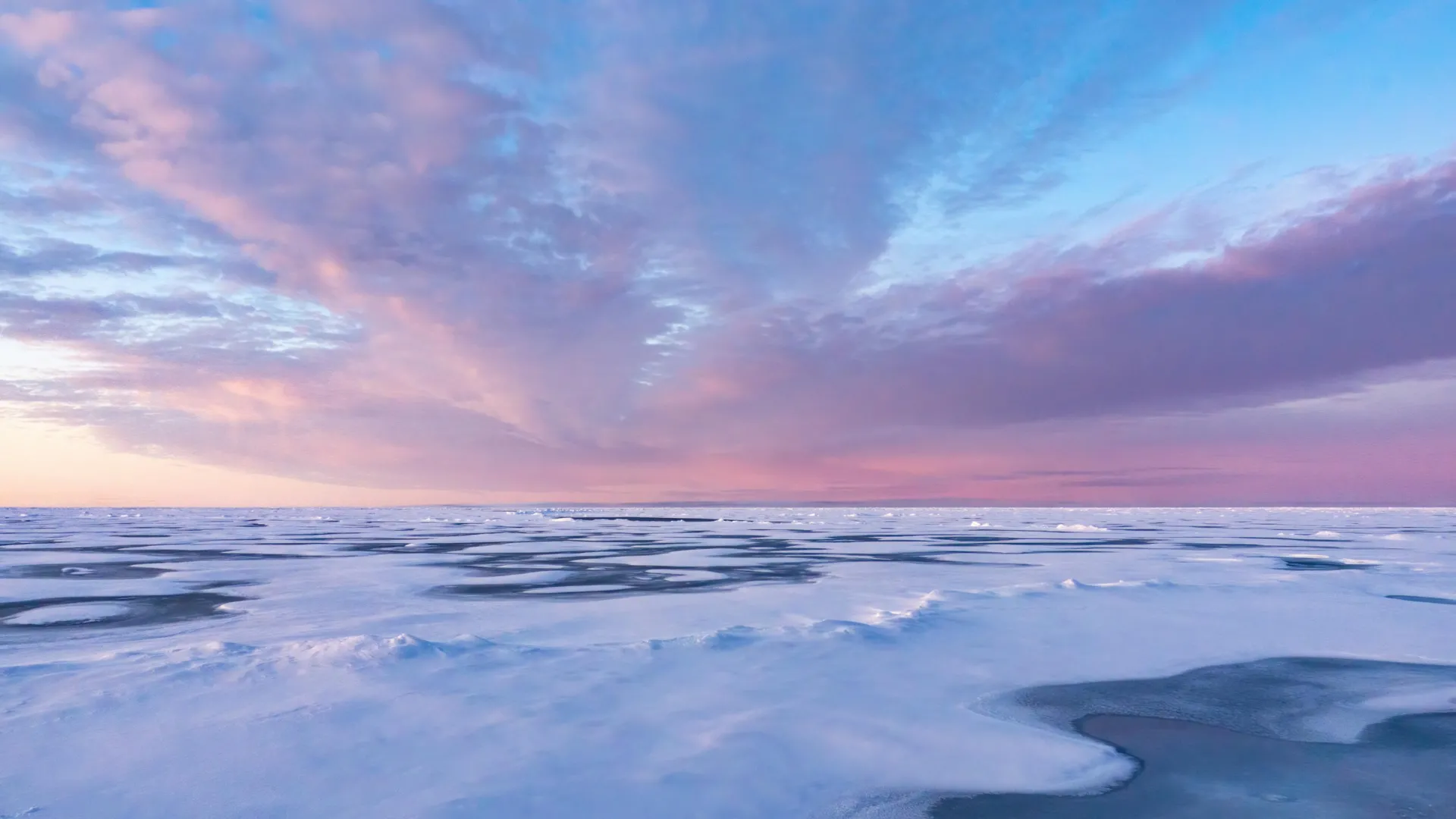
The Arctic is not a static system, and this discovery proves that our models are still missing pieces of the puzzle. A newly identified process near melting sea ice shows that sunlight can trigger chemical reactions with compounds from the ocean, algae, and ice, multiplying cloud-seeding particles by as much as 50 times in a single day. This is not a minor adjustment; it is a significant amplification that could alter how we understand cloud cover and its role in regulating Arctic temperatures. As the ice edge retreats, this active region is expanding, meaning the effect could become more influential over time. The urgency here is not just about adding a new variable to a simulation; it is about correcting a blind spot in our understanding of the entire climate system.
What makes this finding particularly relevant is its connection to the broader infrastructure and economic shifts happening in the region. As Russia Calibrates Export Revenue for Northern Sea Route Icebreaker Fleet and the Vostok Project Launches Arctic Oil Exports Amid Geopolitical Shifts signal increased industrial activity, the environmental dynamics of the same waters are changing in ways we are only beginning to measure. These developments are not isolated; they are part of a larger picture where human activity and natural processes interact in complex, often unpredictable ways. The cloud-seeding boost is a reminder that the Arctic is not just a passive recipient of climate change but an active participant, with feedback loops that can either accelerate or temper warming depending on how they evolve.
For our readers, the practical implication is clear: climate models are not yet fully calibrated to account for this process. Scientists are now pushing to integrate this mechanism into their projections, but until then, the likely outcomes for Arctic warming remain uncertain. This is not an abstract concern for researchers alone; it affects policymakers, industries, and communities who rely on accurate forecasts for planning and adaptation. The takeaway here is that we are dealing with a system that is more responsive and more sensitive than previously assumed. As one researcher might put it, "The Arctic is giving us a new signal, and we need to listen before we can predict." The specific detail to watch is whether this process, once modeled, amplifies or dampens the region's warming trajectory. That answer will not come quickly, but it will be a critical step toward refining our climate intelligence.