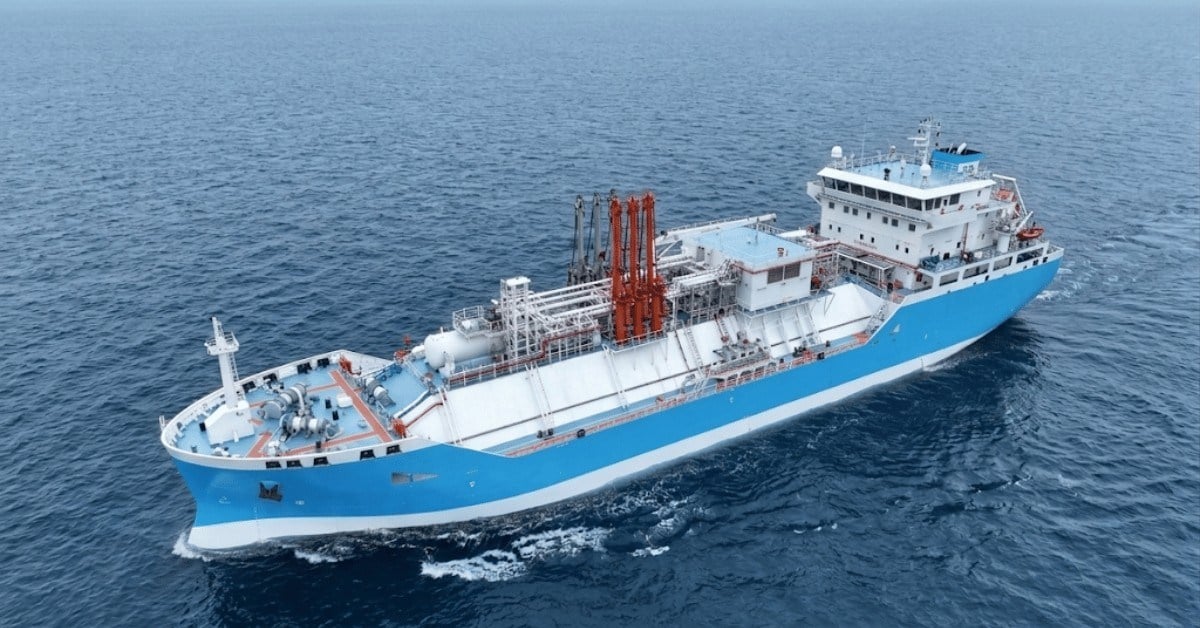
The recent Approval in Principle (AiP) granted to HD HHI and HD KSOE for their ammonia bunkering vessel design represents a significant, albeit incremental, step toward decarbonizing the maritime sector. The development, validated by the American Bureau of Shipping, underscores the growing momentum behind ammonia as a viable alternative fuel for shipping, a sector currently heavily reliant on fossil fuels. This isn't the first time we've seen a bunkering vessel concept receive AiP; a similar endorsement was recently given for an LNG bunkering ship New 22,000 m³ LNG Bunkering Ship Concept Receives AiP from American Bureau of Shipping, highlighting the parallel efforts being pursued to transition to cleaner fuels. However, ammonia presents unique challenges, particularly regarding safety and infrastructure, making this approval a particularly noteworthy milestone. The ongoing difficulties with the bulk carrier Cape Falcon Refloating Efforts Unsuccessful; Bulk Carrier Remains Grounded Near Gladstone, and the heightened vigilance regarding underwater infrastructure as demonstrated by recent Finnish exercises Finnish Authorities Board Ship In Baltic Sea During Live Exercise To Protect Undersea Cables, further emphasize the need for robust safety protocols and comprehensive risk assessments as the industry shifts toward alternative fuels.
The complexity of transitioning to ammonia as a maritime fuel extends beyond simply designing a suitable vessel. It demands a holistic, integrated data ecosystem to manage the risks associated with ammonia’s handling and storage. Ammonia is significantly more challenging to handle than traditional marine fuels due to its toxicity and potential for corrosion. The design of these bunkering vessels, therefore, must incorporate advanced safety systems and robust leak detection capabilities. Furthermore, the development of port infrastructure capable of storing and distributing ammonia is crucial. This requires significant investment and coordinated effort across governments, port authorities, and fuel suppliers. The AiP from ABS is a critical validation of the design’s safety and feasibility, but it’s only one piece of a larger puzzle. A successful transition will hinge on the development of comprehensive operational procedures, rigorous training programs for personnel, and the establishment of clear regulatory frameworks.
The decision to focus on a 22,000 cubic meter capacity vessel suggests a phased approach to adoption, likely targeting larger vessels and established shipping routes initially. This calibrated strategy allows for the accumulation of operational experience and refinement of safety protocols before scaling up to larger vessels and more complex operations. The integrated nature of this development, involving both design and classification approvals, signals a commitment to meeting rigorous standards. The longitudinal data generated from the operation of these vessels will be invaluable in refining risk assessments and optimizing operational efficiency. This empirical data will be critical for informing future design iterations and ensuring the long-term viability of ammonia as a marine fuel. The ocean intelligence derived from monitoring vessel performance and environmental impact will be key to validating the sustainability claims associated with this transition.
Ultimately, the approval of this ammonia bunkering vessel design represents a tangible move toward a more sustainable maritime future. However, significant hurdles remain. The widespread adoption of ammonia fuel hinges on the resolution of safety concerns, the development of necessary infrastructure, and the ongoing refinement of operational best practices. A key question to watch moving forward is whether the cost of ammonia production and bunkering can be brought down to a level competitive with traditional fossil fuels, thereby incentivizing widespread adoption and truly realizing the potential of this promising alternative.