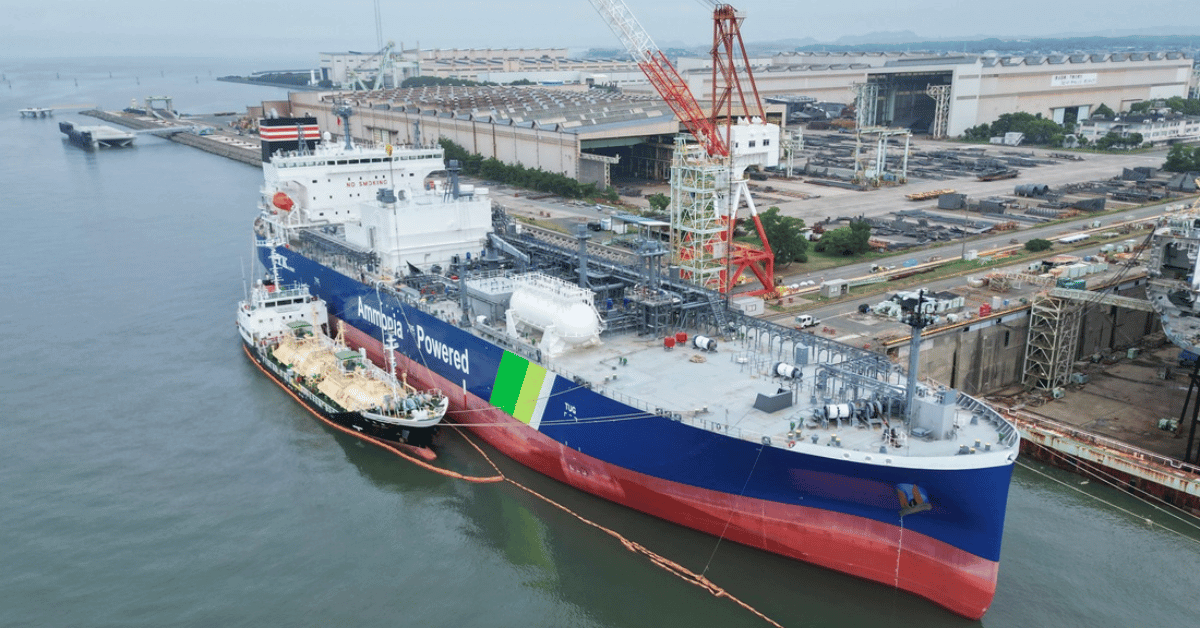
The first ship-to-ship ammonia bunkering operation, completed by NYK Line and its Japanese partners, is not a headline for its own sake. It is a calibrated proof point. For an industry that has spent years theorizing about alternative fuels, this operation moves the conversation from concept to logistics. It tells us that ammonia, despite its toxicity and handling challenges, can be transferred safely between two vessels at sea. That is a measurable step forward, and we would do well to treat it as such rather than as a triumph.
This milestone connects directly to the broader infrastructure work we have been tracking. The recent approval for an LNG-ammonia dual-cargo bunkering vessel shows that the design side is keeping pace with operational reality. And the LNG truck refueling operation at Tenerife Port demonstrates that the shift toward alternative fuels is not a single dramatic event but a steady integration of new systems across different scales. Optimizing Container Terminal Efficiency Through Integrated Crane and Truck Coordination reminds us that the efficiency of these fuel transitions will depend heavily on how well ports coordinate their existing machinery and workflows. Validated Design: LNG Bunkering Vessel Earns Approval for Dual Fuel Capability reinforces that the capital investment in dual-fuel capacity is already being validated by classification societies. And LNG Truck Refueling Marks Tenerife Port’s Sustainable Shipping Advance shows that smaller, more frequent operations are building the operational muscle memory that large-scale ammonia bunkering will eventually rely on.
What makes this operation significant is not the novelty of ammonia as a fuel, but the demonstrated ability to handle it in a ship-to-ship transfer. Bunkering is the moment of highest risk in any fuel changeover, and doing it safely at sea sets a practical precedent. The next question is not whether ammonia can work, but how quickly the necessary supply chain and port infrastructure can be calibrated to support it at scale. We would tell a reader asking about this story that the real signal is in the operational data being generated right now. This is empirical evidence that the industry can move beyond pilot projects and into repeatable procedures.
The takeaway to quote is this: ammonia bunkering has moved from a design aspiration to a validated procedure, and the pressure now shifts to scaling the supporting ecosystem. Watch how quickly other major shipping nations and ports adopt similar ship-to-ship protocols. The specific detail to monitor is whether this operation leads to revised safety guidelines and crew training standards. That is where the real test lies.