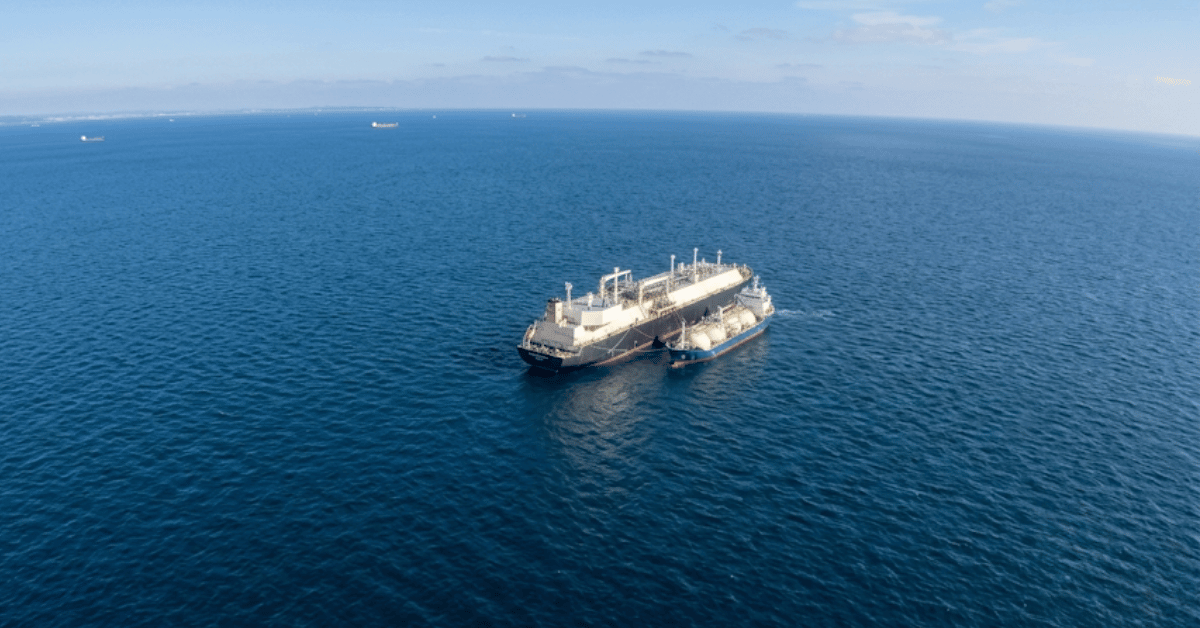
Approval in principle from the American Bureau of Shipping is rarely a headline-grabbing event, but the design it validates deserves attention. Hanwha Power's 22,000-cubic-meter LNG bunkering vessel is not merely another iteration of existing tonnage. The dual-cargo capability, allowing the ship to carry both LNG and ammonia, combined with hybrid propulsion, signals something more deliberate: a move toward infrastructure that does not lock operators into a single fuel pathway. For an industry often criticized for hedging its bets, this is a concrete bet on flexibility itself.
The practical implications for our readers, whether they manage fleets, plan fuel supply chains, or advise on decarbonization strategy, are immediate. A bunkering vessel that can switch between LNG and ammonia without a major conversion is an asset that remains relevant as ammonia's role in the maritime energy transition matures. This is not about choosing a winner among alternative fuels; it is about building the integrated data ecosystem and physical infrastructure that lets the market decide. The hybrid propulsion element further reduces the vessel's own carbon footprint while in operation, a detail that matters when the entire value chain, not just the cargo, is under scrutiny. We would tell a reader who asks, "Is this just another design study?" that the distinction between a paper project and an approved design is the difference between a concept and a commitment. The AiP means the class society has reviewed the engineering, the safety cases, and the operational parameters, and found them sound. That is not a trivial validation.
This development also sits within a broader pattern we have been tracking. The related approval for Ammonia Bunkering Vessel Design Receives Approval, Advancing Sustainable Maritime Fuels from HD HHI and HD KSOE shows that the dual-fuel or multi-fuel approach is not an outlier. Meanwhile, the analysis on Optimal LNG Carrier Design: Boosting Capacity, Reducing Costs from LR reminds us that efficiency gains at scale remain a parallel priority. The distinction is worth making: one set of designs chases lower unit transport costs for LNG, another chases fuel flexibility for bunkering. Both are necessary, but they address different bottlenecks. The Hanwha design tackles the chicken-and-egg problem of ammonia availability by ensuring the vessel can carry it without abandoning its LNG capability. That is a pragmatic answer to a question that has stalled many boardroom discussions.
What we would watch closely is the operational transition. The design's approval does not answer how the crew will be trained to handle ammonia as a cargo, nor does it clarify the regulatory framework for ammonia bunkering in major ports. These are not minor details. The open question is whether the first vessels will be built to this spec or whether the market waits for a few more data points. For our readers, the takeaway is direct: the infrastructure for a multi-fuel future is no longer theoretical. The concrete point to monitor is the next phase, whether Hanwha moves from approval to a firm order, because that will tell us if the demand side is ready to match the engineering.