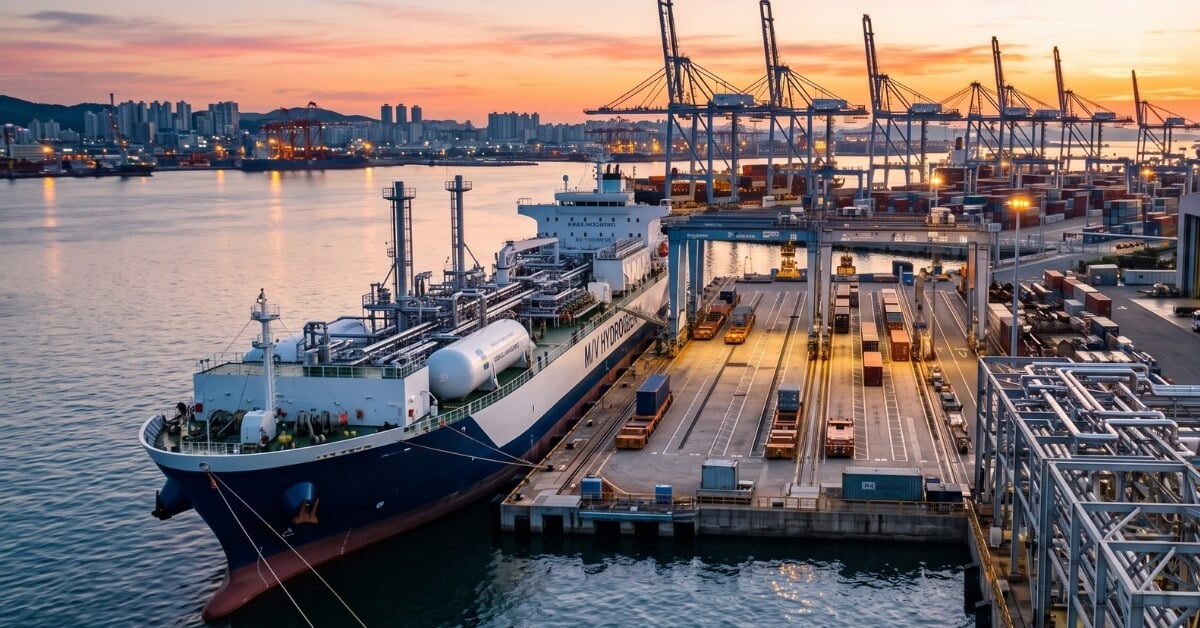
A memorandum of understanding signed by ABS and three Korean maritime organizations signals something more significant than a routine agreement. It represents an attempt to establish international standards for hydrogen-powered and smart ships before the industry fragments into competing regional approaches. The maritime sector has long operated on consensus, but the pace of technological change now demands coordination that matches the urgency of the challenge.
This initiative connects directly to broader questions about maritime readiness and ocean data capabilities. As India Projects Expanded Naval Fleet to Navigate Evolving Maritime Landscape demonstrates, nations are already positioning for a more contested and complex ocean environment. Similarly, the recent Collaborative Shipbuilding Initiative Advances Ocean Data Capabilities in India highlights how shipbuilding partnerships are increasingly tied to data collection and environmental monitoring. Standards for smart ships are not merely technical conveniences. They are the connective tissue between vessel design, operational safety, and the integrated data ecosystems that will define how we understand and protect the ocean.
What makes this agreement noteworthy is the timing. Hydrogen propulsion and autonomous systems are no longer experimental concepts confined to research papers. They are moving toward commercial deployment, and the gap between innovation and regulation is closing faster than many anticipated. Without agreed-upon standards, shipowners face uncertainty about compliance, classification societies face conflicting requirements, and ports face difficulty planning infrastructure. The MOU signals that key maritime stakeholders recognize this window of opportunity.
For our readers, the practical takeaway is direct: the ships being built today will still be operating in 2040. Decisions about standards now will shape operational realities for decades. This is not an abstract policy discussion. It affects vessel certification, crew training requirements, insurance calculations, and port acceptance criteria. A ship designed to meet one set of standards may find itself restricted from routes where different requirements apply. The cost of fragmentation would be measured in delays, retrofits, and stranded assets.
We would tell a reader asking about this development to watch which specific standards emerge and how quickly they gain adoption beyond the signatories. The involvement of ABS, with its global classification reach, gives this effort credibility. But the real test will be whether other classification societies and maritime administrations align with these standards or develop parallel frameworks. The recent Maritime Interdictions Yield 25,000 Pounds of Cocaine, Supporting Ocean Security underscores that maritime cooperation has tangible security dimensions. Standards for smart ships carry similar weight for economic and environmental security.
The specific detail to monitor is how these standards address interoperability between hydrogen systems and existing vessel infrastructure. Hydrogen bunkering, storage, and safety protocols remain inconsistent across ports and flag states. A global framework that resolves these inconsistencies would deliver measurable value. One that leaves them unresolved would merely add another layer of complexity to an already intricate regulatory environment. The MOU is a promising step, but standards only matter when they are adopted, enforced, and proven in operation. That is where the real work begins.