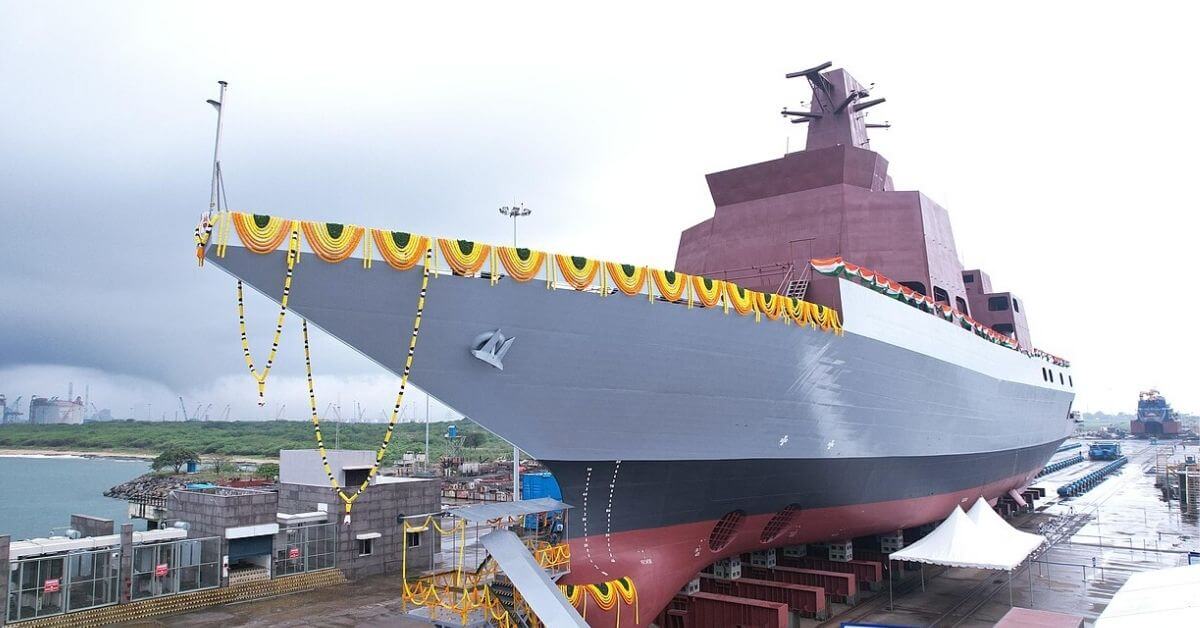
The Indian Navy's acceptance of the indigenous multi-purpose vessel *Samarthak* is not just another hull in the water. It is a calibrated statement about how maritime power is exercised in a region where readiness is measured in seconds, not seasons. The vessel's ability to launch and recover aerial, surface, and underwater targets for gunnery and anti-submarine warfare drills addresses a persistent bottleneck: realistic training. Without realistic practice, even the most advanced sensors and weapons remain theoretical. This ship turns theory into muscle memory.
This development lands alongside the Navy's broader ambition to field roughly 230 ships by 2040-2045, as outlined in our coverage of India Projects Expanded Naval Fleet to Navigate Evolving Maritime Landscape. That projection is not about size for its own sake; it is about distribution of capability across a contested environment. A fleet that large requires crews who have fired live ordnance at moving targets, tracked simulated submarines through layered acoustics, and recovered drones in rolling seas. *Samarthak* is the enabler of that readiness. It also aligns with the Navy's push for domestic innovation, a theme echoed in its recent Request for Information for six new Landing Craft Utility Mk V vessels from Indian shipyards, as detailed in Indian Navy Explores Domestic Innovation for Amphibious Fleet Expansion. The pattern is consistent: self-reliance in construction, but also in the training infrastructure that makes those platforms effective.
Our take is straightforward: this vessel is a force multiplier that does not fire a shot. Its value is in the repetitions it enables. Gunnery exercises that once required coordination with separate target drones or towed sleds can now be scripted, executed, and analyzed from a single deck. Anti-submarine warfare training, historically constrained by the availability of submarines and the cost of their deployment, becomes more frequent and more varied. The practical result is a crew that has seen more scenarios before it faces a real one. That is the difference between a navy that reacts and one that anticipates.
We would tell a reader who asks what this means: watch how often *Samarthak* deploys in the next 18 months, and with which units. Its utility will be proven not in port visits but in the number of live-fire exercises it supports and the accuracy scores its crews post. The related rescue operation near the Andamans, where ocean data enabled a swift medevac, reminds us that maritime capability is ultimately about presence and response. Training is what makes that presence credible. The concrete point to watch is whether this vessel becomes a template for a class of multi-purpose ships, or remains a one-off. If the Navy orders more, it signals that the leadership understands a hard truth: platforms win battles, but rehearsals win wars. That is the metric that matters.