3 Ships Carrying Indian Crew Attacked Near Gulf Amid West Asia Conflict
Our take

The recent attacks on three foreign-flagged vessels carrying Indian crew members near the Gulf, occurring amidst the escalating West Asia conflict, represent a significant and concerning development for maritime security and global trade. These incidents, following closely on the heels of [Four Projectiles Strike Two Vessels Near Strait Of Hormuz, One Catches Fire], highlight a rapidly deteriorating security environment in a critical chokepoint for global energy supplies. The situation demands immediate and coordinated international attention, particularly given the potential for further escalation and the inherent risks to seafarers. The ongoing tensions, exacerbated by recent warnings from Iran to tanker crews [Iran Warns Tanker Crews At Kuwait, Bahrain Ports To Abandon Ships Immediately, Threatening To Target Them], underscore the fragility of maritime operations in the region and the need for proactive risk mitigation strategies.
The Gulf region's strategic importance as a transit route for a substantial portion of the world’s oil supply makes these attacks particularly impactful. Disruptions to shipping lanes, even temporary ones, can trigger significant volatility in global energy markets and impact economies worldwide. The increased prevalence of such incidents suggests a deliberate targeting of commercial vessels, likely linked to the broader geopolitical tensions. While the specific motivations behind these attacks remain subject to ongoing investigation, the pattern of targeting vessels in proximity to key waterways raises serious questions about the safety and security of maritime trade routes. The response from Kuwait Petroleum, offering ship-to-ship transfers [Kuwait Petroleum Offers Ship-To-Ship Transfers Outside Strait Of Hormuz To Protect Supply Chains], demonstrates a proactive attempt to safeguard supply chains, but also signals the growing recognition of the risks involved. This adaptive strategy, while potentially effective in the short term, does not address the underlying security challenges.
The implications extend beyond immediate economic consequences. The safety and well-being of the Indian crew members, as well as those on other vessels transiting the region, are paramount. These attacks underscore the human cost of geopolitical instability and the vulnerability of seafarers operating in high-risk environments. Furthermore, the potential for miscalculation or escalation remains a constant threat. The involvement of various actors, both state and non-state, complicates the situation and increases the likelihood of unintended consequences. A robust, internationally coordinated response is crucial to de-escalate tensions, protect maritime traffic, and ensure the safety of seafarers. This response must be grounded in empirical data and validated intelligence to effectively address the evolving threat landscape.
Looking ahead, the situation in the Gulf demands a sustained and data-driven approach to maritime security. The reliance on real-time ocean intelligence, integrated data ecosystems, and calibrated risk assessments will be essential for proactive threat detection and mitigation. The longitudinal monitoring of climate indicators and maritime traffic patterns, combined with peer-reviewed analysis, can provide a more comprehensive understanding of the evolving risks and inform effective security strategies. A key question moving forward is whether existing international maritime security frameworks are sufficient to address the current challenges, or if new mechanisms for collaboration and enforcement are required to ensure the safety and stability of vital shipping lanes.
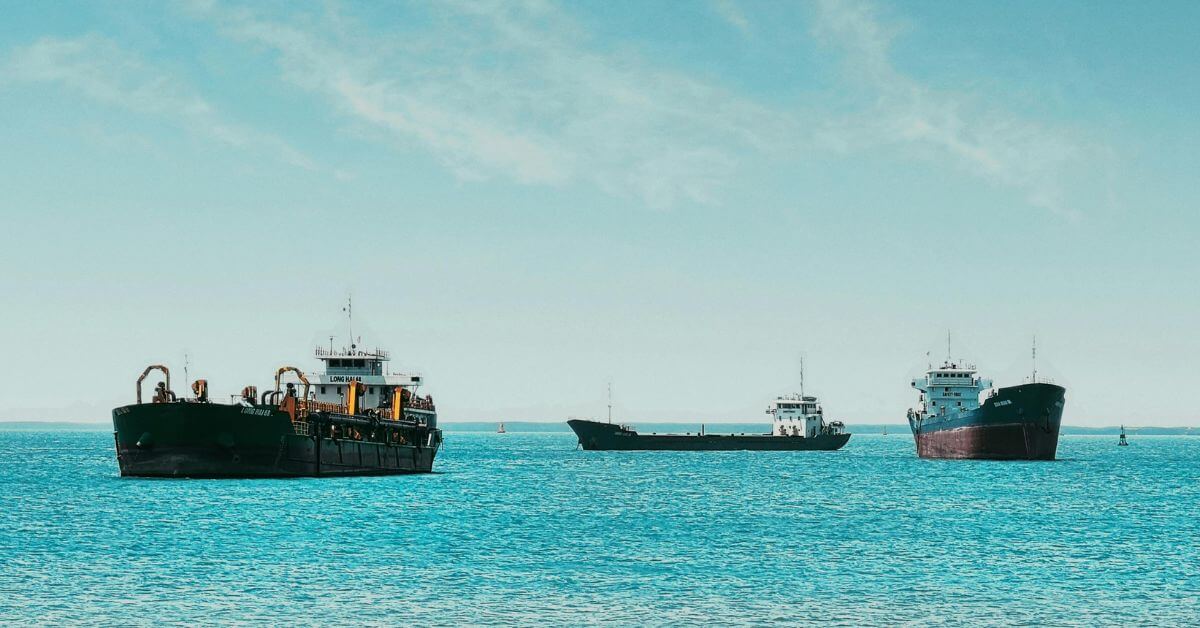
Three foreign-flagged ships carrying Indian crew members were hit on September 8 and 9 amid the ongoing West Asia conflict, according to a report prepared by the Directorate of Maritime Administration.
The ships were the Palau-flagged LPG carrier Horizon 1, the Zimbabwe-flagged crude oil tanker Riesco, and the Liberian-flagged crude oil tanker Mersin Prosperity.
All crew members on the three ships are safe, the report said.
The Zimbabwe-flagged crude oil tanker Riesco was reportedly hit by U.S. naval forces in the Gulf of Oman on September 8 at around 11 p.m. IST.
All 21 Indian crew members had left the tanker before the incident because of the security situation and moved to a safe shelter at an Iranian port, the report said.
All crew members are safe.
The Palau-flagged LPG carrier Horizon 1 was reportedly hit on September 8 at around 11:30 p.m. IST at Khor Fakkan OPL.
There were 16 crew members on board, including 14 Indians and two Georgian nationals.
The ship’s owner and technical manager, KBT Ship Management, said all 16 crew members were rescued by another vessel nearby and are safe.
The Liberian-flagged crude oil tanker Mersin Prosperity was hit by a projectile near Fujairah on September 9.
The tanker had seven Indian crew members on board. All crew members are safe and accounted for, according to the report.
173 Indian seafarers still on vessels in Persian Gulf
The Directorate of Maritime Administration said six Indian-flagged vessels and eight foreign-flagged vessels of Indian interest are currently in the Persian Gulf, west of the Strait of Hormuz.
There are 173 Indian seafarers on board these vessels.
Another 10 vessels of Indian interest have been identified for evacuation. These include Indian-flagged ships and foreign-flagged ships heading to India.
Since the start of the West Asia conflict, four incidents involving Indian-flagged vessels and 50 involving foreign-flagged vessels carrying Indian crew members have been reported, according to the maritime administration.
The incidents have resulted in nine seafarer deaths, 12 injuries and one person presumed dead, the report said.
The safety of Indian seafarers and freedom of navigation through the Strait of Hormuz were also discussed during Prime Minister Narendra Modi’s meeting with Iranian President Masoud Pezeshkian in New Delhi.
Pezeshkian arrived in India on September 11 to attend the 18th BRICS Summit hosted by India.
Modi said India remains committed to lasting peace in the region.
References: moneycontrol, hindustantimes
Read on the original site
Open the publisher's page for the full experience