Video: U.S. Strikes 3 Iranian Oil Tankers After IRGC Targets 2 Navy Warships With Ballistic Missiles
Our take
The recent exchange between U.S. and Iranian forces in the Persian Gulf, involving missile attacks on U.S. Navy warships and subsequent retaliatory strikes on Iranian oil tankers, represents a significant escalation of tensions in a strategically vital waterway. Reports indicate that U.S. forces successfully defended against Iranian attacks, avoiding casualties, but the incident underscores the precarious nature of maritime security in the region. This event follows a pattern of escalating incidents, and highlights the ongoing challenge of maintaining freedom of navigation and protecting commercial shipping lanes. The development builds upon previous concerns and initiatives aimed at securing maritime operations, such as the [U.S Navy’s Robotic System Refuels Drone Boats At Sea To Support Longer Missions], demonstrating a proactive approach to bolstering naval capabilities through innovative technologies. The interconnectedness of global trade routes, particularly those traversing the Strait of Hormuz, makes any disruption profoundly impactful, impacting energy markets and supply chains worldwide.
The Iranian response, including threats to establish an [Iran Threatens To Set Up ‘Exclusion Zone’ Near War-Torn Strait Of Hormuz Following Tanker Attacks], further complicates the situation and raises concerns about potential future actions. Such a move would severely restrict international maritime traffic and could trigger a broader conflict. The strategic importance of the Strait of Hormuz, through which a significant portion of the world’s oil transits, cannot be overstated. Furthermore, the increasing use of advanced technologies in maritime operations is evident in collaborative efforts like the [CMA CGM, Bureau Veritas & SDARI Partner On AI-Powered Container Vessel Concept], which aims to improve efficiency and security through artificial intelligence. These developments demonstrate a shift towards utilizing data-driven solutions to address complex challenges in the maritime sector, though the current conflict underscores the limitations of technological solutions in the face of geopolitical tensions. The current events necessitate a careful assessment of risk and a renewed focus on diplomatic solutions to de-escalate the situation.
The U.S. response, while calibrated to avoid further escalation, sends a clear message regarding its commitment to protecting its forces and ensuring freedom of navigation. However, the targeting of oil tankers carries significant economic and political ramifications, potentially pushing Iran further into a corner and increasing the risk of miscalculation. A key element to consider is the role of real-time data and integrated ocean intelligence in enhancing situational awareness and response capabilities. Validated, measurable data streams, combined with longitudinal analysis of maritime activity, can provide critical insights for policymakers and naval commanders. The ability to calibrate responses based on empirical evidence, rather than conjecture, is essential in managing such volatile situations. The integrated data ecosystem is paramount to accurate assessment and proactive decision-making.
Looking ahead, the long-term implications of this incident remain uncertain. The risk of a protracted standoff, or even a more direct confrontation, is real. The development of autonomous systems and advanced surveillance technologies will undoubtedly play an increasing role in maritime security, but the fundamental challenge remains the need for stable diplomatic relations and adherence to international law. A critical question worth watching is whether these events will accelerate the development and deployment of alternative energy sources and trade routes, reducing reliance on the vulnerable chokepoints in the Middle East.
U.S. forces struck three Iranian crude oil tankers on Saturday after Iran’s IRGC fired ballistic missiles at two U.S. Navy warships in regional waters, the U.S. Central Command (CENTCOM) said.
A U.S. aircraft carrier and a guided-missile destroyer avoided several Iranian attacks. No American personnel were hurt, CENTCOM said.
After the attacks, U.S. forces disabled two Iranian oil tankers and destroyed another.
The M/T Downy was hit off the coast of Kharg Island, while the M/T Stark 1 was struck near Jask. CENTCOM said both vessels were permanently disabled.
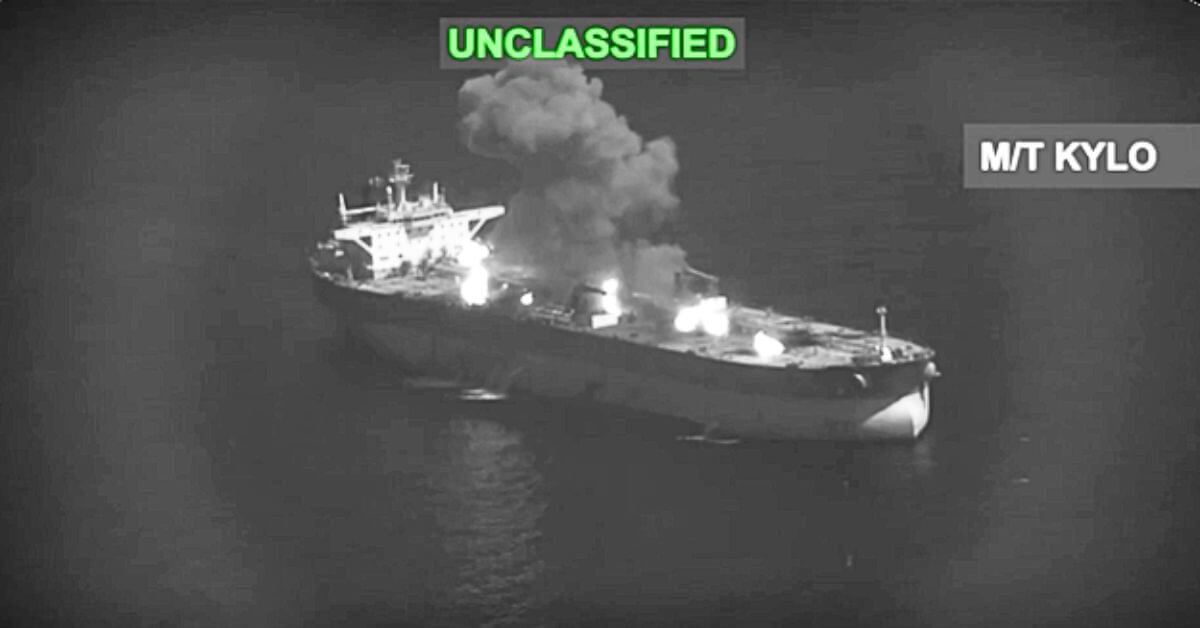
The third tanker, the unladen M/T Kylo, also known as the Noxen, was attacked in the Gulf of Oman. U.S. forces struck the vessel in several critical locations to make it inoperable, CENTCOM said. The crew had been told to abandon the ship.
CENTCOM said the three tankers were part of a multibillion-dollar network that provides money to the IRGC and its regional proxies.
Defense Secretary Pete Hegseth later said the United States would destroy and sink Iranian oil tankers if Iran continued attacking U.S. Navy ships.
There was no response from Iranian authorities.
Iran is the third-largest producer in the Organisation of the Petroleum Exporting Countries (OPEC). Before the war, 90% of its crude exports went through Kharg Island.
Those flows have been disrupted since the United States began a blockade of Iranian oil exports in mid-April.
“Let the message to the IRGC be clear: If you shoot at two of our ships, we will impose an even higher economic cost —taking out three of yours. We will not hesitate to defend American forces, and if necessary, destroy Iran’s limited and exposed oil fleet.” — Adm. Brad Cooper,… pic.twitter.com/UGGcSGsUtd
— U.S. Central Command (@CENTCOM) September 5, 2026
Strait of Hormuz Effectively Shut
The conflict between the United States and Iran has effectively shut the Strait of Hormuz, which was a key route for the world’s oil supply before the war.
The waterway is closely linked to the region’s oil trade, while Kharg Island handled most of Iran’s crude exports before the conflict.
U.S. President Donald Trump threatened in June to seize Kharg Island as U.S. military strikes against Iran continued. On Aug. 31, Trump posted an artificial intelligence-generated video showing Kharg Island being blown up.
U.S. Also Tightens Financial Pressure
The tanker strikes came a day after the U.S. Treasury Department announced sanctions against a small Turkish investment bank and two of its subsidiaries.
The sanctions targeted Golden Global Varlik Kiralama Anonim Sirketi, Golden Global Yatirim Bankasi Anonim Sirketi, and Golden Global Portfoy Yonetimi Anonim Sirketi.
The United States accused the bank and its subsidiaries of helping move funds for an arm of Iran’s Revolutionary Guard.
The Treasury said the companies were “established for the purpose of enabling Iran’s rahbar network to transfer oil revenues from China to Turkey, where it could then be converted to cash and gold by rahbar money exchangers.”
Golden Global Bank is the second major financial institution targeted under Operation Economic Outcast.
Reference: US Centcom
Read on the original site
Open the publisher's page for the full experience