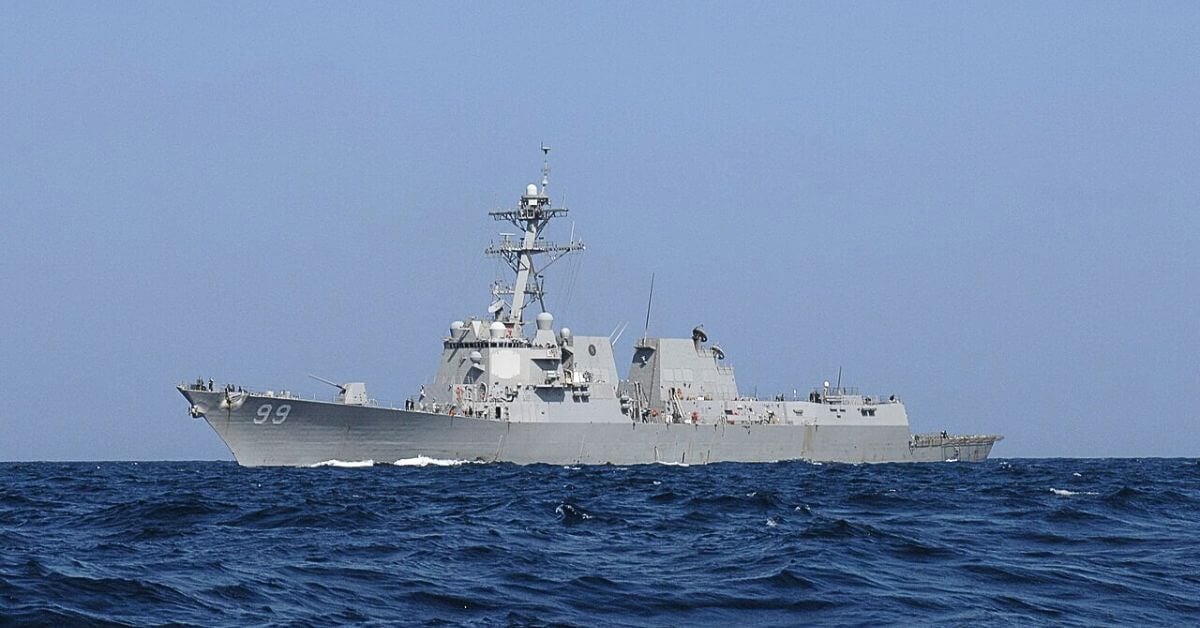
The Navy's $23.13 million TRIDENT contract is a measured, necessary step toward hardening warship electrical systems against cyberattack, and it underscores a truth we see across every domain of ocean intelligence: resilience depends on integrated, validated systems, not isolated fixes. This is not about building a better firewall for a laptop; it is about protecting the physical networks that power sensors, weapons, and control systems aboard a vessel at sea. The challenge is that shipboard power grids are not conventional IT networks. They connect digital controls directly to physical equipment, meaning any cybersecurity measure must operate without introducing latency that could disrupt the safe distribution of electricity. That constraint is what makes this research worth watching.
The TRIDENT program's focus on zero-trust architecture (ZTA) is the correct framework, but its application here faces real technical friction. Older equipment aboard warships may not support modern authentication methods without major retrofits, and the low-latency requirements of power distribution leave no room for security protocols that slow down essential processes. The Navy is asking how to monitor both cyber and physical operating conditions simultaneously, adjust security measures when threats emerge, and keep power flowing during an attack. These are not theoretical questions. They are engineering problems that must be solved before the approach can be scaled. Compare this with the work described in South Korean training ship arrives in Pensacola for multinational ocean stewardship mission, where international collaboration itself becomes a form of operational resilience. Both stories remind us that trust, whether between navies or between a control system and a sensor, must be earned and continuously verified.
For our readers, the takeaway is practical: the same principles that govern secure data sharing in global ocean science apply to naval power systems. The Office of Naval Research has identified secure control methods and reliable electrical distribution as requirements for future naval systems, and the CISA guidance issued in April 2026 on applying zero-trust to operational technology acknowledges the same reliability and safety constraints that researchers at Florida State University's Center for Advanced Power Systems will now confront. This is a direct parallel to the maturity measurement challenges discussed in From observation to action: measuring maturity in ocean practices, where the gap between collecting data and acting on it remains the central obstacle. Here, the gap is between a validated security architecture and its deployment on a ship that must remain mission-ready throughout a 36-month base period and a concurrent option period that runs through October 2030.
The question that lingers is whether zero-trust can be implemented at the scale and speed required without compromising the very systems it is meant to protect. Integer Technologies and its partners have until 2030 to prove it can. The specific detail to watch is how they handle legacy equipment: older systems with limited security features cannot be replaced overnight, and the contract does not fund a full modernization of every ship's electrical backbone. If the research produces a method to retrofit authentication and monitoring onto existing hardware without degrading performance, that outcome will have implications far beyond the Navy, it will inform how we protect every integrated power system, from port microgrids to offshore energy platforms, that connects digital controls to physical infrastructure. That is the real return on a $23 million investment.