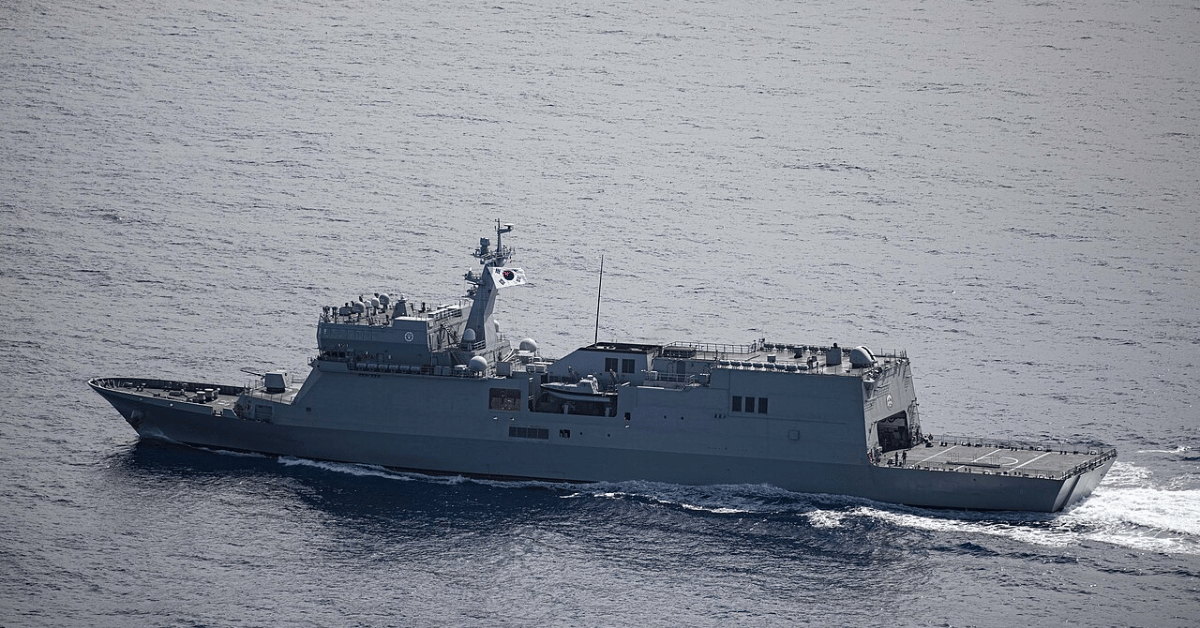
South Korean training ship ROKS *Hansando* arriving in Pensacola is not a ceremonial gesture; it is a calibrated exercise in building the kind of multinational trust that ocean stewardship demands. We see this port call as a practical demonstration that shared maritime security and environmental monitoring depend on personal relationships as much as they depend on satellites and sensors. The nearly 400 cadets and crew who stepped onto Allegheny Pier are not just learning navigation, they are learning the collaborative habits that make integrated data ecosystems work across borders.
This deployment matters because it closes a gap that our recent reporting has made plain. An Empirical Gap Revealed: 82% of Maritime Professionals Cite Training Lagging Behind Digital Operations survey found that the vast majority of maritime professionals believe current training fails to prepare crews for modern digital operations. Here, the Republic of Korea Navy Cruise Training Task Group is building that preparedness the old-fashioned way: through four months of real-world port visits, joint exercises, and face-to-face exchanges. When Lieutenant Commander Sang Ho Yoon describes the mission as "strengthening the Korean and U.S. Navy alliance," he is naming a foundation for the kind of collaborative ocean intelligence that allows navies to share real-time climate indicators and vessel detection data. The *Hansando* crew will visit war memorials, play football with U.S. personnel, and tour the National Naval Aviation Museum, activities that sound social but serve a strategic purpose. Trust is a measurable asset in multinational operations, and it is built through shared experience, not memoranda.
The port call also highlights how navies are evolving alongside the technologies they deploy. The U.S. Navy recently awarded a contract to Five Navy Destroyers to Integrate AI Sensor Fusion for Vessel Detection, a move that will require allied crews to understand and trust machine-generated data streams. You cannot calibrate that trust from a headquarters. You need the kind of practical training that puts Korean cadets and American sailors on the same pier, discussing how to interpret a sensor return or a current profile. Pensacola is one of only three U.S. stops on this deployment, alongside Hawaii and Baltimore, and the ship's itinerary continues to Guatemala, Tahiti, Fiji, and Panama. That route traces a Pacific and Central American arc where ocean health, maritime security, and climate resilience intersect directly.
The practical takeaway is this: the *Hansando*'s visit is a small, measurable investment in the human infrastructure of ocean governance. By November, these cadets will have seen how the U.S. Navy operates, how local communities engage with their naval base, and how Korean War veterans still shape alliances. By January, when the ship returns to South Korea, those 400 personnel will carry peer-reviewed lessons about collaboration that no simulation can replicate. The question that lingers is whether other allied navies will scale this model of integrated, long-duration training deployments to match the pace of technological change. The *Hansando*'s next destination is Baltimore, where the crew will continue to test that proposition in practice.