CO2
CO2 on World Data Ocean: a running collection of 4 stories we have gathered and hand-picked because they are worth your time. Every post here touches on co2 in some way — the news, the analysis, the deep dives, and the occasional surprise find. A Global Hub for Ocean Intelligence 4 World Data Ocean is a centralized digital platform where researchers, scientists, and ocean enthusiasts converge to explore, analyze, and… New stories are added to this page as we find them, so check back if you want to keep up with what is happening around co2, or subscribe to the RSS feed to get them as soon as they are published. Browse the collection below, or head back to the homepage to see everything World Data Ocean is covering right now.
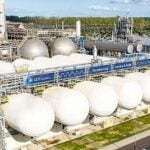
Europe’s Largest Industrial Carbon Capture Facility Begins Operations At Yara Plant
Europe’s industrial landscape has shifted with the commencement of operations at Yara Sluiskil, now home to the continent’s largest carbon capture facility. This significant advancement enables the capture and liquefaction of up to 800,000 tons of CO₂ annually at the ammonia and fertilizer plant. This development represents a crucial step toward measurable reductions in industrial emissions, aligning with global climate indicators. For further context on related maritime and energy developments, explore our article, "Norway Launches NOK 68 Million Project to Accelerate Wind-Powered Shipping.”

Assessing the contribution of euphausiids’ fecal pellets to greenhouse gas inventories in the Eastern South Pacific
The Eastern South Pacific (ESP) presents a complex productivity gradient, with coastal regions representing a notable source of greenhouse gases (GHGs). This study investigates a previously underexplored factor: the contribution of euphausiid (krill) fecal pellets to GHG inventories—specifically CO2, N2O, and CH4—within the mixed layer. Experiments revealed that krill pellets represent a potential range, acting as both sources and sinks, with an estimated contribution of less than 1%.
Elevated pCO2 impairs overall byssus attachment strength in the blue mussel (Mytilus edulis) without altering byssus thread quality
Rising atmospheric carbon dioxide is driving ocean acidification, posing a significant threat to foundational marine ecosystems. Recent research demonstrates that elevated pCO2 impairs the byssus attachment strength of the blue mussel (Mytilus edulis) – the crucial system anchoring them to the seafloor – without compromising thread quality itself. This study, analyzing the byssus as an intact functional unit, reveals a 42% reduction in detachment force and a 19% decrease in mussel condition, suggesting a shift in energy allocation away from structural support.

Shipping Must Stop Treating Decarbonisation As A ‘Future Fuel’ Problem, Says BAR Technologies
A recent EY study underscores a critical shift in decarbonization strategy for the shipping industry: prioritizing immediate energy efficiency and operational improvements over solely focusing on future fuels. BAR Technologies asserts that treating decarbonization as a distant challenge is a misstep, emphasizing readily available, practical actions. This perspective aligns with escalating geopolitical tensions impacting global shipping routes, as highlighted by recent events, including the redirection of commercial vessels amid US-Iran tensions—a situation detailed in our article, "US Says It Redirected 6 Commercial Ships...