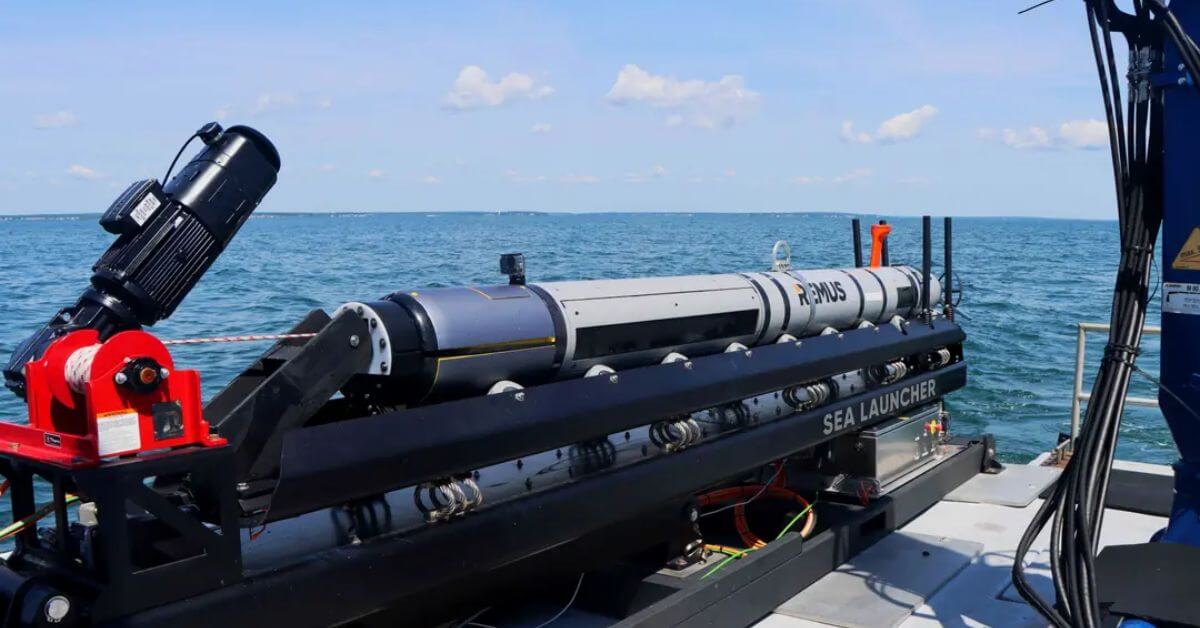
The Royal Navy's £142 million contract for REMUS 620 drones is not merely a procurement milestone; it is a calibrated validation of a long-term strategic shift. By selecting HII's unmanned underwater vehicles after an open international contest, the UK Ministry of Defence has made a measurable commitment to removing sailors from the direct line of danger while keeping shipping routes open. This decision integrates empirical operational data from the existing fleet of smaller REMUS 100 and REMUS 300 vehicles and extends that capability into larger, longer-range platforms. For our readers, whether in naval strategy, ocean intelligence, or policy, the practical meaning is clear: the era of autonomous mine countermeasures has moved from prototype to programme of record, with real budgets and real timelines.
What makes this contract particularly significant is the integrated data ecosystem it reinforces. The REMUS 620 will work with mission software from UK company SeeByte, already in use with the Royal Navy, and will be deployed from motherships under the Hybrid Navy approach that mixes crewed and uncrewed assets. This is not a standalone drone purchase; it is a deliberate move to build an interoperable, validated system of systems. The drones can remain submerged for 110 hours, dive to 600 metres, and scan far wider areas than their predecessors. That range and endurance matter because sea mines do not announce their positions. They are hidden, static threats that require persistent, methodical search patterns. The shift of support work to the UK, sustaining 15 jobs, also indicates that the Royal Navy intends to keep this capability close to its operational core rather than relying on distant supply chains. Compare this with the calibrated electromagnetic defense provided by the rotating decoy launcher recently tested by the same fleet, both systems share a philosophy of removing human exposure from the most dangerous environments while maintaining precise, repeatable performance.
The takeaway here is not about the technology alone. It is about the validation process that got us here. HII has supplied over 750 REMUS vehicles to more than 30 countries over two decades, and the company reports that over nine in ten remain in active service. That is an empirical track record, not a marketing claim. The £142 million contract builds on that foundation, and it opens a specific question worth watching: how will the Royal Navy integrate the data from these drones with the broader ocean intelligence picture? The same ocean that hides sea mines also holds climate indicators, historical wreck sites like the HMS Trooper lost in 1943, and shifting underwater environments. A fleet of validated, long-endurance drones capable of mapping the seabed at scale could serve multiple missions. The contract is a clear signal that the UK sees integrated, uncrewed systems as central to both security and stewardship. The next step is to ensure that the data those drones collect does not remain siloed within a single programme.