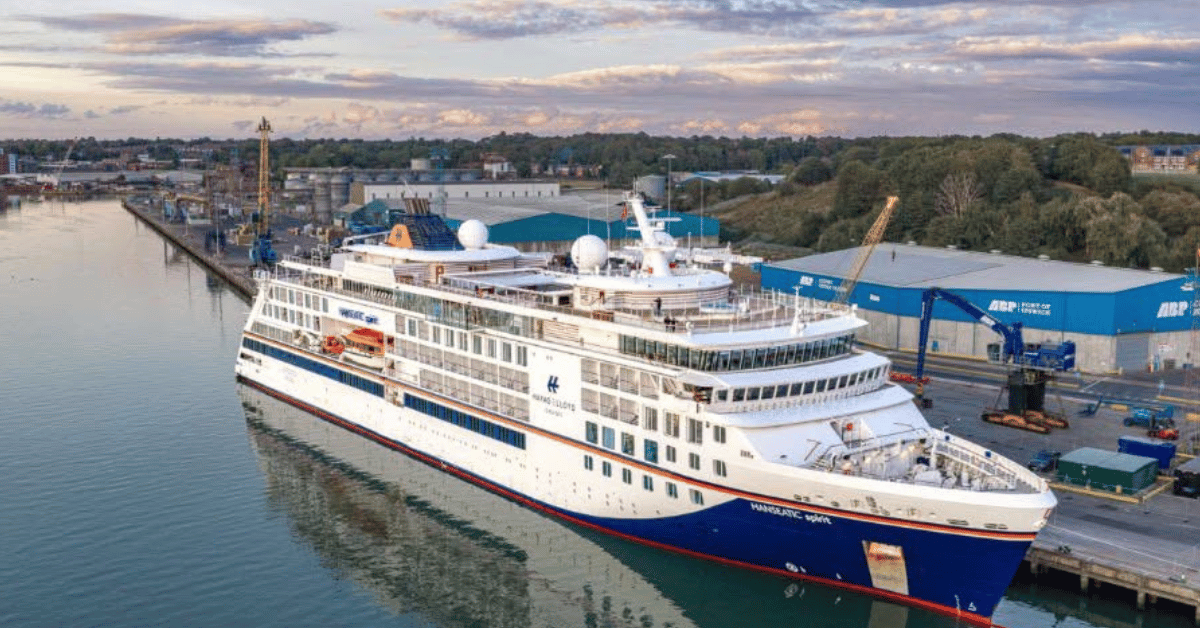
The arrival of the HANSEATIC Spirit at the Port of Ipswich is a practical signal that regional ports can play a measurable role in the cruise sector's evolution, not a symbolic gesture. This is not about a single luxury ship docking; it is a validated milestone for a port better known for exporting grain than hosting expedition-class vessels, and it carries implications for how we think about ocean intelligence and sustainable maritime infrastructure.
The 230-guest HANSEATIC Spirit, built in 2021 to the highest passenger ice class (PC6), is a platform designed for authentic exploration, carrying up to 16 specialists, biologists, glaciologists, historians, geologists, who enrich each voyage with peer-reviewed knowledge. That integrated approach to expedition travel aligns with the broader push for empirical, real-time ocean data we see in projects like Japan's Icebreaker Mirai II Set to Extend Real-Time Arctic Ocean Intelligence. Both vessels operate at the intersection of comfort and scientific capability, though their missions differ: the Mirai II is a dedicated research icebreaker, while the HANSEATIC Spirit uses its expert team to bring guests closer to nature without compromising on premium service. The common thread is a commitment to validated, longitudinal understanding of the marine environment, whether through formal research or guided excursions ashore.
The visit also underscores a shift in how ports can leverage their assets. Ipswich, sitting at the head of the River Orwell and less than a mile from its historic town centre, offers direct access to one of the UK's oldest waterfront communities. This is a different value proposition from established cruise gateways like Southampton, and ABP's Paul Ager noted that such calls support local businesses and generate wider economic benefits. The economic argument is clear, but the deeper point for our readers is about integrated infrastructure. As we see with Optimized Ship Design: Numerical Tools Accelerate Sustainable Vessel Development, the industry is applying digital tools to make vessels more efficient. Ports like Ipswich, which handle over two million tonnes of cargo annually, must similarly calibrate their operations to accommodate diverse vessel types, from grain carriers to expedition ships, without compromising their primary functions. The HANSEATIC Spirit's call is a test case for whether regional ports can scale this balance.
The historical resonance is worth noting. Ipswich was a key trading port for the Hanseatic League during the medieval period, connecting communities across Northern Europe. That legacy of collaboration mirrors the global, integrated data ecosystem we advocate for today. The contrast with the recent Scrap Metal Fire Impacts Cardiff Port, Raising Environmental Concerns is instructive: one port manages a high-risk industrial incident, another successfully integrates a premium expedition vessel into its operations. Both cases highlight the need for robust, empirical risk management and infrastructure planning.
The specific takeaway is this: the HANSEATIC Spirit's visit is a concrete data point for any regional port operator or policymaker weighing the feasibility of diversifying into expedition cruise traffic. It demonstrates that a port's established cargo identity does not preclude it from attracting high-value, low-impact vessels, provided the logistics are calibrated. The open question is whether Ipswich and similar ports can sustain this momentum without compromising their core cargo throughput, a challenge that will require the same integrated, real-time decision-making tools we see emerging in ship design and ocean research. Watch for the next call. That will tell us if this was an anomaly or the start of a replicable model.