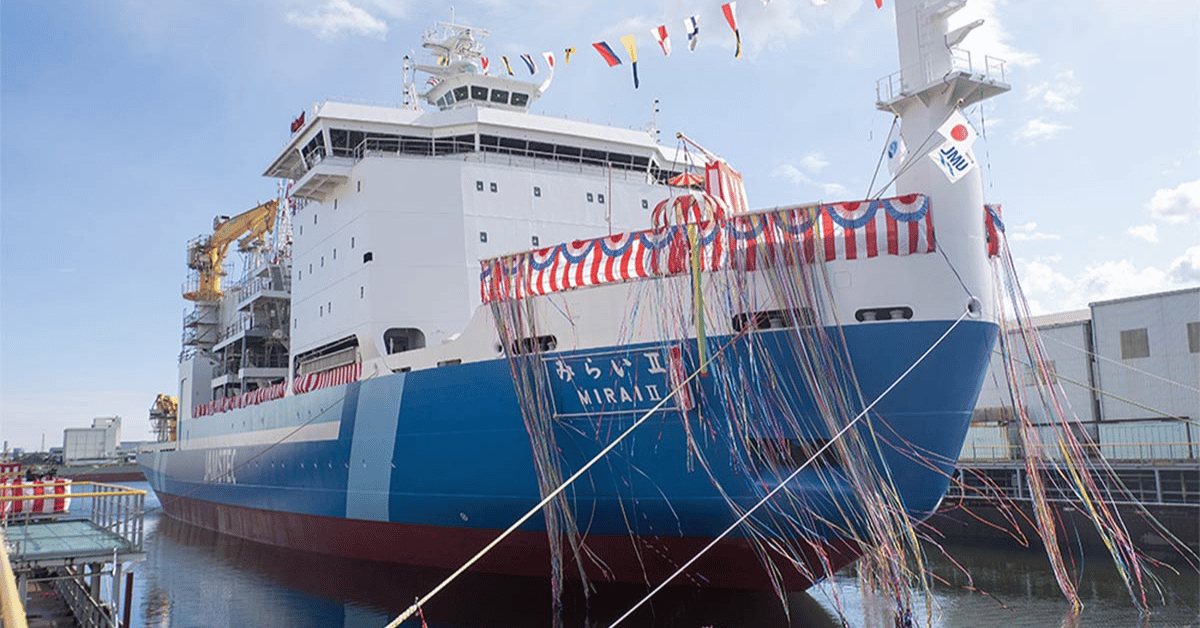
Japan's decision to commission the icebreaking research vessel *Mirai II*, operated by MOL for JAMSTEC ahead of its first Arctic expedition in 2027, is a measured but significant step toward closing a critical gap in ocean intelligence. The Arctic is no longer a remote frontier; it is a rapidly changing system that affects global climate indicators, shipping routes, and ecosystems. What matters most is not the vessel itself, but the quality and accessibility of the data it will produce. For researchers, policymakers, and mariners alike, the promise of real-time, empirical observations from the ice edge is precisely the kind of validated information needed to navigate uncertainty.
This announcement arrives alongside other developments that underscore a broader shift toward measurable, collaborative action at sea. The New Coalition Charts Measurable Course for Safer Global Shipping at the UN signals that nations are beginning to treat maritime safety as a data-driven discipline, not just a regulatory one. Meanwhile, the tragedy of Five seafarers killed as pirates open fire on hijacked tanker during rescue reminds us that human risk remains the most urgent variable in ocean operations. The *Mirai II* project does not solve piracy or safety directly, but it does represent a commitment to the kind of integrated data ecosystem that can inform better decisions across all domains, from ice navigation to security planning.
Our view is clear: the vessel's icebreaking capability is necessary, but not sufficient. The real test will be how openly and rapidly JAMSTEC and MOL share the longitudinal, peer-reviewed observations collected during those Arctic transits. Too often, research vessels return with invaluable data that sits in institutional silos, inaccessible to the very communities who need it most, coastal planners, shipping companies, and climate modelers. If *Mirai II* operates as a node within a truly integrated data ecosystem, feeding real-time ocean intelligence into global platforms, it could set a new standard for polar science. If it does not, it risks becoming an expensive platform with limited impact.
One concrete detail to watch is the vessel's sensor suite and data-sharing protocol. Will the public and scientific community have access to near-real-time temperature, salinity, and ice thickness measurements during the maiden voyage? Or will the data be embargoed for years? The answer will tell us whether this is a genuine contribution to global ocean stewardship or merely a national capability demonstration. For an audience that values empirical evidence over press releases, the *Mirai II* represents a high-stakes opportunity to prove that collaborative, transparent science is the only way to keep pace with a changing Arctic.