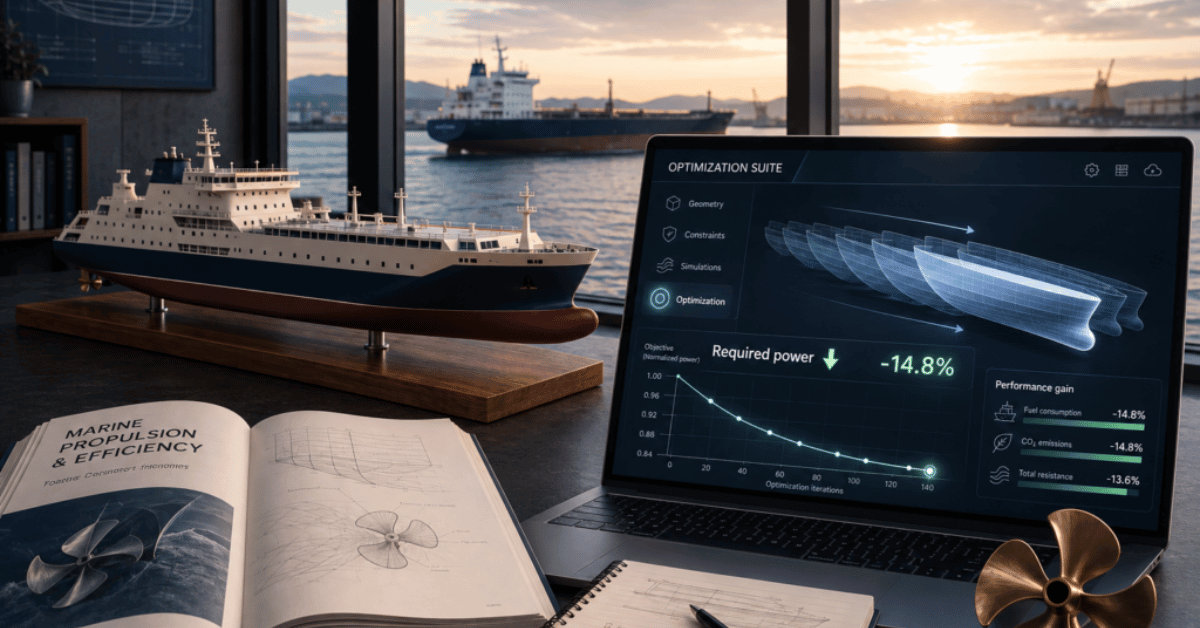
Numerical optimisation is not the most visible frontier in maritime engineering, but it is where the real leverage now sits. Deltamarin's expansion of its digital design toolbox, cutting hull optimisation from weeks to days, is a quiet signal that the industry's efficiency gains will come from computation, not just propulsion retrofits. This is not hype about artificial intelligence replacing naval architects. It is about giving those architects better instruments. The practical consequence is that more design iterations can be tested before steel is cut, which means performance is baked in rather than patched on later. For shipowners, that translates directly into fuel budgets and emissions compliance. For the rest of us, it is a reminder that the path to sustainable shipping runs through the design office as much as the engine room.
The timing matters because the pressure to validate every tonne of carbon reduction is rising across the sector. We see this in the parallel work on validating onboard emissions data for LNG carriers, where Lloyd's Register, Seapeak, Kongsberg Maritime, and Tunable are testing continuous emissions monitoring systems against direct measurement. That trial is about trusting what we measure. Deltamarin's numerical tools are about trusting what we compute. These efforts are two sides of the same coin: one verifies the present, the other shapes the future. Neither works in isolation. If we cannot trust the numbers coming off a ship today, we will not be able to trust the models predicting its performance tomorrow. The connection between these stories is not incidental; it is structural.
There is also a market logic here that should not be ignored. When Cochin Shipyard expands its design capabilities through a stake in Conoship, it is not just buying equity. It is buying access to faster, more iterative design cycles. Deltamarin's approach shows why that matters. A design tool that compresses optimisation time from weeks to days changes the economics of customisation. It makes it feasible to explore more hull forms, more appendage configurations, and more operational profiles without blowing a project schedule. That is a competitive advantage, not a technical footnote. As more shipyards and design houses adopt similar numerical methods, the gap between those who iterate quickly and those who do not will widen. The question is no longer whether optimisation tools belong in the design process, but how quickly the laggards will feel the cost.
What we would tell a reader asking about this story is simple: pay attention to the speed of iteration. That is the metric that separates incremental improvement from real progress. A week-long optimisation loop allows a team to test a hypothesis, fail, adjust, and test again. A day-long loop allows for ten times that learning. Deltamarin is not claiming to have solved ship design; it is claiming to have removed a bottleneck. That is more honest and more useful. The takeaway worth quoting: "The fastest route to a sustainable fleet is not a single breakthrough, but the ability to test more ideas in less time." Watch whether this capability migrates beyond hull optimisation into other design disciplines, because that will tell you if the industry has actually learned the lesson or just applied it narrowly.