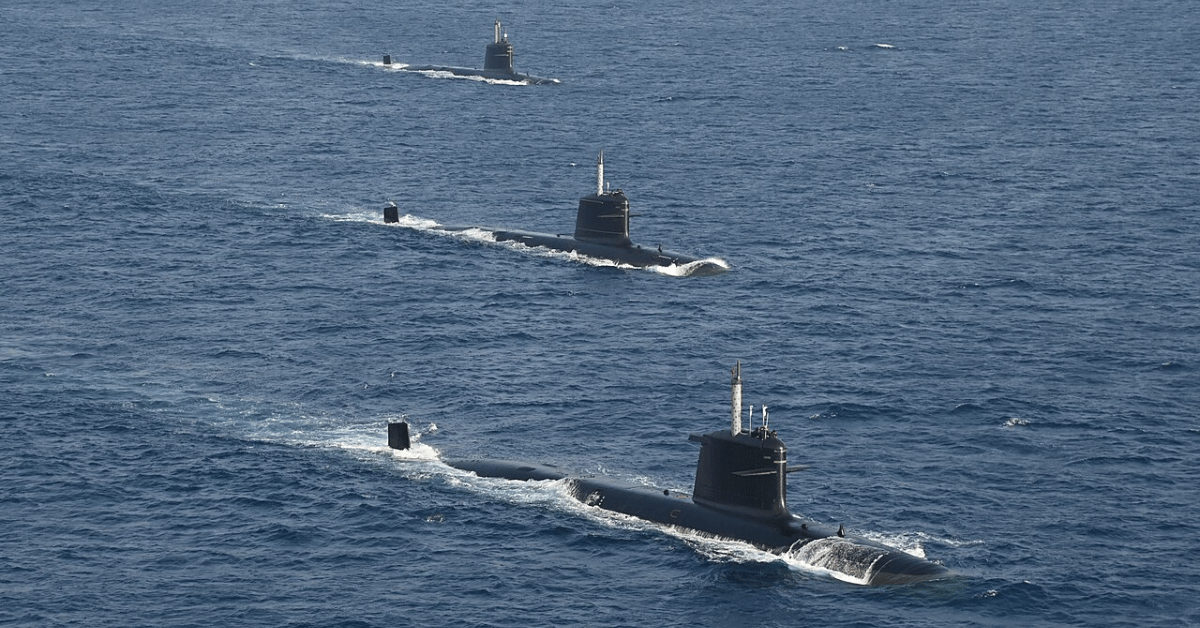
India's indigenous Air Independent Propulsion (AIP) system has reached a verifiable, measurable milestone, and that matters more for ocean security than most headlines suggest. The inauguration of the Setting to Work Phase-2 for the AIP Energy Module, developed by DRDO's Naval Materials Research Laboratory and now being readied at Larsen & Toubro's Hazira complex, means the Kalvari-class submarines will gain the ability to stay submerged for days, not hours, without surfacing. This is not incremental. It is a structural shift in what a conventionally powered submarine can deliver.
The practical consequence is straightforward: a diesel-electric submarine equipped with this integrated fuel-cell system can operate in contested waters with far less risk of detection. Atmospheric dependence has always been the limiting factor for non-nuclear subs. By decoupling underwater endurance from the need to snorkel, the Indian Navy gains persistent subsurface presence without the cost and reactor complexity of nuclear propulsion. The Defence Secretary's emphasis on maintaining "exacting safety culture" around hydrogen and fuel-cell systems is worth noting, this is not a technology that tolerates shortcuts. The fact that the energy module will be energised and tested against Indian Navy protocols before integration at Mazagon Dock in early 2027 suggests a validation process that prioritises reliability over speed.
This milestone connects directly to two other developments we have covered. The new Indian port terminal adds 18 million tonnes of validated capacity to ocean data ecosystem, illustrating how India is simultaneously expanding its maritime infrastructure and its ability to monitor it. Meanwhile, the validation of naval air power with Rafale Marine trials aboard INS Vikrant shows a parallel track in carrier-based aviation. The AIP programme is the underwater counterpart to those efforts, a calibrated, long-term investment in undersea endurance that complements surface and air capabilities.
What is absent from the announcement is equally instructive. There is no mention of export potential, no corporate marketing hype. The language is precise: "productive reality on the shop floor." That restraint aligns with the nature of the technology. Fuel-cell AIP is a mature concept globally, but indigenous development means India now controls the supply chain, the safety protocols, and the integration schedule. For researchers and defence analysts, the specific data point to watch is how the energy module performs during the energisation and power-production phase. Hydrogen fuel-cell stacks degrade over time; the real test is sustained output across multiple patrol cycles.
The open question is whether this capability will eventually be retrofitted onto other submarine classes or remain exclusive to the Kalvari line. That decision will define how broadly India's undersea endurance expands. For now, the concrete takeaway is that by 2027, a conventionally powered Indian submarine will be able to stay submerged for weeks without external air, a validated, peer-reviewed engineering outcome, not a promise.