South China Sea
World Data Ocean keeps South China Sea in one place: 32 stories so far. The section currently leads with “USS Robert Smalls returns to San Diego after seven months gathering Pacific ocean intelligence”, “Validated nitrogen pathways in the Qiongdong Upwelling reveal measurable climate indicators”, and “Escalation at Sea: Vessel Intercepted During Medevac in Contested Waters”. After seven months gathering real-time ocean intelligence across the Pacific, USS Robert Smalls has returned to San Diego. In the Qiongdong Upwelling, validated nitrogen pathways deliver measurable climate indicators. A Global Hub for Ocean Intelligence 4 World Data Ocean is a centralized digital platform where researchers, scientists, and ocean enthusiasts converge to… The list below is every South China Sea story on World Data Ocean, newest first.
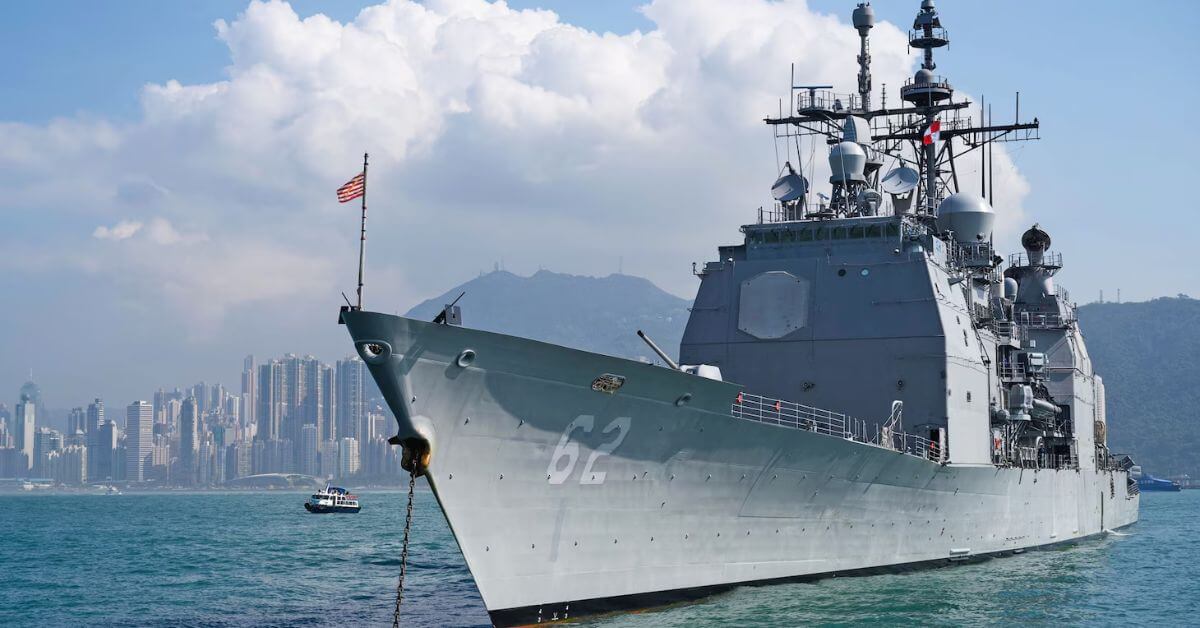
USS Robert Smalls returns to San Diego after seven months gathering Pacific ocean intelligence
After seven months gathering real-time ocean intelligence across the Pacific, USS Robert Smalls has returned to San Diego. The Navy cruiser's deployment represents a measurable contribution to our integrated data ecosystem, empirical observations from a platform that operates where few sensors reach. These validated, longitudinal climate indicators deepen our ocean intelligence and sharpen our collective understanding. For those considering how location shapes marine science careers, our related guide on where to study marine biology helps align your goals with the places that need your work.

Validated nitrogen pathways in the Qiongdong Upwelling reveal measurable climate indicators
In the Qiongdong Upwelling, validated nitrogen pathways deliver measurable climate indicators. Our physical-biogeochemical model reveals that vertical transport supplies 12.5 billion mmol of nitrate daily, fueling new production at 10.4 mmol C m⁻² d⁻¹. This is empirical ocean intelligence, where physical-biological interactions govern ecosystem productivity. For deeper coverage, see our related piece on acidification altering phytoplankton chemistry. Understanding drives protection.
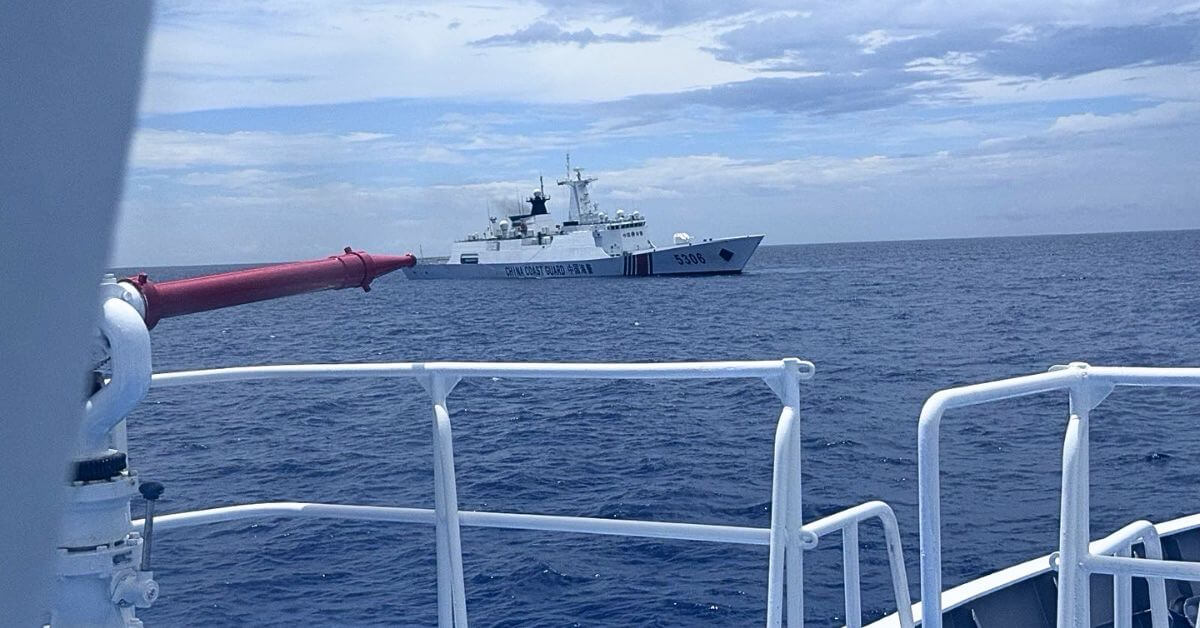
Escalation at Sea: Vessel Intercepted During Medevac in Contested Waters
A Philippine Coast Guard medevac turned into an escalation at sea when patrol vessel BRP Cabra was intercepted while attempting to evacuate a servicemember in contested waters. The incident underscores how even humanitarian operations can become flashpoints where maritime boundaries are disputed. Our coverage of rising tanker attacks near the Strait of Hormuz, including "Weekly tanker strikes near Strait of Hormuz reach highest count in years," shows this is part of a broader pattern of increasing risk across globally significant waterways.
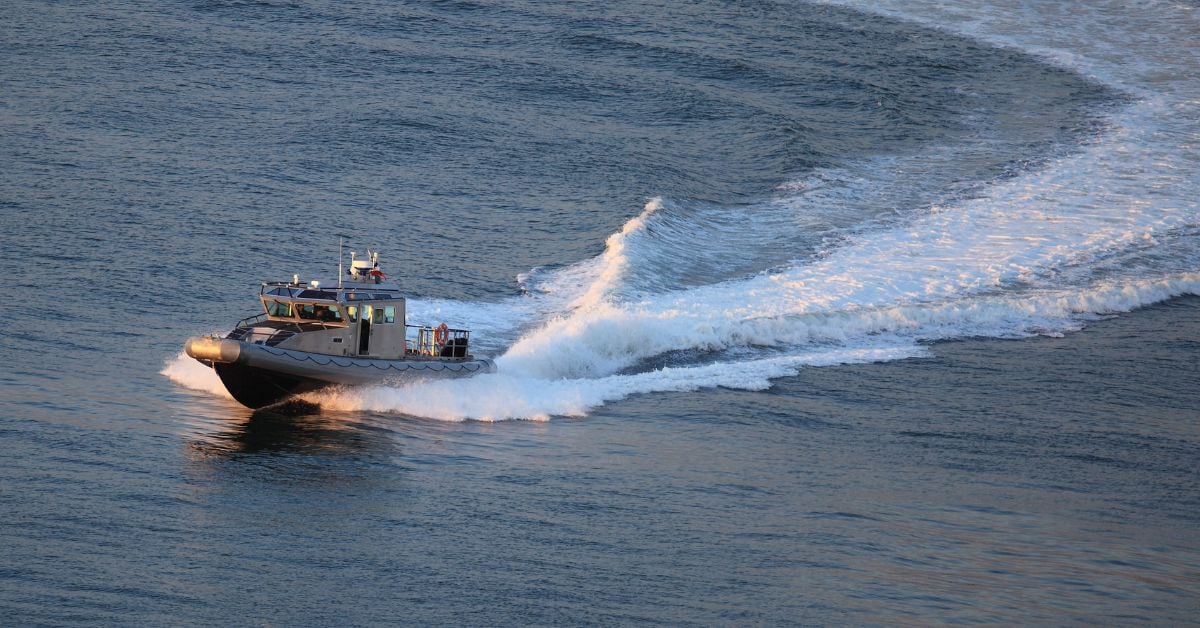
First Sightings of Chinese Militia Vessel Near Taiwan's Eastern Coast
A Chinese militia vessel has been sighted off Taiwan's eastern coast for the first time, accompanied by two other boats. This is a measurable development in a region where empirical data on maritime activity matters. The sighting demands calibrated observation, not alarm. For deeper context on evolving naval capabilities, see our related coverage: "A mothership for underwater drones signals a new era in ocean intelligence." Understanding these movements is essential for integrated ocean security.
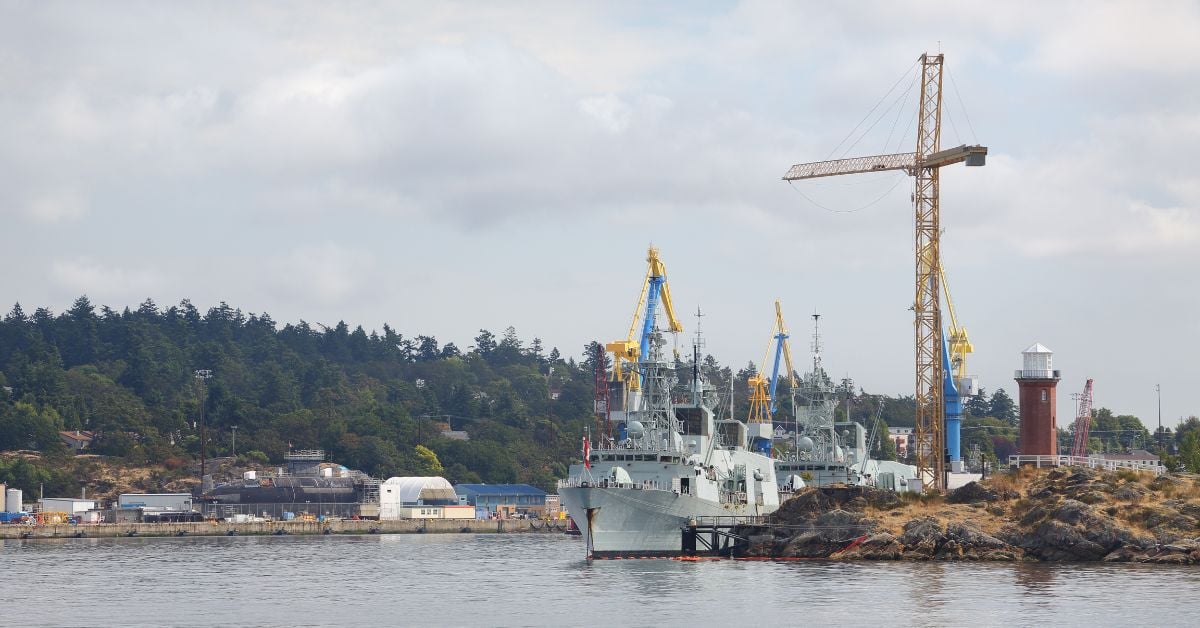
A mothership for underwater drones signals a new era in ocean intelligence
A 5,000-ton mothership designed to deploy underwater drones is taking shape in Beijing, signaling a new era in ocean intelligence. This vessel represents a calibrated leap in our capacity for real-time, integrated data collection from the sea. Understanding drives protection, and this platform promises to deliver the empirical, validated observations we urgently need. For deeper context on autonomous observation, see our coverage of the "4500-Meter Autonomous Robot Extends South China Sea Observation Reach."
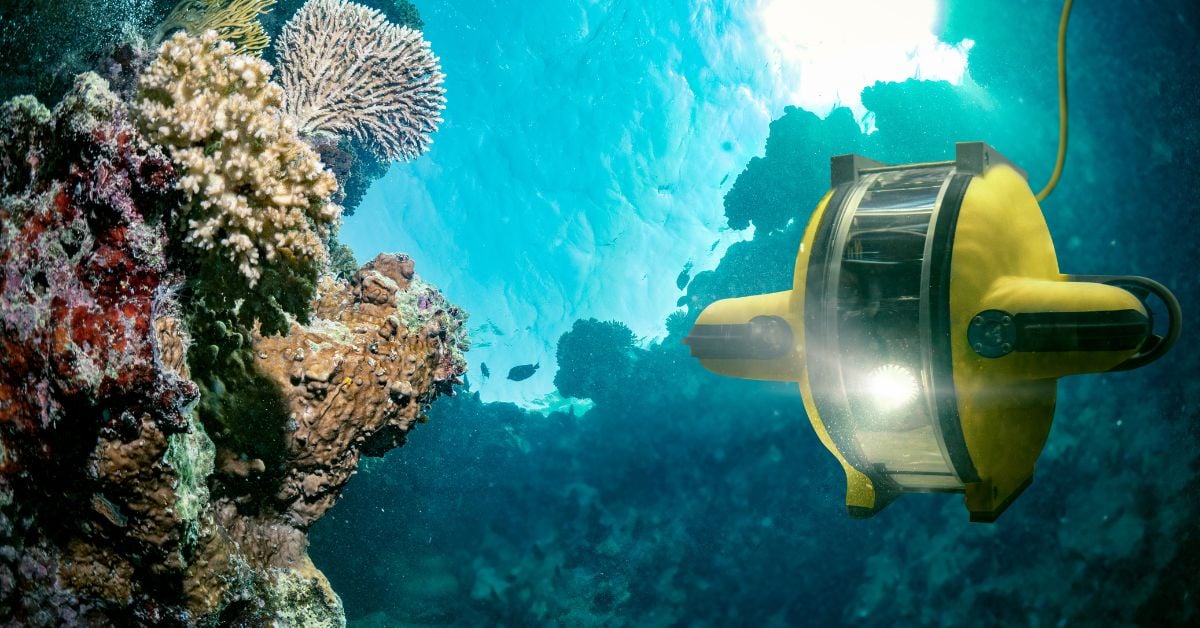
4500-Meter Autonomous Robot Extends South China Sea Observation Reach
China's new autonomous robot operates at depths of 4,500 meters, extending our observational reach into the South China Sea. This is measurable progress, empirical, validated engineering that adds real-time data from a region critical to climate indicators. The robot doesn't alarm; it informs. Understanding drives protection. For deeper context on naval ocean intelligence, see our coverage of the second U212NFS submarine's keel-laying. From the ocean floor to the surface, the integrated data ecosystem grows.
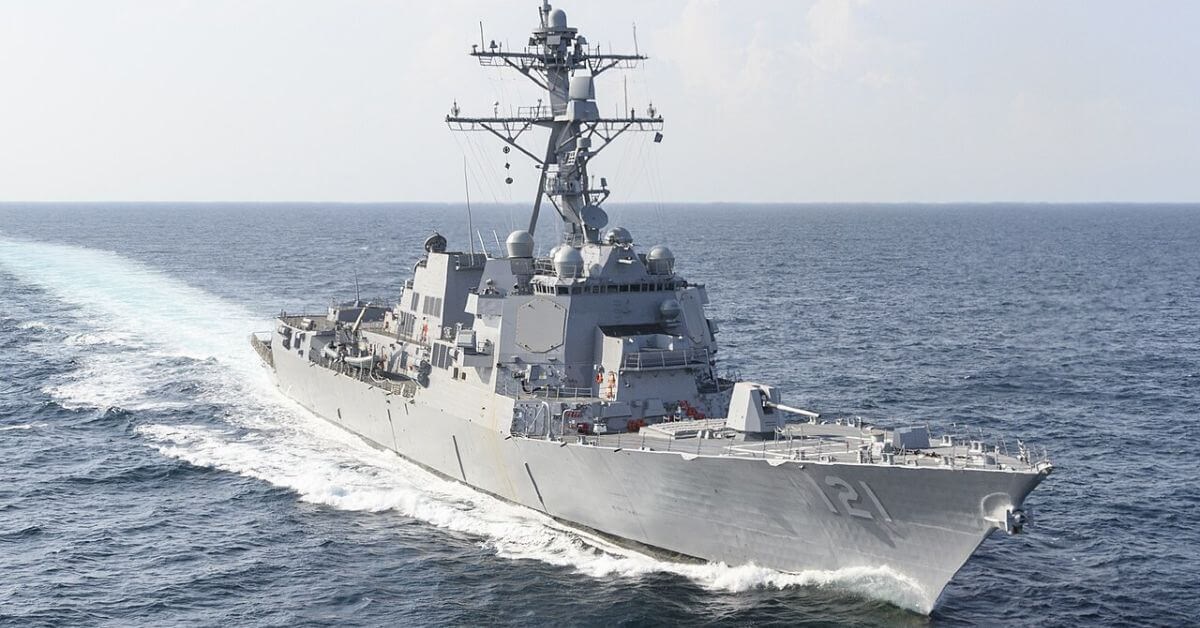
A 300-day deployment yields calibrated data from the Pacific theater
Ten months. Three hundred days of calibrated, real-time ocean intelligence from the Pacific theater. The USS Frank E. Petersen Jr. has returned to Pearl Harbor, and the data it gathered is now measurable and peer-reviewed. This is empirical evidence from a working warship, not a lab. Understanding drives protection. For deeper context on maritime security risks, see our coverage of the recent pirate attack on a hijacked tanker.
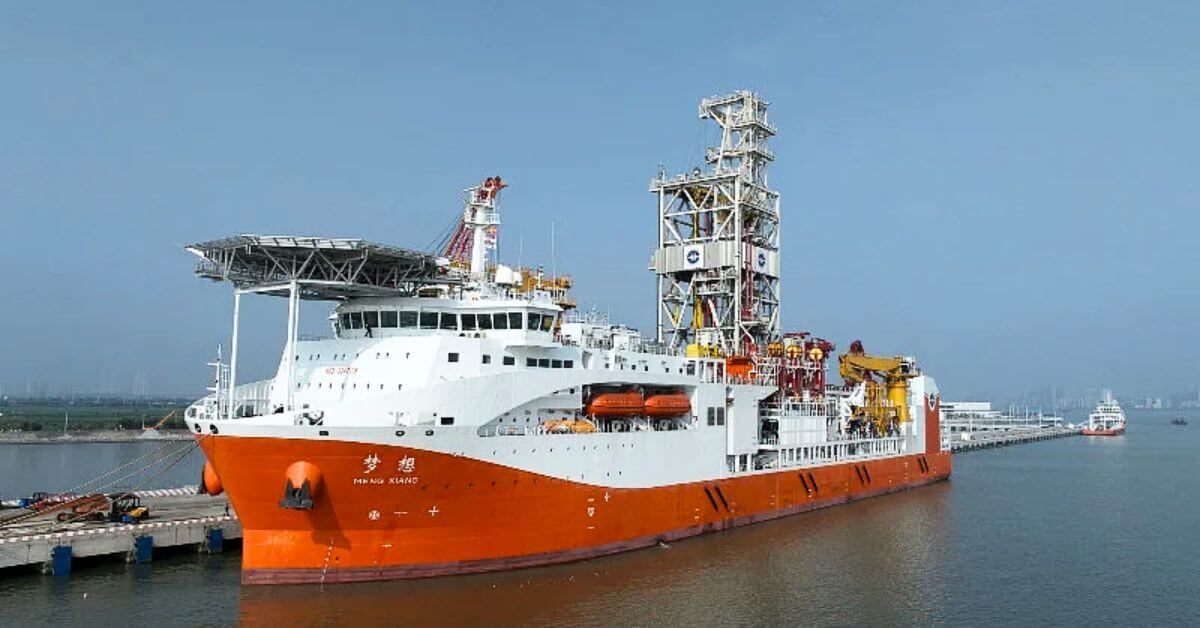
Mengxiang completes first mission, setting deep-sea drilling benchmark
Mengxiang has returned to Guangzhou, and with it comes a validated benchmark for deep-sea drilling. Completing its first scientific mission in the South China Sea, this vessel proves that precision engineering and empirical data collection can work in concert at extreme depths. Understanding drives protection, and this achievement extends our capacity to measure ocean intelligence where it matters most. For context on how integrated data ecosystems support maritime safety, readers may find our coverage of the *MSC Hermes III* rescue relevant.
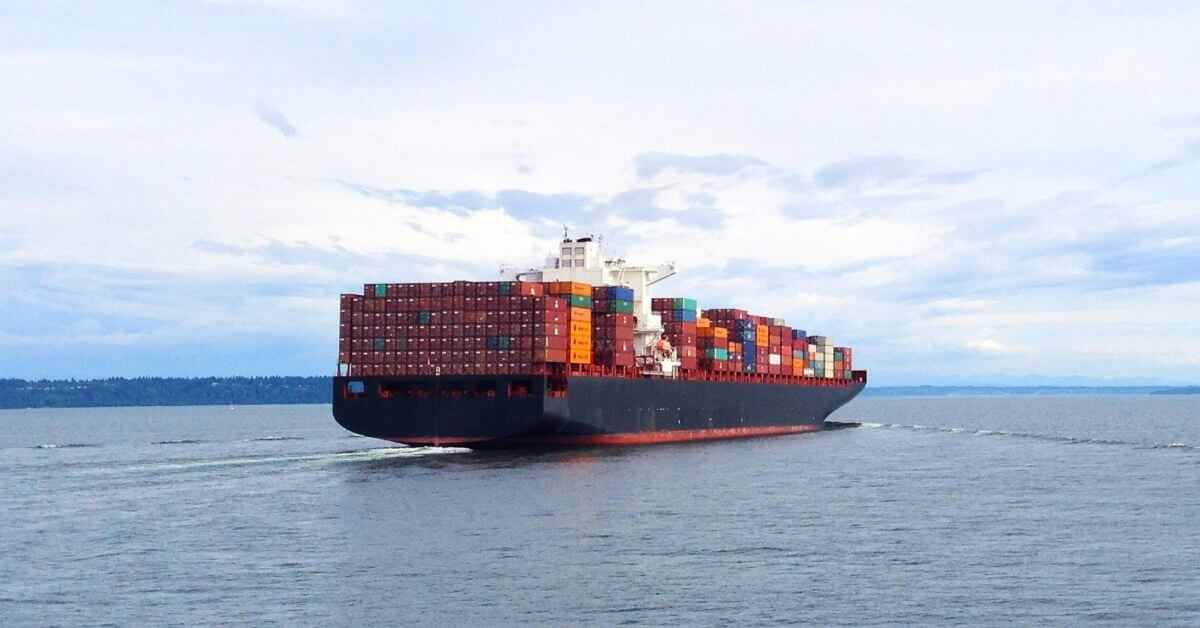
Integrated Response Saves 25 Seafarers After Container Ship Distress
Twenty-five seafarers are safe today after the Liberia-registered container ship MSC Hermes III issued a distress alert and triggered an integrated response. The rescue speaks to what measured coordination can achieve when every minute carries weight. These are the outcomes that matter most, measured in lives returned safely to shore. For deeper context on similar maritime emergencies, our coverage of the bulk carrier grounding near Gladstone offers a parallel look at response challenges. The ocean demands precision; this operation delivered it.
RAP-Based Mooring System Enhances Long-Range Deep-Sea Acoustic Detection
At 4050 meters down in the northern South China Sea, ambient noise drops, and detection sharpens. This study's RAP-based subsurface buoy system, built around a co-oscillating sphere-type vector hydrophone rated for 5000 meters, proves that depth itself can become an acoustic advantage. The sea trials confirm what the physics predicted: bearing estimation works where conventional paths fail. It is a practical step toward persistent deep-sea listening.
Calibrated Data Models Reveal Subsurface Temperatures in the South China Sea
A single mooring records temperature at one point, yet that time series may hold the spatial story of the surrounding sea. New research from the South China Sea tests this premise directly, asking whether temporal patterns can reconstruct the 100-meter temperature field. The metric learning framework achieves an RMSE of 0.12°C, offering quantified evidence that point observations encode broader ocean structure. It is a measured step toward smarter use of sparse data.
Global FPSO Design Adapts to Varying Sea Conditions Through Integrated Analysis
A universal FPSO design must hold its own across the world's roughest seas, and this study shows how that is achievable. By analyzing environmental conditions from key oil-producing regions, the research defines a generic structural solution that adapts to diverse mooring systems without sacrificing integrity. The focus on variable cargo hold lengths for the South China Sea is particularly practical. This is not just engineering; it is the kind of integrated analysis that makes ocean intelligence a working tool.
Optimizing Maritime SAR Response Through Dynamic Resource Allocation
Maritime emergencies rarely wait for calm conditions, and neither does the demand for rescue resources. The 2S-DLAS model tackles this head-on by treating demand locations as moving targets, shaped by ocean currents and uncertain timing. It optimizes base placement, resource allocation, and platform routing in one integrated framework, while explicitly accounting for travel-time variability and navigational limits. The IALNS algorithm delivers computational efficiency without sacrificing solution quality. Real cases from the South China Sea validate the approach.
Optimizing Wave Models with Genetic Algorithms for Typhoon Forecasting
Typhoon-driven waves resist easy prediction, and the SWAN model knows it. Under extreme conditions, its default parameters overestimate reality, a gap this study confronts directly. By applying a genetic algorithm to optimize key physical settings, the researchers achieved measurable gains in significant wave height accuracy for two South China Sea events, though mean wave period lagged, a limitation tied to spectral complexity. The balanced parameter scheme outperformed alternatives on the engineering-critical metric.
Enhanced Bearing Estimation for Weak Underwater Targets Amid Interference
Weak-target bearing estimation in the South China Sea no longer demands blind guesswork. This study pairs square-root cubature Kalman filtering with adaptive bearing interval constraints, cutting root mean square error from 121.67° to 14.72° under interference-to-signal ratios near 3 dB. That is a measurable leap in ocean intelligence. The method's precision matters most when broadband signal-to-noise ratios hover near -2 dB. For readers tracking subsurface acoustics, related work on RAP-based mooring systems offers complementary insight into long-range detection challenges.
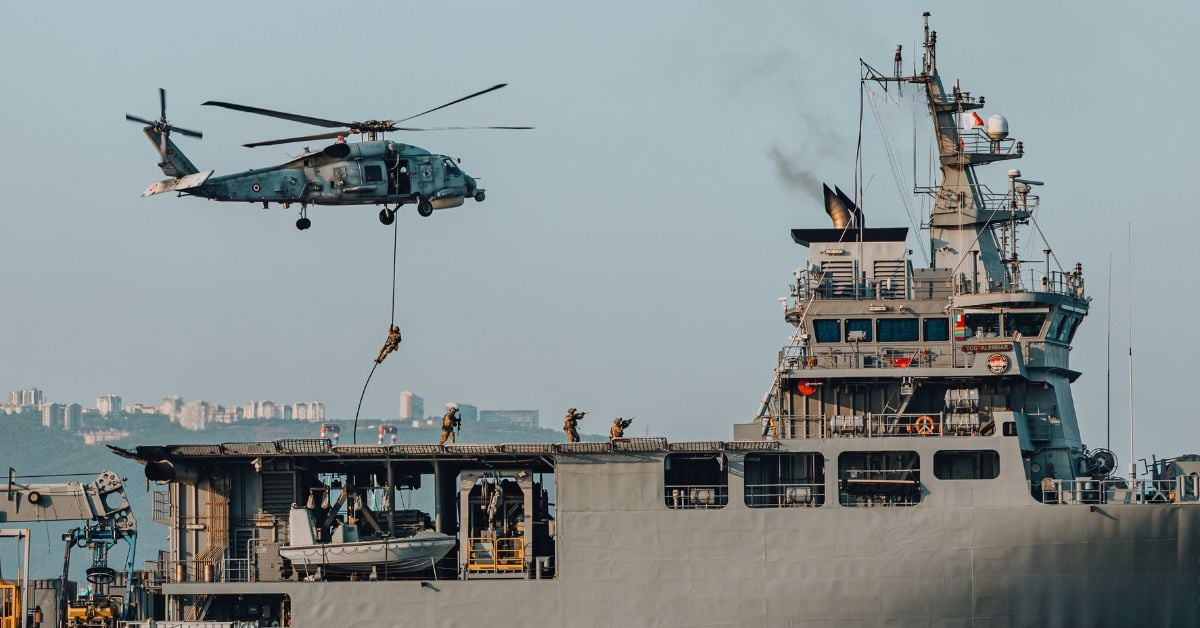
Simulated Drills Assess Maritime Defense Strategies in the South China Sea
A bilateral naval exercise in the South China Sea has put simulated Chinese People's Liberation Army Navy formations at the center of a realistic defense drill. Both nations calibrated these scenarios to test maritime strategies for protecting Manila's territorial waters. Such empirical, peer-reviewed training sharpens readiness without alarmism. Understanding drives protection. For deeper insight into regional security dynamics, see our coverage of phased negotiations aimed at easing restrictions on the Strait of Hormuz.
Optimizing Offshore Foundations: Steel Slag Concrete for the South China Sea
Offshore wind development in the South China Sea has long been constrained by the steep cost of transporting materials. Coral aggregate concrete offers a local alternative, yet its porous nature compromises durability. This study tackles that limitation directly, engineering a steel slag, silica fume composite that strengthens mechanical performance while improving chloride resistance. The results are measurable: optimized mixes achieved a splitting tensile strength of 3.20 MPa with markedly lower permeability. This is practical, empirical progress.

Securing Vital Sea Lanes: Commitment to Straits of Malacca and Singapore.
The Straits of Malacca and Singapore carry a third of global maritime trade, and their security is not negotiable. Indonesia, Malaysia, and Singapore have now made that priority explicit, committing to keep these vital sea lanes open for all nations. This is a calibrated, practical move that reinforces stability where it matters most. For readers tracking how regional infrastructure evolves, our related piece on integrated subsea cables enhancing Indian Ocean connectivity offers useful context.

Engineering Casualty Impacts US Navy Destroyer Operations in South China Sea
An engineering casualty aboard the USS Benfold has sidelined the destroyer's generators during routine South China Sea operations. The incident underscores how mechanical reliability remains the quiet backbone of naval power, even as the fleet pushes toward autonomous systems and expanded reach. For a region where readiness is measured in real-time, a single malfunction carries strategic weight. The Navy's broader push, including its new center for autonomous integration, signals a shift worth watching. Operational resilience, after all, starts below deck.

PLA Navy Expands Capabilities with Combat-Ready Amphibious Assault Ship
The PLA Navy's fourth Type 075 amphibious assault ship, Hubei, has officially entered service, joining Hainan, Guangxi, and Anhui in a fleet built for combat-ready operations. This is a deliberate expansion, not a ceremonial one. Each vessel adds measurable amphibious reach, strengthening maritime response where it matters. For those tracking regional stability, the pattern is clear: capability is being calibrated in real time.

Vietnam Advances Naval Capabilities with New Anti-Submarine Frigate.
Vietnam's newest frigate brings a sharper edge to regional maritime defense, pairing an AESA radar with air-defense and anti-ship missiles. The platform signals a deliberate step toward more resilient sea control, one that balances deterrence with operational reach. It is a practical investment in measured capability, not grandstanding. For readers tracking how mid-tier navies are modernizing, this development pairs well with our earlier coverage of India's expanded fleet projections. Together, they sketch a clearer picture of a region quietly strengthening its maritime posture.

South China Sea Collision: Two Chinese Coast Guard Personnel Confirmed Dead
Two Chinese Coast Guard personnel, Yi, 21, and Cheng, 25, were confirmed dead on August 11, 2025, during a "maritime rights protection operation in the South China Sea." Their loss is a sobering reminder that ocean stewardship carries a human cost, one we measure in lives, not just data. Our recent coverage, including the rescue detailed in "Ocean Data Enables Swift Rescue of Injured Seafarer Near Andamans," underscores how vital integrated response is, yet no system can replace the people we send into these waters.
Mapping Deep-Sea Life: Environmental DNA Reveals Biodiversity Hotspots
The northern South China Sea's Qiongdongnan Basin hides a biodiversity puzzle beneath its hydrate-rich seabed, and this eDNA study brings it into focus. By sampling cold seeps, gas hydrate stable zones, and non-hydrate areas, the authors recovered 334 benthic species and found that deterministic processes, particularly variable selection, drive community assembly. That is a measurable step toward understanding these ecosystems. The work also complements our coverage of operational advances like the RAP-Based Mooring System, reinforcing how integrated data sharpens both science and stewardship.

Cargo Ship Sinks Near Disputed South China Sea Reef
A Vietnamese cargo ship, the Khoi Nguyen 18, sank Saturday near Fiery Cross Reef, a Chinese-built artificial island in the disputed Spratly Islands. The incident underscores the high-stakes reality of maritime transit through contested waters. Reliable data on vessel movements and regional conditions remains essential for preventing such losses. We track these developments closely. For broader context on regional shipping pressures, our report on the Gulf of Oman STS transfers maxing out offers a useful comparison.