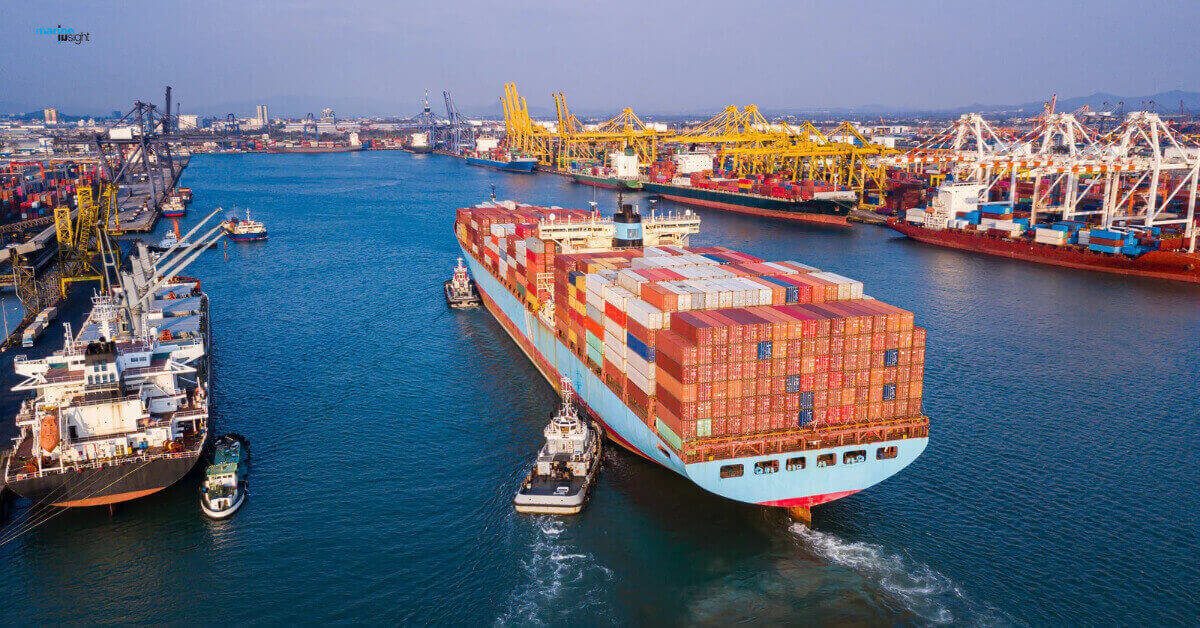
Understanding drives protection. The data on just-in-time arrival is clear: sharing berth schedules early can cut container ship fuel use by up to 14% per voyage, yet most ships still learn their berth time only two hours before the pilot boards. That gap between what is possible and what is practiced is not a technical problem, it is a coordination failure that the maritime industry can no longer afford. This matters because the same principle of calibrated, data-driven efficiency applies across ocean stewardship, from Validated: wind power cuts cargo fuel use by 70% in first year to A calibrated course correction of less than 1% fuel cost protects whale sharks. The common thread is that precise, shared information unlocks measurable savings.
The IMO-Norway GreenVoyage2050 study, based on 2019 AIS data, modelled three scenarios. When a ship adjusts speed for the whole voyage, the average fuel saving is 14.16%. Adjusting only the last 24 hours drops that to 5.90%, and the last 12 hours yields just 4.23%. The earlier the berth time is known, the more fuel is saved. Yet a 2020 exercise at the Port of Rotterdam found that ships often receive their berth time only about two hours before the pilot boards, far too late for meaningful speed reduction. A 2021 Valencia case study of 5,793 port calls showed that the terminal not being ready caused 48% of anchorages, and another 33.5% occurred because the ship arrived on a different date than planned. These are not acts of nature; they are failures to share standardized, real-time data.
Our view is that the industry has the empirical evidence and the digital tools to act. Infyz, for example, reports that its iTOMS terminal operating system has cut vessel turnaround time by 10-15% through automated berth planning and real-time vessel tracking. Other vendors offer similar capabilities. The barrier is not technology but incentives and contractual legacy, such as voyage charter clauses requiring a master to proceed with utmost despatch even when no berth is free. The IMO's just-in-time portal identifies these barriers and suggests charter clauses on virtual arrival and cost sharing as fixes. Terminals that share berth times earlier give ships more time to save fuel, and with the EU Emissions Trading System requiring 100% emissions coverage from 2026, every percentage point of fuel saved directly reduces compliance costs.
The concrete development to watch is how many ports adopt the Port Call Optimization Guide launched in March 2026 by the International Association of Ports and Harbors and the International Harbour Masters' Association. That guide supports standardized electronic sharing of nautical and operational data. If ports integrate these systems and share berth times at departure rather than two hours before pilot boarding, the validated 14% fuel saving becomes an operational baseline rather than an aspirational benchmark. The data is peer-reviewed and the tools are available. The question is whether the industry will choose coordination over inertia.