Ocean intelligence has taken a decisive step from the theoretical to the tangible. The joint study between ONE and ClassNK, which uses real-time operational data from active container ships to validate the performance of roll damping tanks (RDTs), is exactly the kind of empirical, calibrated work that moves maritime safety from model-based assumptions to measurable reality. This is not another simulation; it is a longitudinal, full-scale verification that closes a critical gap between lab predictions and actual sea conditions. For an industry where excessive rolling directly threatens cargo integrity and crew safety, this shift toward validated operational data is long overdue. It echoes the same rigorous, data-driven approach we have seen in other ocean sectors, such as the Global Drifter Network Delivers Real-Time Ocean Data to Sharpen Forecasts and Coastal Safety, which proves that real-world measurement networks are indispensable for reliable marine insights.
What makes this collaboration stand out is its deliberate focus on integration. ONE is providing onboard measurements from its fleet, data that is often proprietary and inaccessible, while ClassNK brings its peer-reviewed analysis and numerical simulation expertise. By combining these streams, the research aims to produce a practical methodology for quantifying RDT effectiveness under actual operating conditions. This is not merely an academic exercise. If the study confirms that RDTs can reliably reduce rolling, the implications for container stowage efficiency and loading capability are direct and measurable. Shippers and operators will gain a validated tool to cut cargo damage risks while possibly increasing the number of containers carried per voyage. The same principle of using integrated data ecosystems to solve operational challenges has also been demonstrated in Mapping marine phosphorus cycling with a global alkaline phosphatase dataset, where a global dataset turned scattered observations into a calibrated baseline for understanding ocean biogeochemistry. Both projects show that the path from raw data to practical insight requires deliberate, cross-sector collaboration.
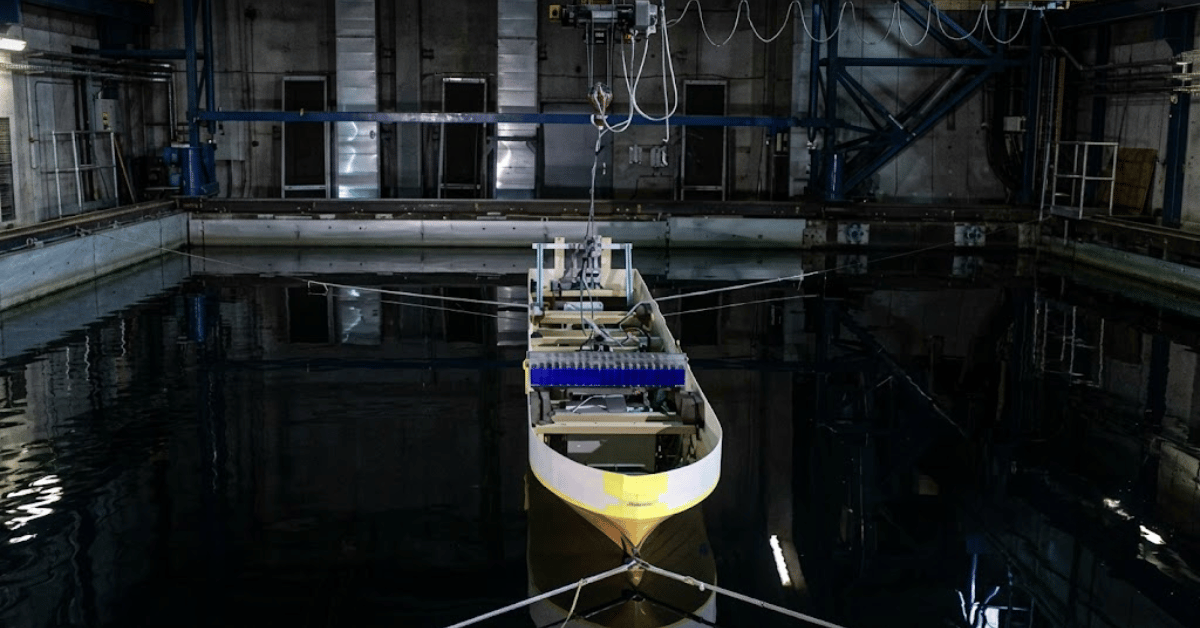
The broader takeaway here is about trust in measured evidence. For years, the maritime industry has relied on model tests and numerical simulations to evaluate RDTs on large container ships. Those methods have value, but they cannot replicate the chaotic, variable forces of a real ocean. By using actual vessel data, ONE and ClassNK are building a foundation of empirical proof that regulators, insurers, and operators can rely on. This is especially relevant as container ships continue to grow in size, making roll stability a more acute challenge. The research directly addresses a question that has lingered: do RDTs perform as well at sea as they do in the tank? The answer, once validated, will reshape design standards and operational guidelines.
What to watch next is whether this methodology becomes a template for other shipboard systems. If ONE and ClassNK can establish a reliable, data-backed framework for evaluating RDTs, the same approach could be applied to hull coatings, stabilizers, or even energy-saving devices. The open question is how quickly other shipping lines will adopt similar data-sharing practices. For now, the concrete point is this: the industry now has a clear, replicable path to turn operational data into calibrated safety improvements. That is a measurable step forward, not a promise.