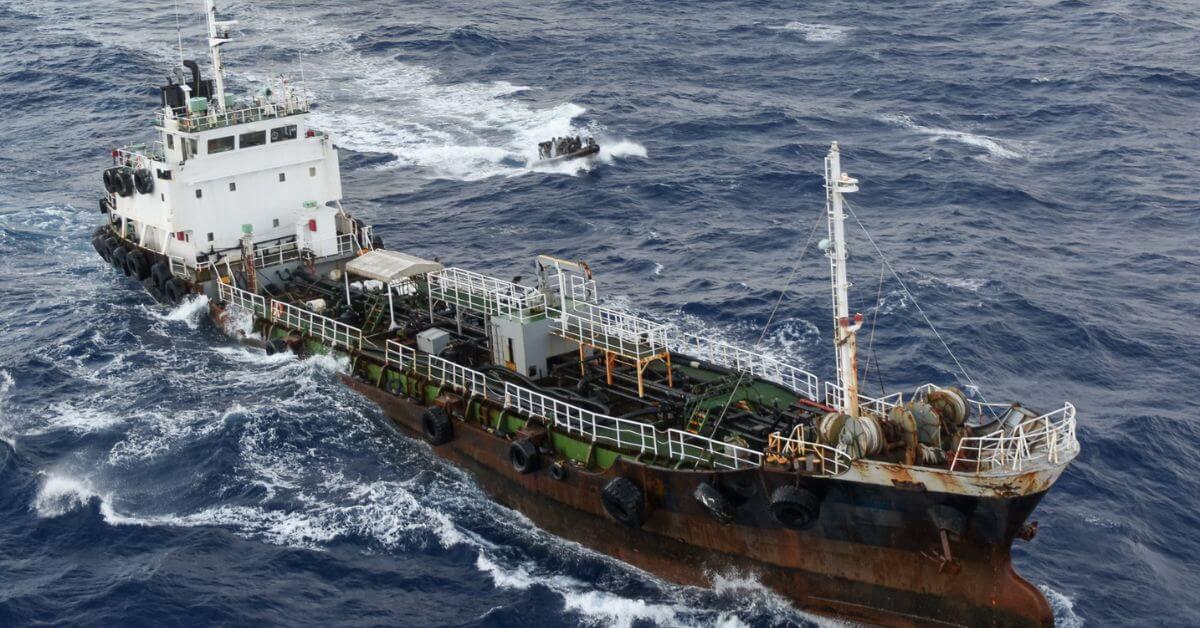
The seizure of 3.3 tonnes of methamphetamine from an unflagged tanker in the North Pacific is not merely a law enforcement success; it is a calibrated signal about the expanding operational reach of transnational crime and the maritime intelligence networks required to counter it. This bust, coordinated by French forces with regional maritime information centres and a US Coast Guard patrol plane, demonstrates that the open ocean is no longer a sanctuary for stateless vessels. For our readers, whether in shipping, policy, or ocean science, this event reinforces a practical truth: the same integrated data ecosystems we use to track climate indicators and vessel emissions are becoming essential for security surveillance.
The French Navy's operation, conducted under UNCLOS after weeks of surveillance, reveals a pattern worth watching. This is the third major narcotics interception in the Pacific by French forces in 2026, pushing the annual total past 15 tonnes. Compare this to the Atlantic Asphalt remains under judicial arrest as liability cap seeks validation case, where a tanker's legal status became a liability question after a collision. There, the issue was accountability in coastal waters; here, the challenge is jurisdiction on the high seas. Both cases share a common thread: the vessel's flag and legal identity matter enormously. The unflagged tanker and its crew were released and placed on an international watch list, a measured response that prioritises intelligence over detention, but one that leaves open questions about deterrence. Meanwhile, the Suspected shadow fleet tanker released after France secures €1M penalty incident showed France extracting a financial penalty from a vessel linked to sanctioned operations. The contrast is instructive: a fine is a finite cost of business, but a watch list entry is a permanent operational handicap.
What does this mean for the maritime community? Drug smugglers are routing shipments through remote Pacific waters to reach Australia and New Zealand, exploiting the same vast, poorly policed spaces that shadow fleet tankers use to move sanctioned oil. The empirical evidence is mounting: over 15 tonnes of narcotics seized in one year in one region is not an anomaly; it is a trend. The French Pacific Command's use of a helicopter and a Falcon 50 jet for boarding support shows that interception now requires multi-domain coordination, not just a patrol boat. For shipping operators, this raises a practical concern: the same routes and vessels that attract drug traffickers may attract increased scrutiny from naval forces, delaying legitimate cargo. The port calls that sharpen jurisdiction for emissions accountability, as covered in Port calls sharpen jurisdiction for shipping emissions accountability, are the same ports where a vessel's history on a watch list could trigger inspection or denial of entry.
The concrete point to watch is the fate of the watch list itself. The crew and tanker were freed, but their names are now shared across international databases. Will this deter future stateless voyages, or will traffickers simply scuttle the vessel and swap crews? The answer will determine whether these interceptions remain tactical wins or become strategic deterrents.