U.S. Strikes 2 Iranian Government Tankers Under New ‘Tanker-for-Tanker’ Policy In Strait Of Hormuz
Our take
The recent reports of the U.S. military striking two Iranian government tankers in the Strait of Hormuz under a newly implemented “tanker-for-tanker” policy represent a significant escalation in tensions within a region already fraught with geopolitical instability. This action, the first publicly reported instance of the U.S. directly targeting Iranian tankers, signals a hardening of resolve in response to ongoing attacks on commercial vessels traversing the vital waterway. The Strait of Hormuz, a critical chokepoint for global oil transport, sees roughly a third of the world’s seaborne oil pass through it daily, making any disruption profoundly impactful on global energy markets and maritime security. Understanding the broader context necessitates considering recent developments, such as the potential for increased Iranian aggression as highlighted in Iran’s IRGC Unit 4000 Plans Attacks On Ships, Waterways And Ports In East Asia, Sources Say, and the continued U.S. naval presence in the region, exemplified by the ongoing deployment and eventual docking of the USS Abraham Lincoln, as detailed in U.S Navy’s Carrier Abraham Lincoln To Dock At Thai Port Before Heading Home After 250-Day Middle East Deployment. The escalation underscores the complex interplay of power projection, economic interests, and regional rivalries shaping maritime security in the Middle East.
The “tanker-for-tanker” policy itself is a deliberate and assertive measure, designed to deter further attacks on commercial shipping by directly targeting those perceived to be responsible. While the U.S. has previously attributed responsibility for attacks to Iran or its proxies, this marks a departure from a more reactive posture to a proactive one. The implications for international law and the rules-based order are considerable, as such actions risk triggering a wider conflict and potentially disrupting the flow of commerce. It is worth noting the ongoing technological advancements in naval capabilities, which are influencing operational strategies; the recent certification of Rolls-Royce engines for autonomous naval vessel operations, as reported in Rolls-Royce Wins U.S. Navy Certification For mtu Engines In Autonomous Naval Vessel Operations, demonstrates the increasing reliance on advanced systems and potentially unmanned platforms for maritime security operations. The question becomes whether this new policy will serve as an effective deterrent or inadvertently escalate the situation, leading to a tit-for-tat cycle of retaliatory actions.
The broader significance of this development extends beyond the immediate geopolitical implications. It highlights the fragility of global supply chains and the vulnerability of critical infrastructure to disruption. The Strait of Hormuz incident underscores the need for robust maritime domain awareness and the importance of international cooperation to ensure the safe passage of commercial vessels. Ocean intelligence, derived from validated and measurable data—including satellite imagery, sensor networks, and real-time tracking—is increasingly vital for predicting and mitigating risks in these complex maritime environments. Longitudinal data analysis of shipping patterns and incident reports can provide valuable insights for policymakers and maritime security professionals, enabling them to make informed decisions and develop effective strategies. The current situation necessitates a calibrated response, balancing the need to deter aggression with the imperative to avoid escalating tensions into a wider conflict.
Looking ahead, the efficacy of the “tanker-for-tanker” policy remains to be seen. It is crucial to monitor the Iranian response and assess whether this measure successfully deters further attacks on commercial shipping. A key question is whether other nations will adopt similar strategies, potentially leading to a proliferation of retaliatory actions. Furthermore, the increasing sophistication of maritime threats, including cyberattacks and the use of unmanned systems, demands a more integrated and adaptive approach to maritime security—one that leverages empirical data and fosters global collaboration to ensure the safety and stability of the world's oceans. How will the evolving technological landscape—particularly the rise of autonomous maritime systems—reshape the dynamics of maritime conflict and cooperation in the years to come?
The U.S. military has struck two Iranian government tankers on Tuesday during a series of attacks on Iran, U.S. officials said, according to Axios.
It was the first reported case of the U.S. military targeting Iranian tankers in response to attacks on ships in the Strait of Hormuz.
Earlier U.S. strikes on tankers aimed to stop them from violating a U.S. naval blockade, Axios reported.
A U.S. official said President Donald Trump had approved a new “tanker-for-tanker” policy to discourage Iran from attacking tankers travelling through the Strait of Hormuz.
The United States struck about 100 targets in Iran during the operation, U.S. officials said.
The targets included Islamic Revolutionary Guard Corps (IRGC) air defence sites, communications sites, mine-laying capabilities, radar systems, attack drone launchers and anti-ship cruise missile launchers.
Two Iranian tankers hit
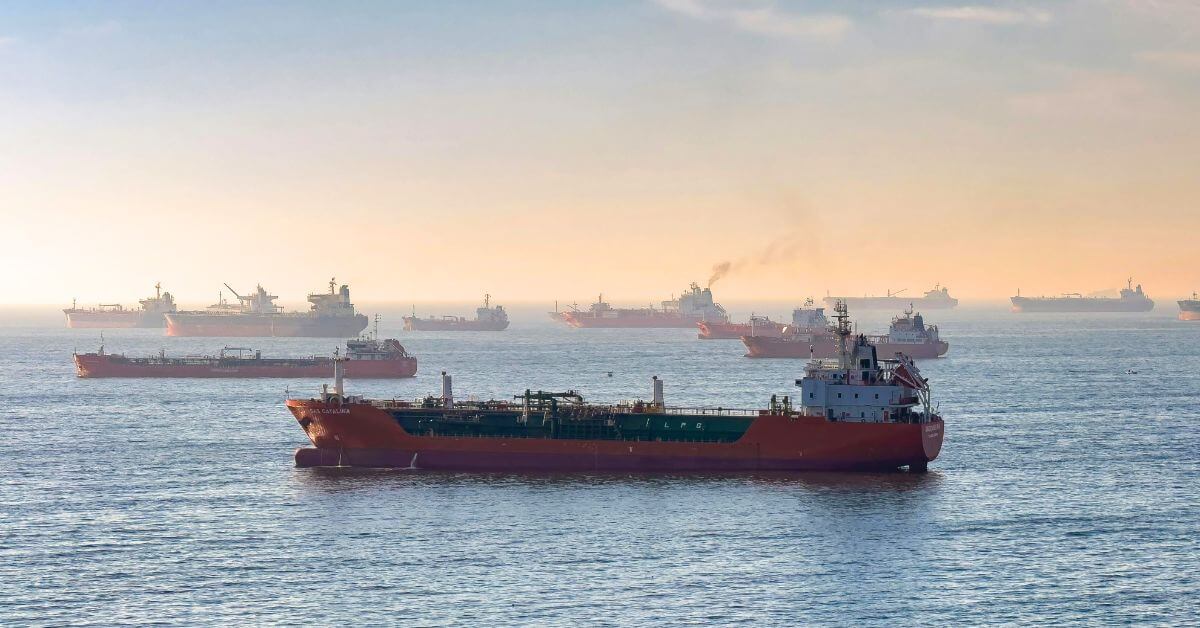
The two Iranian government tankers were anchored off Iran’s coast, north of the U.S. naval blockade line.
U.S. drones fired missiles at the tankers’ engine rooms, U.S. officials said.
The strikes were part of a U.S. plan to stop Iran from rebuilding the radar and missile systems that could be used to attack ships in the Strait of Hormuz, Axios reported.
A U.S. official said the operation was intended to lower the risk of Iranian attacks on oil tankers, U.S. Navy ships and U.S. Air Force aircraft.
Another U.S. official told Axios that the strikes had weakened Iran’s ability to attack ships in the strait and had “bought at least a month” of lower threat levels for commercial ships.
The White House and U.S. Central Command said the strikes were carried out in response to recent attempted IRGC attacks on commercial ships in the Strait of Hormuz and attacks on U.S. bases in the region.
Iran fires missiles and drones
Iran responded by launching 25 ballistic missiles, U.S. officials said.
They said about half reached Jordanian airspace, while 10 were intercepted and three landed without causing casualties.
Iran also launched two dozen drones at U.S. bases in Bahrain. Most were intercepted, according to a U.S. official.
Iran also fired ballistic missiles and drones at U.S. bases in Kuwait.
Two drones were launched at a U.S. base in Erbil, in Iraq’s Kurdistan region, but were intercepted, U.S. officials said.
The strikes followed a weekend exchange of fire, the first since late July, and attacks on Monday involving two tankers leaving the Strait of Hormuz.
Ships keep moving through the strait
U.S. forces continued guiding ships through the Strait of Hormuz while the two sides exchanged fire.
About 40 ships carrying millions of barrels of oil passed through the waterway on Tuesday, according to a U.S. official.
The official said U.S. forces intercepted multiple anti-ship cruise missiles and drones fired by the IRGC towards the ships.
None of the ships was hit.
Iran reports civilian deaths
Iranian media reported that a U.S. strike hit a wedding ceremony in the town of Kuhestak. The reports said at least four people were killed and at least 35 were wounded.
The Iranian Red Crescent reported that five people were killed and 50 wounded at a wedding near Sirik, a coastal area on the Strait of Hormuz.
Mehr news agency said a 4-year-old child was among those killed. IRNA, citing a provincial official, reported that 68 people were wounded.
CENTCOM spokesman Capt. Tim Hawkins said the U.S. military was aware of the reports and said they came from Iranian state media.
“The U.S. military never targets civilians, unlike the IRGC,” Hawkins said.
References: Axios, AA
Read on the original site
Open the publisher's page for the full experience