U.S Navy To Build Small Drone-Fired Anti-Submarine Weapons For Aircraft Carriers
Our take

The U.S. Navy’s development of small, drone-fired anti-submarine weapons represents a significant evolution in naval warfare strategy, reflecting a shift towards distributed operations and enhanced situational awareness. This initiative, spearheaded by the Naval Air Systems Command, addresses the growing challenge of detecting and neutralizing increasingly quiet and sophisticated submarines. The development aligns with broader trends within the Navy, including the increasing reliance on unmanned systems and the integration of advanced technologies to bolster fleet readiness, as evidenced by the recent approval of [U.S. Navy Approves Rapid 3D-Printing Standards To Boost Submarine Fleet Readiness]. Such advancements are crucial for maintaining maritime dominance in an environment where peer competitors are rapidly modernizing their submarine capabilities. The ability to deploy these weapons from drones launched from aircraft carriers or other ships provides a flexible and potentially less vulnerable platform for anti-submarine warfare, supplementing traditional methods involving dedicated submarines and helicopters.
The strategic implications of this development extend beyond simply improving the Navy’s ability to counter submarines. The integration of drone-launched weaponry into carrier operations fundamentally alters the operational calculus. Carriers, traditionally vulnerable to submarine attack, gain a new layer of defense, capable of proactively engaging threats at a greater range. This also allows for the redeployment of manned assets to other critical tasks, maximizing the overall effectiveness of the carrier strike group. Considering the recent preparations for deployment of the USS Theodore Roosevelt [U.S Navy Prepares Aircraft Carrier USS Theodore Roosevelt For Middle East Deployment To Relieve USS George Washington], the addition of this new weapon system would significantly enhance its operational capabilities in high-threat environments. Furthermore, the development underscores the Navy’s commitment to utilizing innovative technologies to address the complex challenges of modern naval warfare, a commitment further highlighted by recent efforts to improve sailor wellbeing following incidents like the one aboard the USS Abraham Lincoln [U.S Navy Charges 19-Year-Old Sailor After Apparent Suicide Attempt Aboard USS Abraham Lincoln].
From a technological standpoint, the development necessitates advancements in several key areas. Precise targeting and guidance systems will be essential to ensure the weapon’s effectiveness against moving underwater targets. The drones themselves must possess robust communication links and the ability to operate autonomously in challenging maritime environments. The weapon's design will also require careful consideration of factors such as size, weight, and payload capacity to maximize the number of weapons a drone can carry and deploy. The successful integration of this system will depend on the development of a robust integrated data ecosystem, allowing for real-time data sharing between drones, carrier systems, and other naval assets to ensure optimal coordination and responsiveness. The empirical data gathered through testing and operational deployments will be critical for calibrating the system’s performance and refining its operational procedures.
Looking ahead, the proliferation of drone-launched weaponry is likely to reshape naval warfare across the globe. Other nations are actively pursuing similar technologies, and the U.S. Navy must remain at the forefront of innovation to maintain its competitive edge. The development of countermeasures to these new weapons systems will also become a priority, creating a continuous cycle of technological advancement and adaptation. A key question to watch is how this new capability will be integrated with existing anti-submarine warfare assets and whether it will lead to a shift in naval doctrine, potentially favoring more dispersed and agile operations over traditional, concentrated deployments.
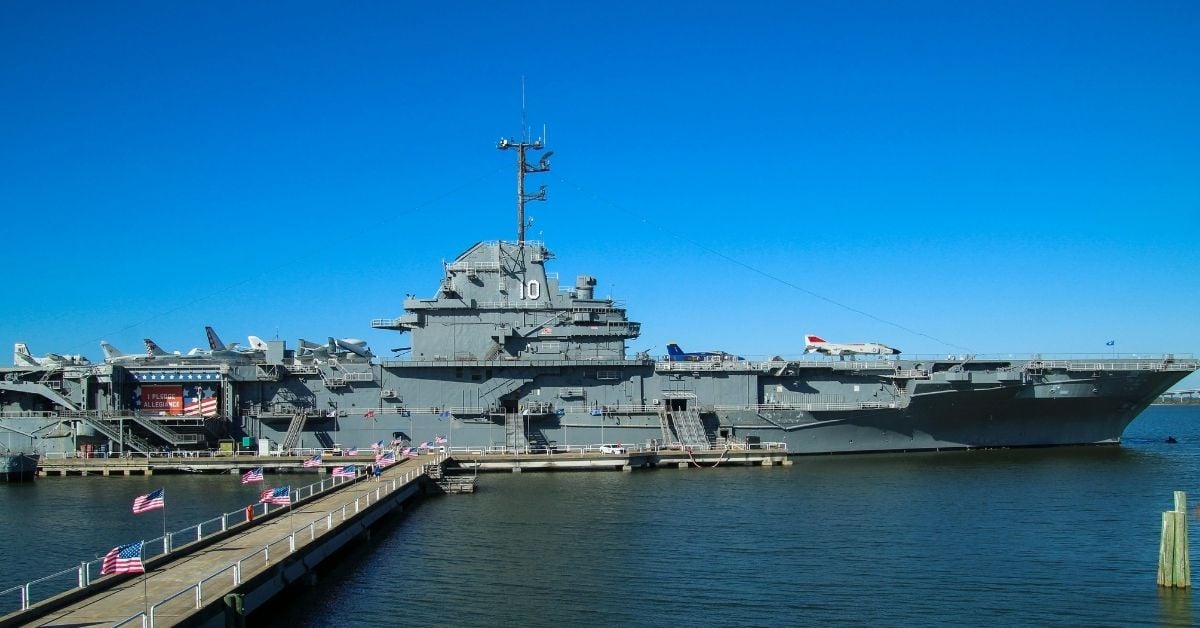
A tiny weapon that can be fired towards enemy submarines from drones launched from aircraft carriers or other ships is being developed by the U.S Naval Air Systems Command.
Called the Silent Anvil Air-Launched Torpedo or SAA-LT, it will be small in size compared to similar weapons, measuring just 70 inches and weighing about 268 pounds.
The Navy wants the weapon to easily integrate into the bomb rack of fighter planes and bombers. The BRU-61/A rack is used for carrying glide bombs known as GBU-39Bs.
Till now, the naval forces depended on Boeing’s P-8A Poseidon aircraft equipped with missile nd torpedoes for finding submarines.
However, after the development of Silent Anvil, the U.S expects to better target Chinese warships operating in the Indo-Pacific, as the increasing Chinese naval dominance has been a cause of concern not only for the United States but also its allies in the Pacific and Arctic.
The most unique feature of the new weapon is its stealth, since it would approach and strike underwater threats without being detected easily.
Additionally, if the Navy can build such munitions, which do not take up a lot of space and are equally effective as bombs or missiles, then the pressure to build more warships would also reduce, as would the warfighting capabilities.
If they succeed to reducing the weapon to the size of a tiny bomb, then U.S airplanes, drones and fighter jets could conduct anti-submarine operations, changing the nature of underwater naval warfare.
Secondly, this would also mean that the strain on personnel would reduce and they could be allocated new missions to enhance the Navy’s warfighting abilities.
The Navy is also investing in AI technologies for tracking and identifying enemy vessels accurately.
If the new system is developed and then scaled, it could not only shape naval warfare but also how the world believes the standard ways of maintaining an undersea nuclear deterrent.
Read on the original site
Open the publisher's page for the full experience