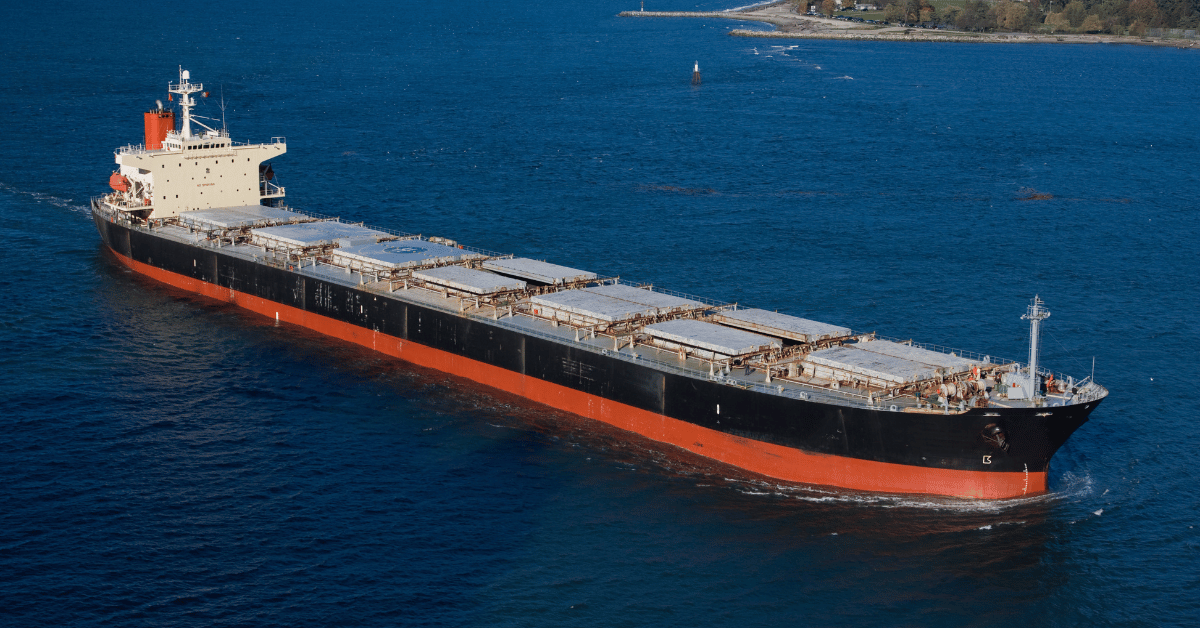
MOL's 25-year charter with Vale for two tri-fuel ore carriers is not a pilot project or a symbolic pledge, it is a commercial contract backed by empirical fuel data and a measurable emissions target. By committing to vessels that can burn ethanol, methanol, or conventional heavy fuel oil, the partnership gives the maritime industry something it has lacked: a practical, scalable template for decarbonizing bulk transport without betting on a single fuel winner. This is a concrete step, not a gesture.
The vessels, 210,000-tonne ore carriers scheduled for delivery in 2030, are equipped with tri-fuel engines and built with an LNG/ammonia-ready design. That dual flexibility matters. Ethanol can reduce lifecycle carbon emissions by up to 90% compared with heavy fuel oil, according to Vale's data, and its handling is straightforward enough for wider marine adoption. But methanol and conventional fuel remain available when supply or economics demand them. The ships will primarily haul iron ore from Brazil to China, the world's longest seaborne commodity route, so the emissions reduction will be measured in real tonnage, not theoretical curves. This is the kind of integrated, multi-fuel approach that aligns with the MOL Group's "BLUE ACTION 2035 Phase 2" vision of net-zero greenhouse gas emissions by 2050, and it directly addresses Vale's Scope 3 marine transport emissions.
This announcement also signals a shift in how shipping companies are thinking about fuel infrastructure. MOL is not just buying engines; it is working across the fuel supply chain for ethanol and methanol, from procurement to bunkering. That collaborative model echoes the logic behind Japan's Icebreaker Mirai II Set to Extend Real-Time Arctic Ocean Intelligence, where MOL's operational role on a research vessel supports real-time ocean data collection. Both projects treat the vessel as a node in a larger system, one for climate intelligence, the other for fuel logistics. Similarly, Methanol from Bogibeel signals Dibrugarh's return to international river trade shows that methanol is gaining traction as a traded commodity in its own right, reinforcing the logic of building ships that can burn it.
The practical takeaway here is simple: the tri-fuel approach buys time and optionality. No single alternative fuel has solved the scale, cost, and infrastructure challenges of deep-sea shipping. By building vessels that can switch fuels based on availability and price, MOL and Vale are hedging against uncertainty while still delivering measurable emissions cuts. The question to watch is whether ethanol production can scale sustainably to meet the demand that contracts like this will create. If it can, this 25-year deal may become the reference case for the next generation of bulk carriers. If it cannot, the ammonia-ready design gives them a second path, but that path comes with its own safety and regulatory hurdles. Either way, the maritime industry now has a real-world data point to calibrate against.