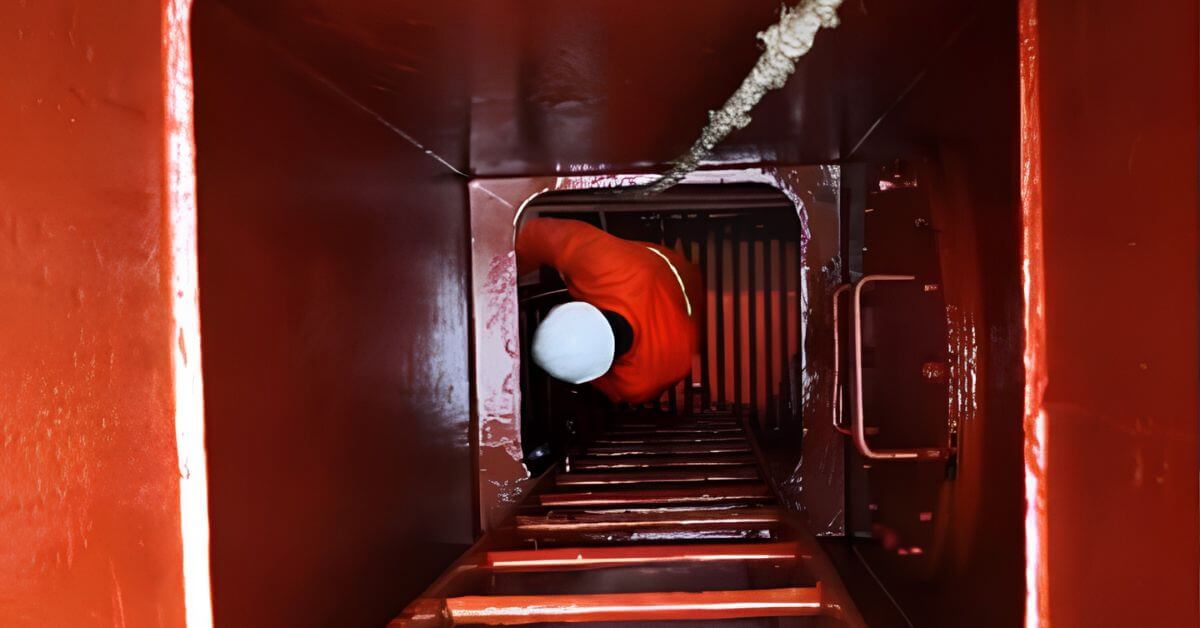
The maritime industry has a thirty-year data set proving that its safety systems for enclosed spaces are failing, and the root cause is not a lack of rules but a mismatch between those rules and the reality of life at sea. InterManager's study of 354 incidents from 1996 to 2026, involving over 900 seafarers, shows that crew members consistently face complications with paperwork, time shortages, commercial pressures, and inadequate practical training. These are not isolated failures; they are systemic gaps that reveal a culture of compliance over effectiveness. As we have seen in the Strait of Hormuz disruption strands thousands of seafarers amid mounting maritime threats, external pressures on shipping can cascade into dangerous working conditions. Similarly, the gap between protocol and practice documented here is a measurable social behavior problem, when rule breaking spreads, it accelerates, as our coverage of When rule breaking spreads, measurable social behavior can accelerate confirms. The industry must stop inspecting for paperwork compliance and start inspecting for real-world effectiveness.
The key takeaway from InterManager's findings is that blaming seafarers for accidents obscures the deeper failures in system design, leadership, and training. Captain Kuba Szymanski made this explicit: the factors contributing to these deaths are well known, yet the measures taken remain insufficient. A training regime that relies on one-off exercises rather than regular, practical drills and refresher courses is not a safety system, it is a liability. The data shows that crew members are unwilling to tackle the root cause of accidents, but that reluctance is a symptom of a culture where commercial pressure and staffing shortages make thorough compliance nearly impossible. We need to ask why a seafarer would choose to skip a safety step. The answer is almost always structural, not personal.
Technology and ship design offer a clear path forward, but only if they are integrated into a system that values outcomes over checklists. Real-time gas detection sensors, wearable sensors, digital work permits, and hands-free communications can reduce the number of times a person must physically enter a dangerous space. Better placement of equipment, improved coatings, and robust pipework can eliminate the need for entry altogether. These are measurable, validated solutions. Yet the study also reveals a critical blind spot: poor information sharing. When companies withhold or inaccurately report accident data, the entire industry loses the ability to learn. This is not just a procedural gap; it is an ethical one. The Integrated sensors and aerial surveillance reinforce Black Sea maritime security demonstrates how technology can enhance situational awareness when deployed with a clear operational goal. The same principle applies here: sensors and data sharing must be calibrated to prevent harm, not just to satisfy an auditor.
The specific consequence to watch is whether ship operators will adopt the recommendation to involve seafarers in establishing safety regulations, ship design, and working arrangements. If the industry continues to write procedures from shore without testing them against crew realities, the next thirty years will look exactly like the last. The open question is whether the industry has the will to shift from a culture of blame to a culture of empirical improvement.