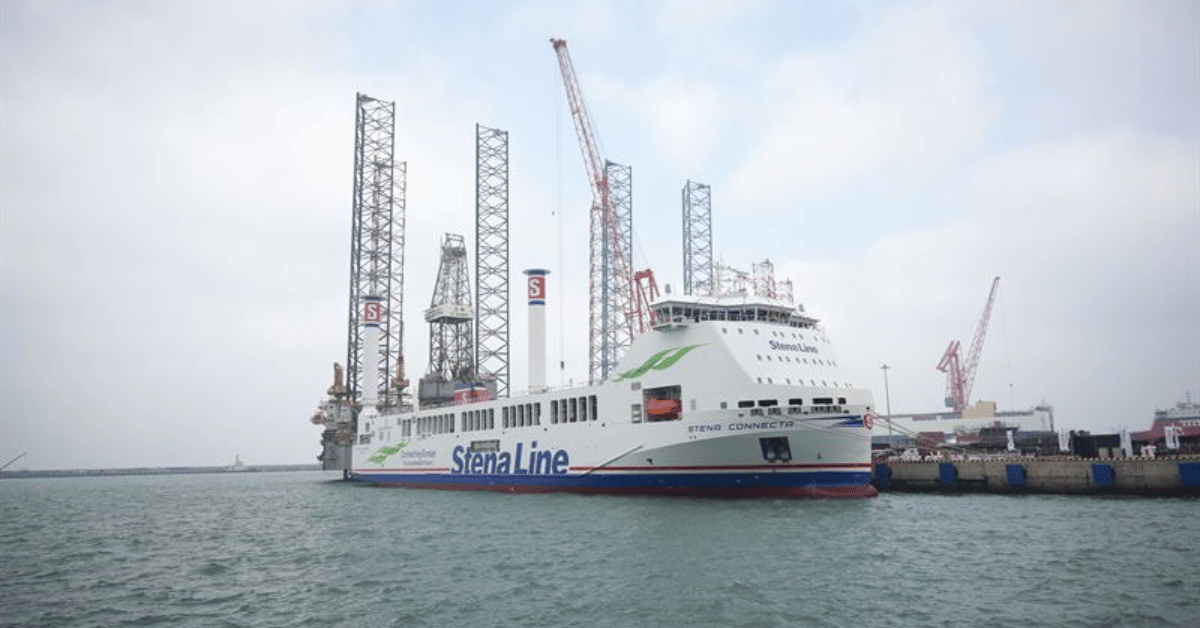
Rotor sails on a hybrid ferry are not a headline-grabber; they are a calibrated, measurable step toward decarbonizing one of the hardest sectors to shift. Stena Line's new Stena Connecta, christened this month at a Chinese shipyard, will soon begin plying the Irish Sea with a multi-hybrid propulsion system that burns less fuel thanks to two 28-meter Norsepower Rotor Sails. The 9 percent fuel savings on the Belfast, Heysham route matter because they are empirical and replicable, not because they are flashy. This is the kind of integrated, real-world data the maritime industry needs to validate its next moves.
The practical takeaway for fleet operators and policymakers is that hybrid retrofits and newbuilds are converging on a workable baseline. Stena Connecta is not a one-off experiment; its sister ship, Stena Futura, is already prepared for the same sail installation, and together the two vessels boost cargo capacity on that route by 40 percent. That is a measurable efficiency gain paired with a capacity increase, a rare combination in an era when operators often face trade-offs between payload and emissions. For comparison, a fully electric barge in Vietnam cuts inland shipping emissions by 778 tonnes yearly, proving that electrification works well on short, predictable runs. Stena's approach is different: it uses battery power, biofuel, and methanol alongside wind-assist technology, creating a flexible fuel mix that can adapt to route length and port infrastructure. That flexibility matters because, as a recent IMO competitiveness study on India’s marine fuel potential shows, alternative fuel availability is uneven globally. A ship that can burn methanol today and swap to biofuel tomorrow is a ship that keeps sailing while the fuel supply chain catches up.
Stena Line's CEO stated a clear target: a 30 percent reduction in CO₂ emissions by 2030. The 9 percent fuel saving from rotor sails alone is a significant contributor, but it is not the whole answer. The hybrid propulsion system gives the vessel optionality, battery power for maneuvering in port, methanol for the open sea, and wind assist for the entire crossing. That layered approach is what makes the Stena Connecta a practical template rather than a PR exercise. It is also worth noting that the ship will not enter regular service until January 2026, giving the industry a full year to watch its performance data emerge. We will be watching the longitudinal fuel consumption figures closely, because they will either validate the rotor sail retrofit market or reveal hidden operational constraints.
One specific consequence to track: the 40 percent capacity increase on the Belfast, Heysham route will almost certainly shift freight logistics in the Irish Sea region. More trucks moving per sailing means fewer total sailings could theoretically cover the same cargo volume, compounding the emissions reduction. That is the kind of system-level gain that peer-reviewed lifecycle analyses should quantify. For now, Stena Connecta offers a clear, concrete signal: hybrid propulsion combined with wind-assist technology can deliver measurable fuel savings without sacrificing cargo performance. The next question is whether the rest of the industry will follow with similarly integrated, data-backed investments or wait for a single silver-bullet solution that does not exist.