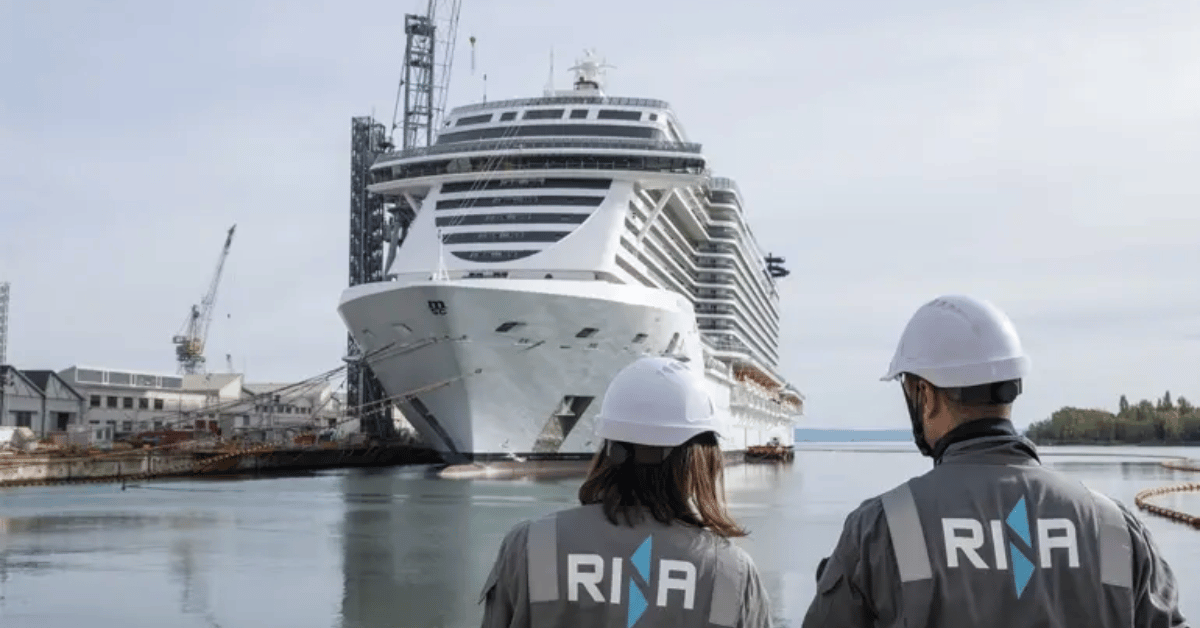
RINA's decision to expand its Singapore Open Innovation Hub with support from the EDB is a measured but meaningful step toward decarbonising one of the hardest sectors to clean up. The hub will focus on digital twins, artificial intelligence, and maritime decarbonisation, three areas where the gap between ambition and operational reality remains wide. This is not a flashy announcement about a prototype vessel or a single green-fuel trial. It is a bet on infrastructure: the kind of persistent, integrated data ecosystem that makes measurable progress possible.
What makes this development worth watching is not the technology alone but the location. Singapore sits at the nexus of global shipping routes, and its port handles roughly one-fifth of the world's container transshipment. A digital twin of a vessel in the North Sea is useful. A digital twin of a vessel operating through Singapore's traffic separation schemes, refuelling at its terminals, and reporting to its maritime authorities, that is a longitudinal, real-time dataset with empirical weight. Compare this with India's first e-methanol plant fuels cleaner shipping on the Asia-Europe corridor, which tackles the fuel-supply side of the same challenge. Both projects aim to reduce emissions on the Asia-Europe corridor, but they address different bottlenecks: one provides the fuel, the other provides the calibrated intelligence to use it efficiently. Meanwhile, Cochin Shipyard Expands Design Capabilities with Conoship Equity Stake signals that ship design itself is being rethought. Taken together, these three stories suggest that maritime decarbonisation is no longer a single-sector problem. It requires an integrated approach linking fuel production, vessel design, and operational data.
The practical takeaway for our readers is this: digital twins are not simulations for academic papers. When validated against real-time sensor data and peer-reviewed for accuracy, they become operational tools that can reduce fuel consumption by 5 to 10 percent on existing vessels, without a single retrofit. That is a measurable, immediate lever. The Singapore hub's emphasis on AI-driven solutions suggests RINA is moving beyond static modelling into adaptive systems that learn from each voyage. For fleet operators, this means the difference between a one-time efficiency gain and a continuously improving baseline.
One specific detail to watch is how RINA integrates its digital twin data with the broader maritime regulatory framework. If the hub produces calibrated, empirical evidence that certain operational changes cut emissions by a validated margin, that data could inform future International Maritime Organization policy. The conversation around ocean decarbonisation has long been heavy on pledges and light on verified outcomes. This hub, if it delivers on its promise, could supply the kind of ocean intelligence that turns commitments into calibrated action.