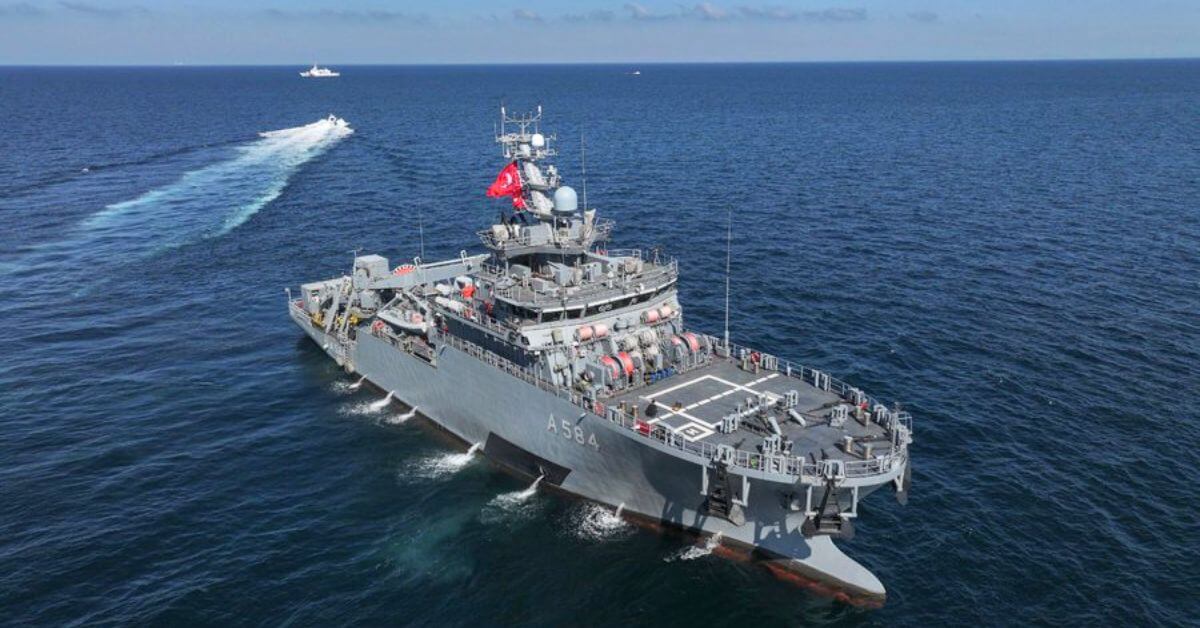
A collision in the dark water off Istanbul is a blunt reminder that the ocean remains an unforgiving operating environment. The tugboat *Tugberk Imamoglu* and the Turkish-flagged *Alsu* came together at roughly 3 a.m. local time on Wednesday, Sept. 2, sending one vessel to the seabed and leaving a search for 10 crew members ongoing. The Turkish Navy has located the sunken cargo ship, but location is not rescue. For those of us who track maritime operations, this is the part of the story that matters: the gap between knowing where a ship went down and knowing where its people are.
This incident is not isolated from the broader currents of naval and commercial activity. Just as a Kiwi Frigate Monitors Sanctions, Enhancing Global Maritime Security Intelligence demonstrates how navies are absorbing real-time data to enforce international law, the same integrated data ecosystem should be applied to search-and-rescue coordination. Meanwhile, the Indian Navy Explores Domestic Innovation for Amphibious Fleet Expansion and Next-Generation Missile Vessels Advance Indian Navy Capabilities point toward a future where vessels are faster, more networked, and increasingly capable of sharing position and environmental data in near real time. Those same systems, designed for military advantage, are the ones that could shave critical minutes off a rescue operation. The lesson is not that better tech prevents every accident, but that the gap between a collision and a recovery is often a data problem.
Our take is straightforward: every minute of search time is a function of preparation, not luck. The crew of the *Tugberk Imamoglu* and the *Alsu* were operating in one of the busiest maritime corridors on the planet, yet the initial response still relies on legacy coordination methods. We would tell a reader who asks, "What does this mean for me?" that the practical takeaway is about redundancy. The ocean does not care about flag states or tonnage. It rewards vessels and command centers that have already tested their emergency communications, their drift models, and their cross-agency protocols before the 3 a.m. call comes in. The Navy's ability to locate the sunken cargo ship is a validation of persistent surveillance, but it is not the same as having a recovery plan that accounts for the human element under pressure.
The specific detail to watch in the coming days is not just the number of survivors, but the timeline of the search. If the crew is found alive, it will be because current data was integrated faster than the water could take them. If not, the review will inevitably focus on why the collision happened, and whether better-calibrated traffic separation or real-time bridge alerts could have prevented it. We are not going to speculate on the cause. But we will say this: the ocean is the ultimate validator of claims about resilience. Every maritime professional should read this incident as a directive to ask their own bridge team, "What is our 3 a.m. plan?" Because the answer, right now, is the only thing between a ship and its next port.