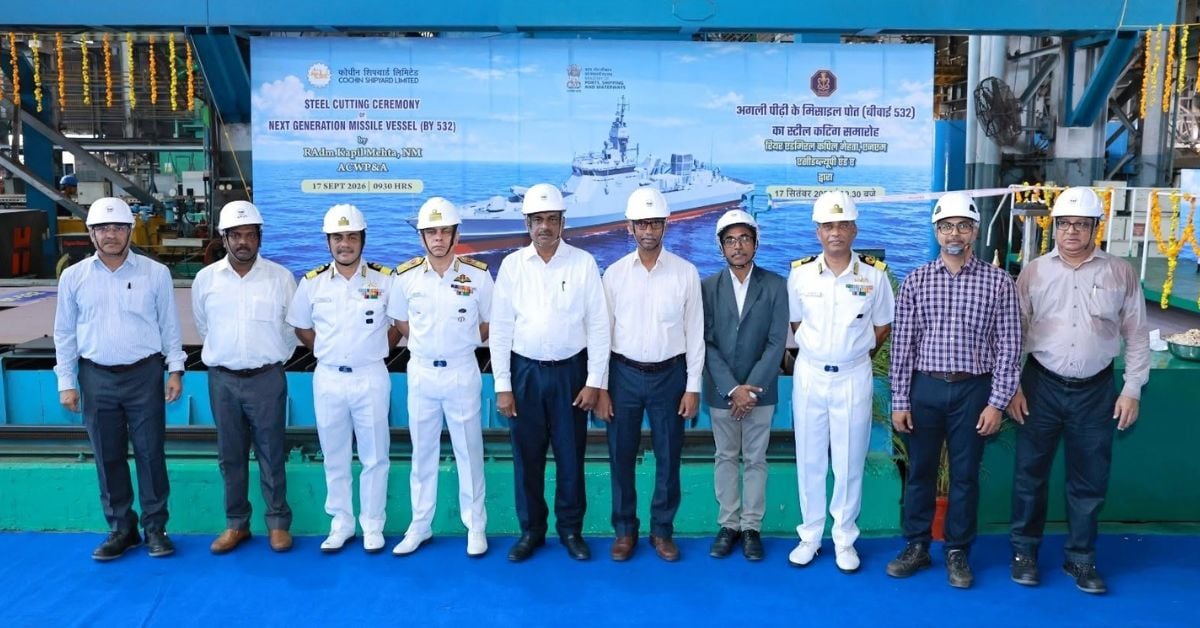
The Indian Navy's decision to lay the keel for its first of six next-generation missile vessels at Cochin Shipyard signals something more than a routine construction milestone. With a projected top speed of 33 knots and a crew of roughly 80 per vessel, these NGMVs are being built for agility and reach. But the deeper story is about industrial capability and strategic patience. This is not a sudden surge; it is a calibrated step within a longer arc of fleet expansion that India has been methodically pursuing. As we noted when India projected an expanded naval fleet to navigate evolving maritime landscapes, the goal of around 230 ships by 2040-2045 is as much about deterrence as it is about domestic production. The NGMV program fits squarely into that blueprint.
For our readers, the practical takeaway is less about the vessels themselves and more about what their construction represents. High-speed missile platforms are not novel in concept, but building them efficiently and affordably at scale is a persistent challenge for any navy. Cochin Shipyard's expanding role here is telling. This is the same yard that recently moved to bolster its design capabilities through a 23% equity stake in Conoship International, a partnership aimed at broadening its engineering reach. When a shipyard layers that kind of forward-looking design ambition onto a firm order for six warships, it suggests a deliberate attempt to institutionalize knowledge rather than merely execute a one-off contract. The NGMV program, in that sense, is as much a test of India's shipbuilding ecosystem as it is of naval firepower.
There is also a collaborative thread worth pulling. The collaborative shipbuilding initiative advancing ocean data capabilities in India, which pairs Synergy Marine Group with Cochin Shipyard on shipbuilding and repair, may seem separate from a missile vessel program. But the overlap is real. The same industrial base that services commercial and oceanographic needs is being asked to deliver on complex defense requirements. That convergence is not accidental. It means the NGMV project will likely benefit from a broader base of skilled labor, drydock capacity, and supply chain maturity. It also means that any bottleneck, whether in steel quality, propulsion systems, or weapon integration, will be felt across multiple sectors. The margin for error narrows when a yard is balancing commercial timelines with defense commitments.
What we would tell a reader asking about this story is straightforward: watch the delivery schedule, not the launch ceremony. The 33-knot speed figure is impressive on paper, but the real metric is whether these vessels enter service on time and within a budget that does not crowd out other naval priorities. The Indian Navy's 230-ship target is ambitious, and programs like the NGMV are the building blocks of that ambition. If Cochin Shipyard can deliver these six vessels while also expanding its design portfolio and commercial partnerships, it will have proven that Indian shipbuilding can move beyond assembly and into genuine integration. The specific detail to watch is the second or third vessel in the class, because that is where the lessons from the lead ship will either accelerate or stall the program. The ocean is not forgiving of delays, and neither is a peer competitor's timeline.