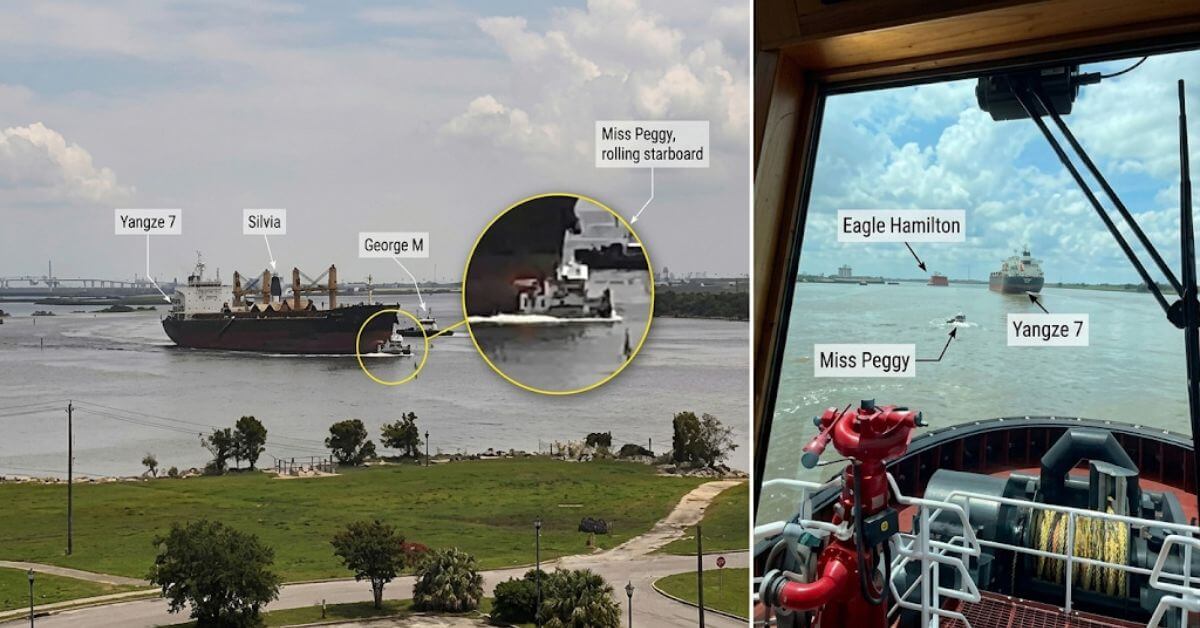
The first seaman's manslaughter charge ever brought against a U.S. ship pilot is not merely a legal novelty; it is a necessary recalibration of accountability on the water. The indictment of Darris Ornel Jefferson for his role in the 2024 collision between the Yangze 7 and the towing vessel Miss Peggy sends a clear signal that the duty of care aboard a vessel extends to the pilot on the bridge, and that negligence with lethal consequences will be treated as a criminal matter, not just an operational failure.
The facts laid out by the NTSB are stark. The pilot was on a personal phone call with another pilot for 39 minutes before the accident, ending it only about two minutes before impact. Neither vessel kept a proper lookout. The crew on the Yangze 7 did not see the towboat until it was within one ship length of the bow. The result was a capsizing, a death, and a precedent that now places personal device distraction at the center of maritime safety law. This case echoes patterns seen in other recent incidents, such as the Lawsuit Filed Against Tanker Operators Over Mississippi River Collision and the Unauthorised sea trial ends with tanker breaching seawall in Perak, where operational discipline and oversight were central questions. In each case, the gap between procedure and practice proved fatal or catastrophic.
What matters here is the practical consequence for every mariner, shipping company, and regulator. The NTSB has recommended that the Coast Guard prohibit vessel operators from using phones for non-navigation purposes. The American Pilots' Association has been asked to adopt similar guidance. If this charge results in a conviction, the standard will no longer be aspirational; it will be enforceable by federal prison time. The pilot faces up to ten years and a $250,000 fine. That is not a theoretical risk. It is a specific, measurable deterrent.
Our take is straightforward: the legal system is finally catching up to the empirical reality that distraction kills at sea as surely as it does on the road. The ocean intelligence community has long called for integrated, real-time monitoring of bridge operations and crew attention. This case validates that call. The question now is whether the industry will wait for more indictments before adopting the calibrated, peer-reviewed protocols that could prevent the next collision. The answer should be no.