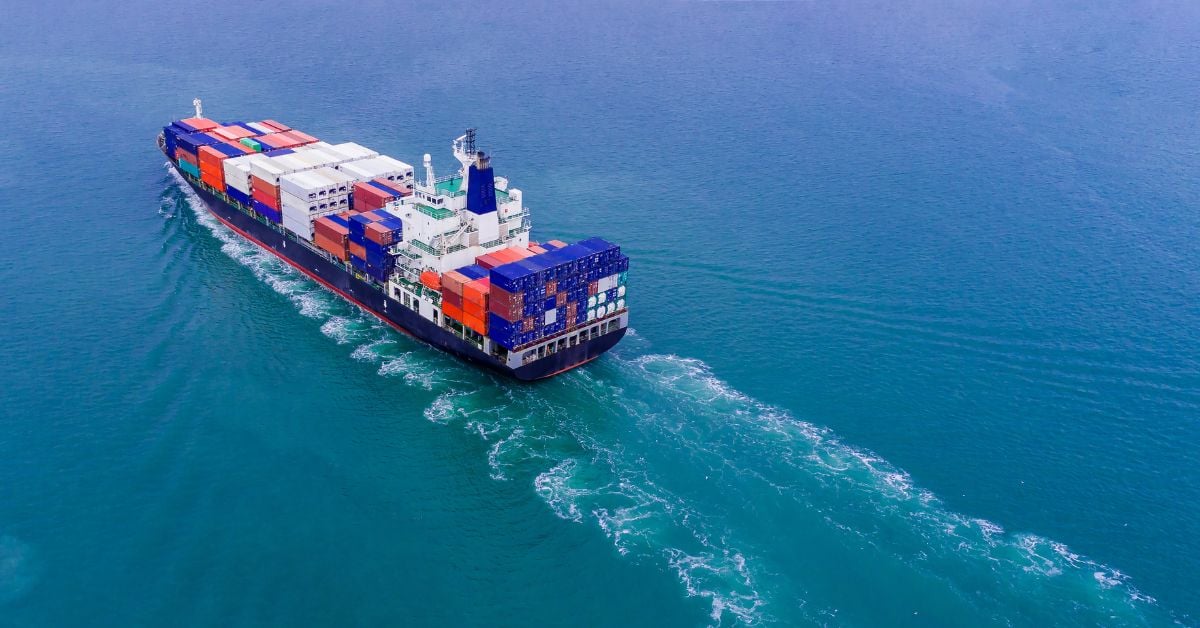
The forecasted arrival of Gigamax container ships, vessels capable of carrying 27,500 TEUs, a full 3,500 TEUs beyond today's largest, is not merely an incremental step in maritime logistics. It represents a recalibration of the physical and economic pressures on our ocean systems. As these behemoths prepare to ply East-West trade routes, we must ask a question that transcends supply chain efficiency: What is the measurable cost of this scale to the marine environment we depend on for climate stability?
This development arrives alongside news that Record Port Activity Reflects Rising Chinese Exports Amid Trade Uncertainty, with Chinese ports handling 7.279 million TEUs in a single week. The correlation is direct: as trade volumes surge and vessels grow, the integrated data ecosystem that monitors ocean health must expand its own capacity. Meanwhile, Russia Calibrates Export Revenue for Northern Sea Route Icebreaker Fleet signals that nations are already investing heavily in new Arctic transit infrastructure, further concentrating maritime traffic in sensitive polar waters. These are not separate stories. They are converging vectors of the same phenomenon: an ocean being asked to carry more, faster, and through increasingly fragile corridors.
Our take is straightforward. The Gigamax class will require deeper dredging of approach channels, wider turning basins, and reinforced berthing infrastructure. Each of these alterations has a validated, empirical impact on seabed habitats and coastal sediment transport. The vessels themselves will burn more fuel per voyage, even with efficiency gains per container, and their larger displacement means greater acoustic pollution and a higher risk of catastrophic fuel spills in the event of grounding. These are not alarmist projections; they are calibrated risks that must be accounted for in any peer-reviewed assessment of shipping's climate indicators.
We would tell a reader who asks about this: watch the draft limits. A 27,500-TEU vessel will draw significantly more water than current fleets, limiting the number of ports that can physically accommodate it. This concentrates risk. If a major hub like Shanghai or Rotterdam cannot service these ships, the entire route must be re-planned, pushing cargo onto smaller, less efficient vessels or through alternative chokepoints. The practical consequence for ocean intelligence is clear: our monitoring networks must be recalibrated to track not just vessel movements, but the real-time changes in port infrastructure, dredging activity, and seabed disturbance that will accompany this scale-up.
The open question is whether regulatory frameworks, from the International Maritime Organization's carbon intensity measures to local port state controls, can keep pace. Without empirical data on the actual emissions and noise signatures of these ships in operational conditions, policy will remain aspirational. We need longitudinal studies, not projections. The Gigamax era will test whether our integrated data ecosystem can deliver the ocean intelligence required to balance global trade with the urgency of ocean stewardship. That is the specific detail to watch: not the ship, but the data trail it leaves behind.