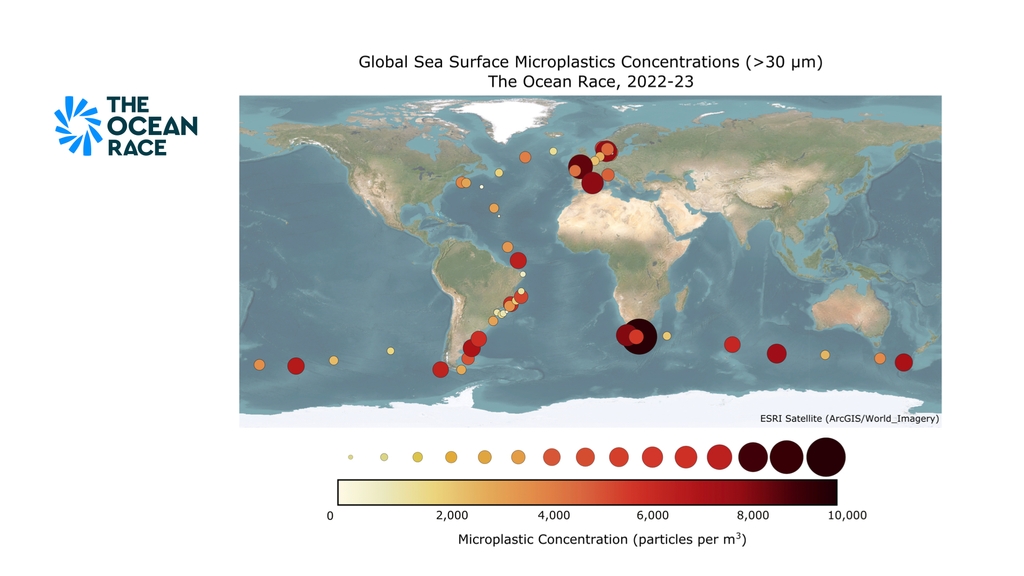
The data is clear, and it demands a recalibration of our focus. Europe is not just a source of plastic pollution; it is a primary hotspot, particularly for the invisible threat of textile microfibers. This finding, drawn from water samples collected by sailors in The Ocean Race, shifts the conversation from a distant problem to one that originates in our own homes and industries. For policymakers and citizens alike, this means the solution is not just about cleaning the open ocean, but about fundamentally rethinking the materials we wear and how we care for them.
The research, which analyzed particles as small as 0.03 millimeters, found that 71% of the microplastics were microfibers from textiles like polyester. Three of the top five global hotspots for this pollution are in European seas: the edge of the English Channel, the Balearic Sea, and the North Sea. This is not an abstract issue from a faraway continent. It is a measurable, empirical signal of a systemic failure in how we produce and dispose of clothing. As we have previously reported, Tracing plastic from 1,000 rivers to nearly 80% of ocean emissions shows the critical role rivers play in transporting waste, and Satellite data reveals measurable pathways of ocean plastic pollution helps us track its movement. This new data adds a crucial layer: it identifies the specific product type, proving that our clothing is a dominant and direct contributor to the crisis.
The implications for the ongoing Intergovernmental Negotiating Committee meetings in the Republic of Korea are immediate. International laws on plastic pollution must now explicitly address textile design and manufacturing. Voluntary pledges are not enough when every single sample collected across a 60,000-kilometer race route contained microplastics, including in the most remote parts of the Southern Ocean. The data is validated and peer-reviewed. It provides a measurable baseline that cannot be ignored. The question is no longer whether microfibers are a problem, but how quickly binding regulations can be implemented to require filtration in washing machines, mandate changes in fabric construction, and hold producers accountable for the full lifecycle of their products.
The high concentration of microplastics, on average 4,789 per cubic meter, represents a direct pathway for these particles to enter marine food webs and, ultimately, human cells and tissues. The science is advancing faster than our policy. While the sailors provided the platform and the samples, the analysis from the National Oceanography Centre and the University of Rhode Island has given us a precise, actionable target. The specific question to watch is whether the outcome of the negotiations in Korea will include a mandate for product-level labeling and microfiber filtration, or whether the textile industry will once again be allowed to operate without consequence for its measurable impact on ocean health.