microplastics
World Data Ocean keeps microplastics in one place: 10 stories so far. The section currently leads with “Tracking 350 million tons of annual plastic waste to its ocean sink”, “Seafloor sediment confirmed as a vast plastic pollution reservoir”, and “A thousand rivers drive eighty percent of ocean plastic emissions”. 350 million tonnes of plastic waste enters the global system each year, but where does it finally settle? Seafloor sediment has been confirmed as a vast plastic pollution reservoir, according to a world-first study by the Commonwealth Scientific and Industrial Research Organisation. A Global Hub for Ocean Intelligence 4 World Data Ocean is a centralized digital platform where researchers, scientists, and ocean enthusiasts converge to… The list below is every microplastics story on World Data Ocean, newest first.
Tracking 350 million tons of annual plastic waste to its ocean sink
350 million tonnes of plastic waste enters the global system each year, but where does it finally settle? Tracking this debris to its ocean sink requires calibrated, real-time data, the kind of integrated ocean intelligence that reveals the measurable impact of human activity. Understanding this pathway is protection in action. For deeper context on how we validate such environmental signals, see our related coverage of measured sea level rise validated across decades of ocean data.
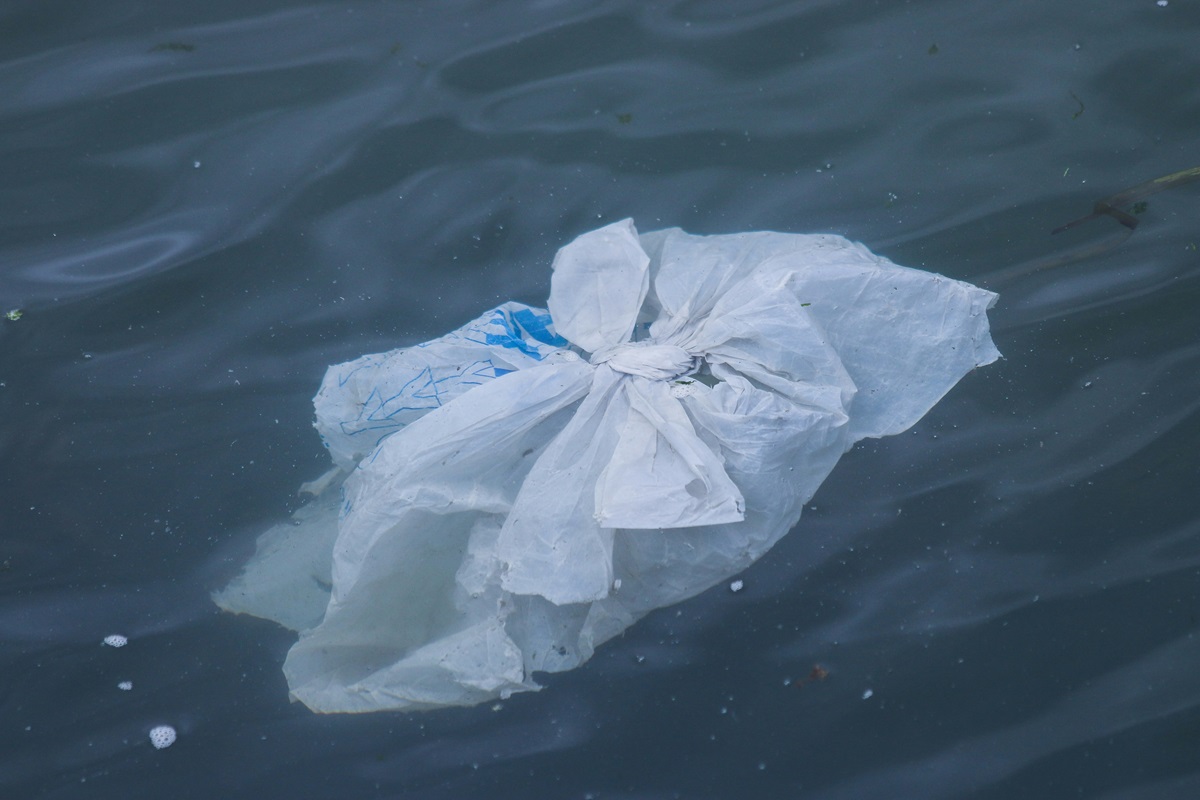
Seafloor sediment confirmed as a vast plastic pollution reservoir
Seafloor sediment has been confirmed as a vast plastic pollution reservoir, according to a world-first study by the Commonwealth Scientific and Industrial Research Organisation. This is not a surface problem, plastic is accumulating in the deep, where it becomes part of the geological record. The finding is a measurable, empirical signal of our impact. Understanding where plastic settles, from the seafloor to the Great Pacific Garbage Patch, is foundational to integrated ocean stewardship.
A thousand rivers drive eighty percent of ocean plastic emissions
A thousand rivers drive eighty percent of ocean plastic emissions, a finding that demands a calibrated, not alarmist, response. This is not about panic; it is about measurable action. Understanding the source of the problem allows us to target interventions where they matter most. For deeper context on how disclosure transforms data into accountability, see our related coverage, "Closing the data gap: disclosure as a calibrated step toward ocean action." Precision, not hype, guides real protection.
Mapping Ocean Plastic Accumulation to Future Climate Indicators
Plastic doesn't just float; it accumulates in distinct ocean zones that now serve as measurable climate indicators. Understanding where our debris settles reveals more than pollution patterns, it exposes future warming trajectories. Our World in Data maps this convergence, connecting observable accumulation zones to broader environmental shifts. The findings are empirical, calibrated, and urgent. For deeper context on how integrated data reshapes ocean observation, see our related piece "From orbit to ocean floor: integrated data reshapes our view of the sea."
Tracing ocean plastic to its land-based sources via empirical data
Every river is a potential pipeline. Our latest analysis, grounded in empirical data, traces ocean plastic back to its land-based origins. The evidence is clear: mismanaged waste from coastal populations is the primary driver. This is not guesswork; it is a measurable, validated flow. Understanding this pathway is the first step toward intervention. For deeper insight into where these plastics ultimately settle, see our related piece, "From surface to seafloor, a calibrated global map of microplastic drift.

Saint John Harbour: Establishing a Baseline for Microplastic Levels
Blue and black fibres dominated every seawater sample collected in Saint John Harbour, and 94% of zooplankton taxa had ingested microlitter. That finding, from a multi-year survey by our researchers, establishes a critical baseline for microplastic levels in the Bay of Fundy. Notably, larval fish and *Calanus* copepods showed the highest encounter rates. This is empirical, local data, the kind needed to monitor change and assess ecological risk.
Arctic Glacier Retreat Creates New Coastal Lagoons, Expanding Ecosystems
Retreating glaciers across the Arctic are redrawing coastlines, and Svalbard now hosts a growing number of coastal lagoons where none existed before. These newly emerged paraglacial systems remain largely absent from regional monitoring, despite their rapid expansion. We see this as a missed opportunity: the lagoons form a developmental continuum, from glacier-influenced basins to biologically structured systems, and early evidence suggests they act as biogeochemical reactors, including potential methane sources.
Tracking Plastic's Reach: Ocean Intelligence from Remote Waters.
Plastic debris doesn't stay where we drop it. New tracking from remote waters shows how far it travels, and the data is telling a clearer story than ever before. This kind of ocean intelligence turns scattered observations into something measurable, something we can act on. It's a reminder that the problem isn't out of sight, just out of sightlines. For readers drawn to the unseen, our piece on unidentified marine life offers a complementary glimpse into what else moves beneath the surface.
Ballast Water Filtration: A Practical Tool for Reducing Marine Microplastics
A 50 μm screen filter on a commercial ballast water management system captured 83.5% of microplastics during a single backwash event. That is not a lab-scale estimate; it is a measured retention from 147,769 particles entering the filtration unit. This study offers quantitative evidence that existing infrastructure can intercept plastic pollution during routine operations. The finding reframes ballast treatment as more than a compliance step; it is a practical tool for ocean stewardship.
Microplastic Pollution Assessed Across Key International Shipping Routes
Aboard the research vessel *Jaywun*, 100 surface-water samples now trace a microplastic story across the Atlantic, Mediterranean, Red Sea, and Arabian Gulf. Concentrations swung from 4 to 290 particles per liter, with polyester and PET dominating the mix. The Arabian Sea carried the heaviest load, while the Strait of Gibraltar surprised with a localized peak.