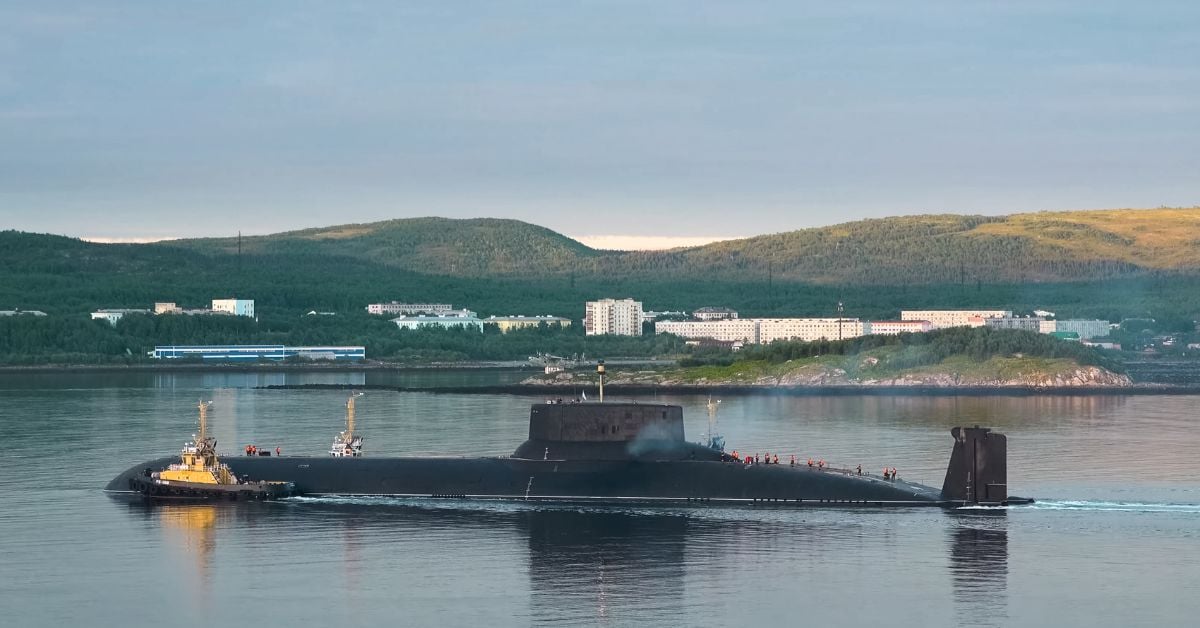
A former NATO Commander has publicly voiced concern over the expansion of Russian military infrastructure and the enhanced capabilities of its submarine fleet. This assessment arrives alongside concrete moves by Moscow to secure its Arctic presence, including plans to collect more than 200 billion roubles from exporters for new icebreakers, a logistical pivot detailed in Russia Calibrates Export Revenue for Northern Sea Route Icebreaker Fleet. Meanwhile, the long-delayed Vostok project, covered in Vostok Project Launches Arctic Oil Exports Amid Geopolitical Shifts, has finally begun production. These are not separate stories. They are calibrated, empirical indicators of a single strategic vector: Russia is building the industrial and military capacity to project power beneath increasingly ice-free Arctic waters.
Our take is direct: NATO's ocean intelligence posture must evolve faster than the threat. Submarines are the quietest, most persistent variable in maritime security. A Russian submarine operating below Arctic ice is not just a detection problem; it is a data problem. The ocean transmits information, temperature, salinity, acoustic signatures, but only if you have the integrated data ecosystem to collect, validate, and interpret it. The former Commander's concern is valid, but concern alone is not a strategy. Real-time, peer-reviewed ocean intelligence from fixed and mobile sensor networks is what turns a vulnerability into something measurable. Without it, NATO's operational picture has gaps that an adversary can exploit with a single, quiet transit.
The audience for this, researchers, policymakers, defense analysts, needs a clear takeaway: the return on investment in ocean intelligence infrastructure is no longer hypothetical. Each icebreaker Russia commissions and each barrel of Arctic oil it exports lowers the cost of its naval mobility. The Vostok project's launch, despite western sanctions, demonstrates that economic constraints alone are insufficient to deter capability-building. What is required is a symmetrical commitment from NATO allies to deploy calibrated, longitudinal monitoring of acoustic and climate indicators in the Arctic basin. We would tell any reader asking for advice: stop treating submarine detection as a hardware problem. It is an ocean intelligence problem. The water column itself is the sensor. You must fund the integration, not just the platform.
A specific detail to watch: the acoustic signature of the new Russian icebreakers under construction. Icebreaker noise is distinct. If those vessels are designed to mask the signature of submarines transiting beneath them, NATO's existing detection models will require recalibration. The question is not whether Russia will test that capability, but whether our ocean intelligence network can measure the difference in real time. That is the empirical threshold we should be watching.