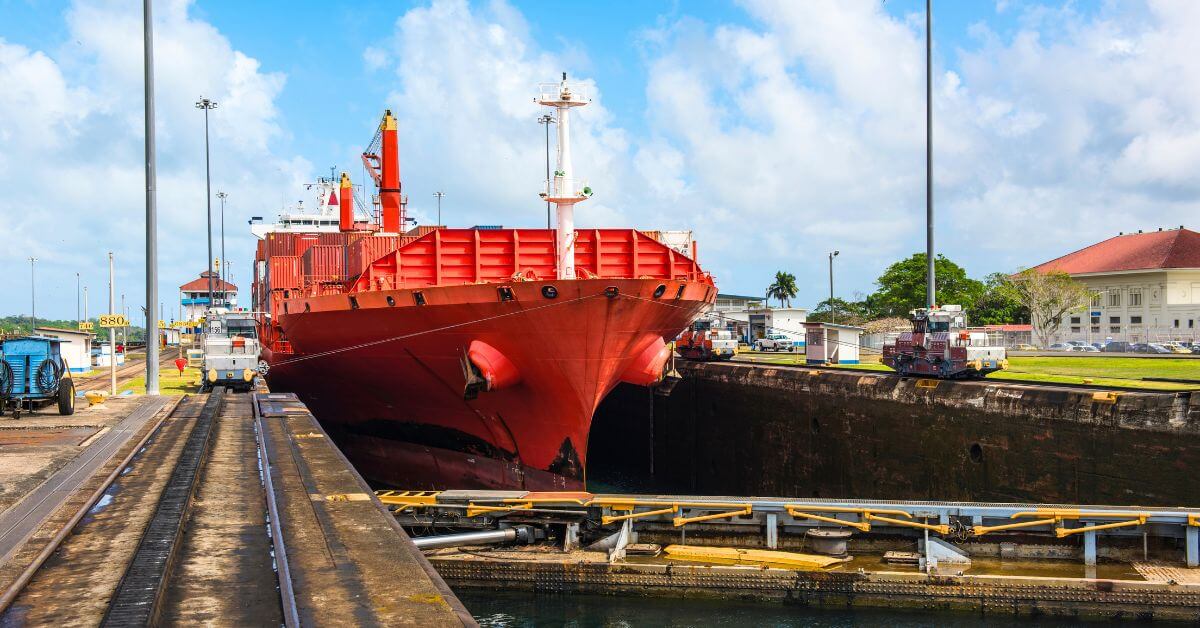
The Panama Canal is tightening its own bottleneck. With an average of 29.5 vessel transits per day slated for October under the draft plan submitted to Panama, the waterway is no longer just a conduit for goods; it is a live indicator of how climate stress rewires global logistics. This is not a headline about weather. It is a calibrated signal that the assumptions underpinning maritime routing are due for revision.
The immediate cause is severe drought linked to El Niño, which directly reduces the freshwater reservoir that feeds the canal's locks. But the deeper story is one of integrated fragility. The canal does not operate in isolation, and neither does the shipping network that depends on it. Consider the related pressure points: Gulf of Oman STS Transfers Max Out Amid Rising Saudi Oil Exports shows tankers improvising at anchor because port and pipeline capacity have hit their ceiling. Meanwhile, Phased Negotiations Aim to Ease Restrictions on Strait of Hormuz remind us that geopolitical chokepoints remain a policy variable, not a constant. And Integrated Subsea Infrastructure Shifts to Enhance Indian Ocean Connectivity points to a quieter but equally consequential rerouting of data and supply chains across the Indian Ocean. None of these events caused the Panama drought, but they are all symptoms of the same condition: the old map of reliable routes, fixed costs, and predictable transit times is no longer valid.
What we would tell a reader who asks about this news is straightforward: do not treat the 29.5 figure as a one-off operational detail. It is a measurable, empirical data point in a longer series of adjustments. The canal authority is not panicking; it is planning. That planning reflects a reality where freshwater availability is becoming as strategic as fuel pricing. For shippers, the practical consequence is not just longer queues or higher slot auction prices. It is the need to build redundancy into routing models, to compare canal transits against transshipment via alternative hubs, and to treat climate indicators as commercial inputs rather than background noise. The Gulf of Oman example is instructive here; when one route maxes out, the pressure does not disappear, it migrates to the next available asset. The same logic applies to the Strait of Hormuz negotiations, where diplomatic progress could ease one constraint even as others tighten.
The honest take is that we are watching a recalibration of what "reliable" means in ocean intelligence. A canal that cuts transits is not failing; it is adapting to a hydrological budget. The question for the industry is whether its own logistics planning is adapting at the same pace. The draft plan is not an anomaly; it is a preview of how climate volatility will keep reshaping chokepoints. For researchers and policymakers, the takeaway is to watch the rainfall data and the lockage records with the same attention as freight rates. For operators, the specific thing to watch is how slot availability auctions respond in the coming weeks, because that will tell you whether the market believes 29.5 is a floor or a ceiling.