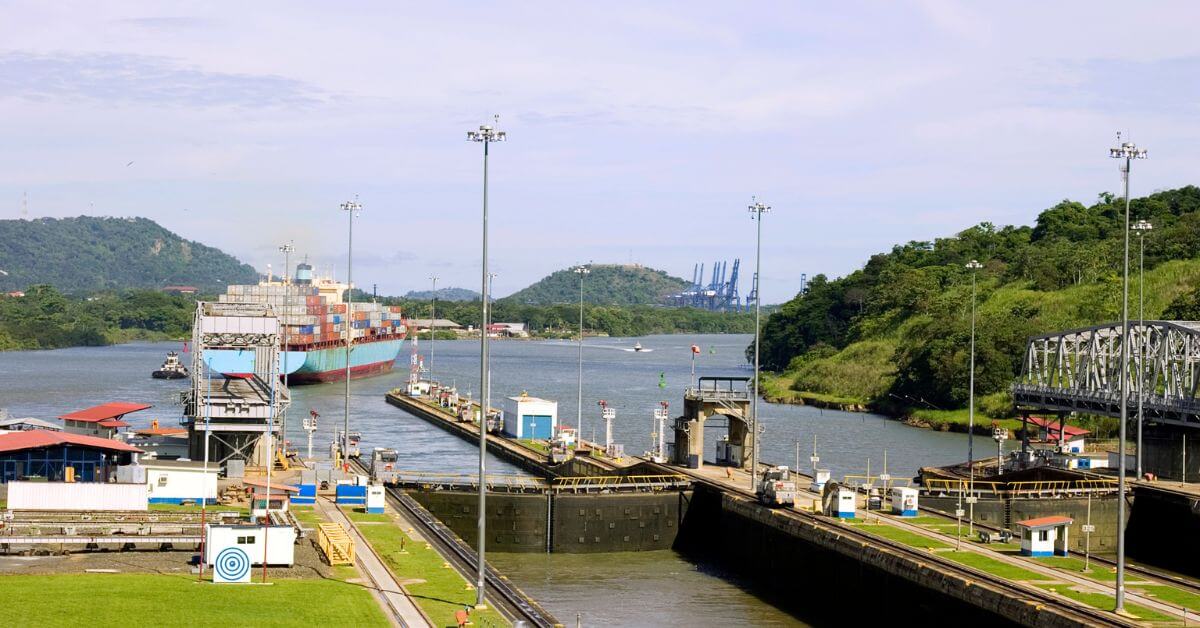
The $5.3 million fee that SK Gas agreed to pay for a Panama Canal transit slot on Sept. 1 is not an anomaly. It is a signal. When a company pays roughly 30 times the standard auction price for a single LPG carrier passage, it is making a calculated bet that the value of certainty now outweighs the cost of waiting. That bet is rooted in a global shipping system that is becoming simultaneously more expensive and less predictable. The record payment reflects a market where the price of a route is no longer just fuel plus tolls, but the premium a company places on knowing its cargo will arrive on a specific day.
This is not happening in a vacuum. The same week that SK Gas locked in its slot, Chinese ports handled a record 7.279 million twenty-foot equivalent units in the seven days to September 20, as record port activity reflects rising Chinese exports amid trade uncertainty. Meanwhile, the Strait of Hormuz has seen conflicting reports of vessel detentions that raise the stakes for every regional transit. And the Panama Canal itself is still recovering from the drought-driven reductions that forced an average of only 29.5 vessels per day in October, as detailed in reduced canal transits: drought impacts global shipping routes. Put those three data points together, and you see the emerging logic: when chokepoints become unreliable, the ability to pay more for a confirmed slot becomes a competitive advantage.
The practical takeaway for anyone moving cargo is that the auction system is now a permanent feature of the ocean logistics landscape, not a temporary spike. For shippers, this means budgeting for transit should include a risk premium that did not exist a decade ago. For carriers, the message is simpler: capacity is a product, and scarcity is now a line item. The old assumption that a canal transit is a fixed cost is obsolete. What replaces it is a more fluid, market-driven pricing model where the only constant is that the highest bidder gets the certainty everyone else is chasing.
What we would tell a reader who asks about this is straightforward: if you are not already modeling canal transit costs as a variable expense, you are behind. The record fee is not a one-off. It is a benchmark that will be cited in future negotiations, insurance underwriters will use it to adjust premiums, and other energy companies will factor it into their logistics planning. The open question is whether the canal authority will expand auction frequency to capture more of this revenue or keep supply tight to sustain the premium. Either way, the era of predictable, low-cost ocean routes is over. Watch the next auction results closely, because the spread between the base toll and the auction price will tell you more about the health of global trade than any GDP forecast.